Prehistoric Humans Traded This Rare Green Gem and AI Has Identified Its Surprising Origins


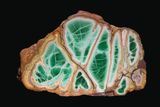
Thousands of years ago, prehistoric human societies traded the rare green mineral variscite. Between the sixth and second millennia BC, people in Western Europe appreciated the mineral’s distinctive turquoise hue and incorporated it into necklaces, rings, and bracelets. Variscite has been found at various archaeological sites across the Iberian Peninsula, but tracing the origins of these finds has proven difficult.
Now, an interdisciplinary team of AI experts and archaeologists from Portugal and Spain have collaborated to build an analysis pipeline that tracks variscite from mine to archaeological discovery, in a recent study published in the Journal of Archaeological Sciences.
“It’s not just about green pearls: it’s about using artificial intelligence to tell the human stories of prehistory,” Daniel Sánchez-Gómez, lead author of the study and an archaeologist at the University of Lisbon, said in a press release.
Green gem samples in archaeological sites
Researchers tracked variscite by comparing geological samples taken from modern mines with ancient variscite samples from archaeological sites. In their latest study, the team used portable X-ray fluorescence chemical analysis to determine the elemental composition of 1,778 variscite samples from three ancient mines in modern Spain.
They then analyzed their data through a random forest AI algorithm, which uses a series of decision trees to improve classification accuracy.
“Our model learns to recognize the unique geochemical fingerprint of each mine,” Sánchez-Gómez said.
After teaching the model to link element signatures to specific mines, the team tested it on 571 variscite beads recovered from archaeological sites. The analysis pipeline allowed the team to identify the mine of origin of each bead with 95% accuracy.
“It is able to identify the origin of a prehistoric pearl, even thousands of years after it was made,” Sánchez-Gómez said.
Learn more: The Aztecs oversaw a vast trading network of precious obsidian products
Surprising trade routes
The study results showed that archaeologists may need to reconsider previously mapped historical trade routes. Previously, a mine near Encinasola in southwest Spain was considered the main variscite mining site. The new analysis suggests that Encinasola was less important for the production and distribution of variscite.
Instead, the Gavà and Aliste mines, in the Spanish provinces of Catalonia and Zamora respectively, would likely be the main sources of the ore. Variscite found in northern France was geolocated to mines in the northern Iberian Peninsula, suggesting that it was traded along routes across the Pyrenees, rather than via sea passages as previously thought.
Use AI techniques
Importantly, the team made its data and the code that powered its analysis available through an open-access repository called Zenodo. This will allow other researchers to review the data independently as part of efforts to improve open science.
The team prioritized AI techniques that make their decisions clear to human users, as opposed to those operating in so-called “black boxes.” Carlos Odrizola, project leader and professor at the University of Seville, said this approach would increase the usefulness of their results for other researchers.
“We used explainable artificial intelligence techniques, which allow AI models, especially the most complex ones, to explain in a clear and understandable way how they make their decisions. In the case of our research, this means that it not only predicts accurately, but also shows us which chemical elements were decisive in each classification, bringing transparency and rigor to archaeological interpretation,” he said in a press release.
The researchers hope their approach can be applied to other materials from archaeological sites, such as amber. They also intend to track variscite’s newly mapped passage through Western Europe to try to determine what makes it so valued.
Learn more: AI helps decode mysterious prehistoric cave markings known as finger grooves
Article sources
Our Discovermagazine.com editors use peer-reviewed research and high-quality sources for our articles, and our editors review the articles for scientific accuracy and editorial standards. See the sources used below for this article:


