Honey Bees’ Waggle Dance — Wiggling and Looping Motions — Changes With the Crowd


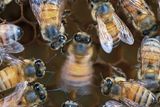
When it comes to animal communication, honey bees might have one of the most interesting forms yet. When a bee returns to the hive with knowledge of a prime food source, it performs what is called a “wiggle dance” – a series of wiggling movements and loops that give other members of the hive a detailed map of where the food sources are located.
Although science knows the existence of the waggle dance, new research reveals that the dance is only one part of communicating food sources; the other is knowing which bees are present in the audience.
These new results, published in the Proceedings of the National Academy of Sciencesexamine why the audience is just as important as the waggle dance in communicating about food sources.
How bees play with the crowd
To us, a waggle dance can look like a bee circling and shaking its abdomen. However, its hive mates can determine the direction of a food source relative to the sun based on the angle of the waggle dance, while the duration indicates how far away the food source is.
James Nieh, a professor at the University of California San Diego School of Biological Sciences and one of the study’s authors, compares the wriggling dance to that of a street performer. If a street performer performs in front of a larger audience, they will focus more on their performance; however, if the audience is smaller, the artist will place more importance on retaining audience members rather than their performance.
When a bee returns to the hive and discovers that there is a small audience to show off its dance to, the bee may spend more time worrying about the audience, rather than focusing on its wagging dance performance.
“Everyone has seen a street musician or artist adapt to a changing crowd,” Nieh said in a press release. “In the hive, we see a comparable trade-off. When fewer bees follow, the dancers move more in search of their audience and the dance becomes less precise.”
Learn more: Bumblebee queens can survive and breathe underwater for over a week by reducing energy demand
Honey bee audience comparison by size and age
For this study, Nieh, working with researchers from Queen Mary University of London and the Chinese Academy of Sciences, observed experimental hives and studied the bees’ “dance floor.” According to the study, the dance floor replicated the bustling, cluttered dynamics of the social space within traditional hives.
For the first part of the experiment, the research team analyzed fluctuations in the number of bees in the dancing area to test how changes in bee numbers affected dancing. In the second part of the experiment, the team kept the same audience size, but introduced younger worker bees who were less interested in wagging dances, thereby lowering the average age of the audience.
From the results, the team found that in both parts of the experiment, the wriggling dance became less accurate as the number of spectators decreased.
“Wriggling dance is often presented as a one-way transfer of information,” Ken Tan, lead author of the study and a researcher at the Xishuangbanna Tropical Botanical Garden of the Chinese Academy of Sciences, said in the press release. “Our data shows that audience feedback shapes the signal itself. In this sense, the dancer is not only sending information, but also reacting to social conditions on the dance floor.”
Communication through dance and touch
Another thing the team thinks they discovered during their study is how honey bees determine the size of their audience. The team noted that during the dance, bees from the audience frequently come into contact with the dancing bee’s body and antenna. This method could provide the dancer with information about the audience.
The study results provide additional insight into how groups of animals communicate and manage information. In collective groups like hives, communication can depend on repetition and sharing of signals.
“The new findings show that the accuracy of a signal can depend on the availability of receivers, not just the motivation of the transmitter,” Nieh said. “This type of feedback can be important in animal societies, artificial swarms, and other distributed systems where the quality of information can increase or decrease based on audience dynamics.”
Learn more: Bumblebees and ants fight in violent nectar wars, leading to death and food shortages
Article sources
Our Discovermagazine.com editors use peer-reviewed research and high-quality sources for our articles, and our editors review the articles for scientific accuracy and editorial standards. See the sources used below for this article: