Launch of historic Mars mission aboard Blue Origin’s New Glenn rocket delayed by solar storm


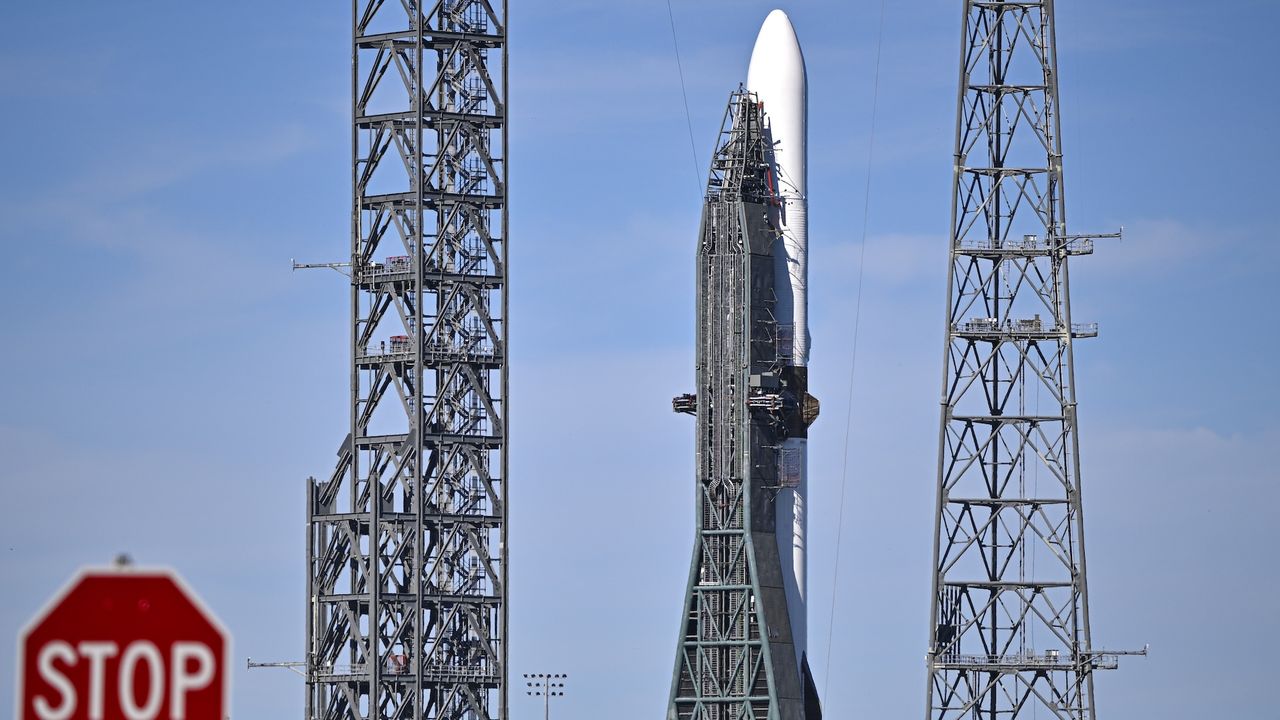
As people around the world receive auroral treats from an active sunRecent solar activity has disappointed fans of the Mars mission. Due to unfavorable space weather, they will now have to wait to see two spaceships bound for the Red Planet launch aboard a Blue Origin rocket.
NASA’s ESCAPADE sister spacecraft was supposed to fly to March as early as this afternoon (November 12), but high solar activity means the mission will have to wait until an undetermined date, Blue Origin officials said in a post on the social platform. The mission has already been delayed several times from its planned October 2024 liftoff date due to technical and scheduling issues, and a recent launch attempt on November 9 was canceled due to weather conditions on Earth.
ESCAPADE – short for Escape and Plasma Acceleration and Dynamics Explorers – is a NASA-managed mission that uses two spacecraft built by California-based aerospace company Rocket Lab. The spacecraft will fly aboard Blue Origin’s 300-foot-tall New Glenn rocket, designed for orbital and interplanetary missions like this Mars effort.
Ironically, ESCAPADE is designed to study the space weather that delays it. The sun has an 11-year solar activity cycle and peaks in 2025. When the sun releases large clouds of fast-moving plasma, known as coronal mass ejectionsThis electrically charged material triggers auroras when particles interact with Earth’s magnetic field lines and the atmosphere. Severe solar storms can also affect satellites and power lines, which is why NASA and other groups want to keep an eye on the sky.
ESCAPADE will examine how this space weather along with the solar wind – the constant stream of charged particles that the sun sends through the solar system – previously stripped Mars of its thicker atmosphere. the red planet had in its ancient past. Scientists believe that as the atmosphere thinned, the water that flowed to the surface dried up, leaving Mars as a largely desert world except for ice at the poles and presumed reserves of groundwater.
The ESCAPADE, worth nearly $80 million, isn’t the only payload aboard the New Glenn. In the rocket’s second stage is a telemetry communications experiment for Viasat flying on behalf of NASA’s Communications Services Project, Blue Origin officials said. in a report from Live Science’s sister website, Space.com.
So far, New Glenn has only been used in one mission: during the NG-1 mission in January. Its first stage is designed to land on a barge in the ocean so it can be reused. However, during the January mission, he failed to land on his barge and became lost.
Blue Origin also plans to eventually use New Glenn for Moon exploration, bringing both humans and scientific equipment to the lunar surface aboard its yet-to-be-piloted Blue Moon lander.
Rival aerospace company SpaceX is, for now, responsible for the first human landing of NASA’s plane. Artemis Lunar Programwhich could happen aboard the company’s Starship as early as 2027. But delays in Starship development recently prompted acting NASA Administrator Sean Duffy to suggest it could reopen the Artemis 3 contract to Blue Origin and other companies.


