Flashing Light May Guide a Firefly to Mate, but Scent “Seals the Deal”


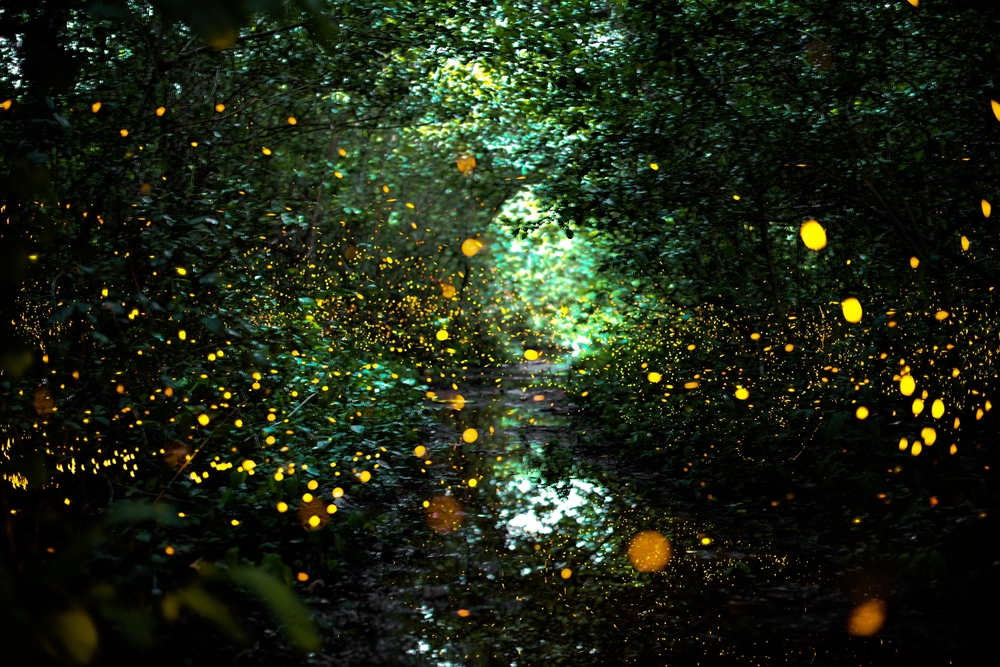
The fireflies light up at night to attract companions, but the attraction may not be flashy; It could also be to know who feels the best.
New research published in BMC Genomics Look at the genetics of the common eastern Firefly (Photinus pyralis) and have found that in addition to biolumine lightnings, fireflies can also use pheromones to attract companions.
“Lucioles have always been considered a visual species. They light up, and we assume that it is how they talk to each other,” said Sarah Lower, author of the main study – who helped map the genome of the struggle press release. “But we examined the genes of odorous receptors – those linked to the smell – and found that there were many more things than we thought.”
Fireflies and smell
According to the study, the research team collected 102 genes from the fragrant receiver (gold). Many of which have been strongly expressed in the antennas. Surprisingly, there was one or a gene that presented itself more in men than in women, indicating that it could be used to attract friends.
“It drew our attention,” Lower said in the press release. “It is the only gene of the fragrant receiver that has been lit in men than in women. In adult men, the main objective is to find a woman with which to mate. This gene could help them do it through chemical signals at hand.”
It was a long -standing belief that the fireflies relied on visuals to find partners; However, these results can question this belief.
“We did not expect to see this P. PyralisWhich is one of the most common species in North America, “said Lower in the press release.”
Find out more: Are we really the latest generation to enjoy the scintillating fireflies in summer?
Luciole pheromones collection
For the study, to collect Firefly pheromones, the research team has done what many of us have done like children: to collect east fireflies and put them in a pot.
“This is a very special pot,” says Lower. “It is attached to an air pump so that the air is continuously circulating to this pot, and at one end, the air comes out of the pump, enters the pot and passes through a charcoal filter[…]. So it’s air cleaning. Then, the air mixes with the firefly in the pot and is sucked in the outing, then in the release, we have another of these charcoal filters, but this time, it is collecting all the smells that come out of the fireflies. “”
After collecting pheromones, the research team used RNA sequencing to compare the expression of genes in the antennas to fight against the fight against men and women. The team found that the gene or the PpyRor6 gene – a male expression – was the most distinguished.
“This could help the male locate a woman or even avoid predators,” Lower said in the press release. “Some species imitating women attract in without distrust and eat them – the so -called female female female women. The smell could be part of the way men sail on this risk.”
Use pheromones for the future
Lucioles are currently faced with many obstacles with regard to mating. Certain species of firefighters see massive drops in number. This can be linked to climate change, the use of pesticides and light pollution. However, common species of the fight against firefighters are better than most, and their pheromones can have something to do with that.
“The smell is a much more difficult modality to disrupt,” Lower said in the press release. “Light pollution is everywhere, and this affects people and animals. But olfactory signals can remain clearer, which is another reason why this discovery is so interesting.”
The common fireflies of the East may not be the only species to use pheromones to attract companions. Winter fireflies, also known as dark fireflies or unlit fireflies, come out during the day and do not use light to attract companions. Lower thinks that pheromone receivers help them find potential partners.
Lower says that she hopes that this research on pheromones could one day help the conservation of fire sheets, especially as a means of collecting population data.
“It would be really great to see that people can use something like that to monitor the populations,” said Lower. This is particularly important because researchers know that the enlightened populations on fire are decreasing; Is the same thing true for dark fireflies?
Learn more:: How fireflies shine – and what their signals mean
Article Sources
Our writers at Discovermagazine.com Use studies evaluated by high -quality peers and sources for our articles, and our publishers examine scientific precision and editorial standards. Review the sources used below for this article:
A graduate of UW-Whitewater, Monica wrote for several organizations, including one-focused bees and the natural world, before coming to Discover Magazine. His current work also appears on his travel blog and his Common State magazine. His love of science came to watch PBS shows like a child with his mother and spend too much time to expire Doctor Who.


