From ‘drone guy’ to Ukraine peace negotiator: Who is Dan Driscoll?


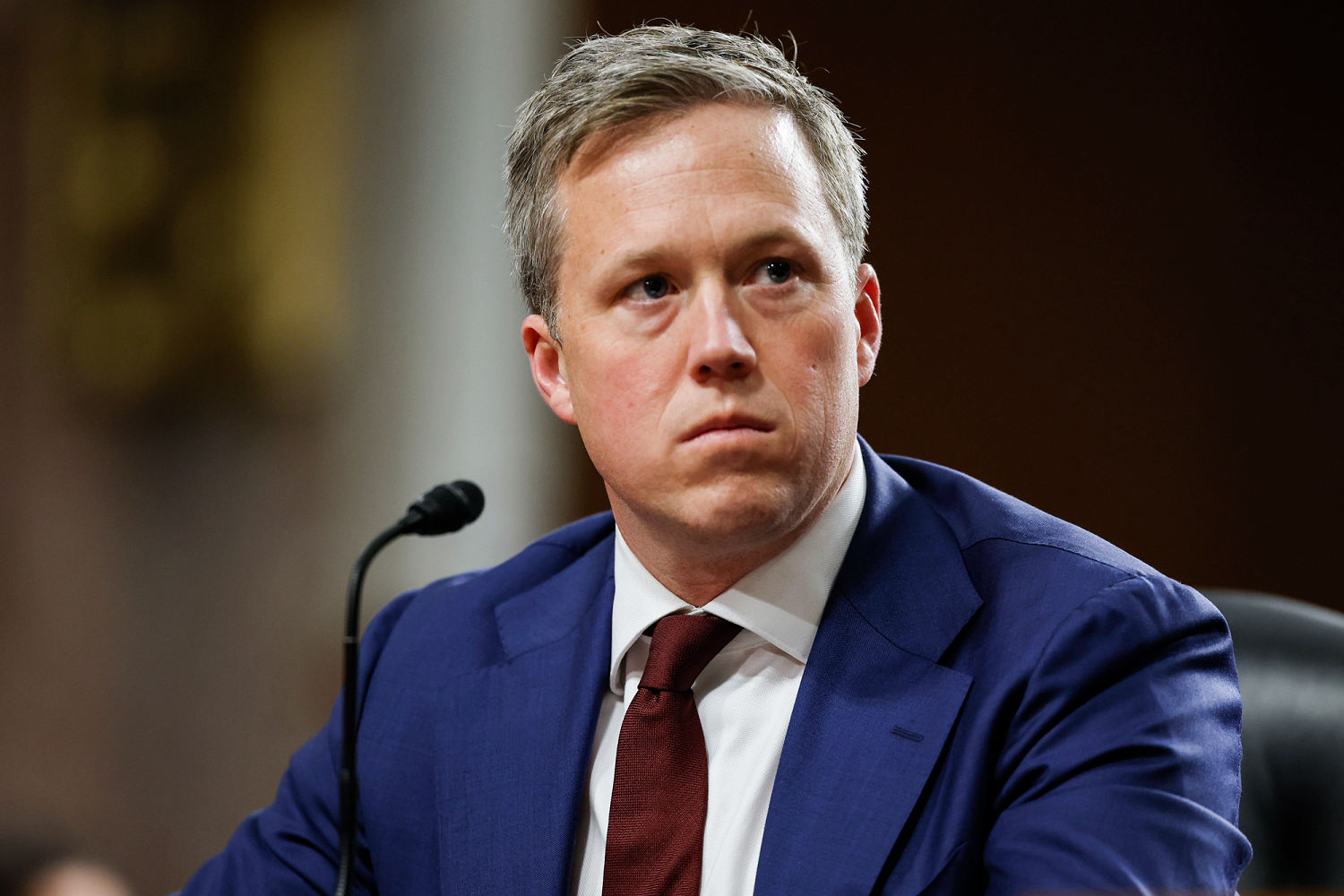
WASHINGTON — Army Secretary Dan Driscoll was planning a trip to Kyiv to discuss drone technology with his Ukrainian counterparts when his mission suddenly became more complex. President Donald Trump was upgrading his role, Driscoll was told, to include that of international diplomat.
The move propelled Driscoll to the forefront of the thorniest foreign policy challenge Trump, by his own admission, has faced since taking office: ending the nearly four-year-old war in Ukraine. It’s a high-stakes foray for Driscoll, a former Army Ranger and financier, that has raised his profile and fueled speculation inside and outside the Trump administration about where he might land next.
This account of Driscoll’s diplomatic activities and how the administration came to trust him is based on interviews with four current and two former U.S. officials.
For more than a week, Driscoll has crisscrossed Europe, shuttling from kyiv to Geneva to conduct negotiations with Ukrainian and European officials. And he made a secret trip to the Middle East to meet with the Russians. All the while, he socialized elements of the U.S.-backed peace plan developed by Trump’s closest advisers.
Driscoll flew Wednesday from Abu Dhabi, United Arab Emirates, to Fort Campbell, Kentucky, to meet with Vice President JD Vance, who was there to address troops, and he is expected to meet again with Ukrainian officials.
A senior administration official said Driscoll was chosen for the Ukraine negotiations because Trump trusted him and because it was convenient given that he was already scheduled to be in kyiv for talks on drones.
Driscoll, who is also acting director of the Bureau of Alcohol, Tobacco, Firearms and Explosives, was brought into Trump’s orbit by Vance, his close friend. Both men are former Yale Law School students and veterans.
Driscoll, 39, a North Carolina native, served in Iraq in 2009 before attending Yale and then working in finance. Since his Senate confirmation in February, he has focused on transforming the military by pushing to eliminate some weapons considered sacred cows in the military and adding new, cheaper and easier-to-purchase measures intended to make the military more relevant and “lethal,” he has said publicly.
That effort has faced challenges as some lawmakers fear Driscoll’s proposed changes could lead to a drain of jobs in their districts and states. But Republicans and Democrats alike have praised him as sincere and approachable, and many lawmakers are on abbreviated contact, according to two U.S. officials..
Driscoll has no formal diplomatic training. But the two U.S. officials said the highest echelons of the White House had given him full latitude to convey Trump’s message.
“People know he’s moving in the direction of the vice president, and the vice president is aligned with the president,” one of the U.S. officials said of Driscoll.
“In the middle of a conversation, he can make the decision whether to take the next step or not without hesitation, because he knows and is confident that he is within the bounds of his intention,” the official said. “He knows where the red lines are and where to continue.”
At Vance’s urging this month, Trump special envoy Steve Witkoff asked Driscoll to talk about a peace deal while he met with the Ukrainians during his trip to kyiv, according to one of the previously mentioned U.S. officials and two other U.S. officials.
It was ultimately Trump who said he wanted Driscoll to be part of his impromptu peace effort, these three U.S. officials said. Trump was undeterred by Driscoll’s lack of diplomatic experience, having already embraced unconventional diplomacy by tapping his friend and fellow businessman Witkoff to lead his peace efforts in the Middle East and Ukraine.
Trump is known to refer to Driscoll as a “drone guy,” one of those U.S. officials said, because of his expertise in technology. He also congratulated him publicly.
“What a job this guy does,” Trump said of Driscoll in September at an Oval Office event announcing the deployment of National Guard troops to Memphis, Tennessee.
“Look at that pretty face, and yet he’s a killer,” Trump added. “Pretty, handsome face, and he’s a total killer. I don’t know how you do it, huh?”
“Lotion, sir,” Driscoll joked.
The idea behind sending Driscoll was that as a White House-backed military leader, he could look the Ukrainians in the eye, perhaps with more credibility than a conventional government diplomat, and persuade them that it was time to make peace, the three U.S. officials said.
Witkoff explained to Driscoll the broad outlines of the peace agreement he had developed, although Driscoll was not briefed on the details of the 28-point plan until he arrived in kyiv, according to two of the U.S. officials. Elements of the plan were leaked to the media while Driscoll was engaged in informal talks in kyiv, the two officials said.
That leak and early signs of momentum in talks between Driscoll and the Ukrainians prompted White House officials to decide to brief Driscoll on the 28-point plan, those U.S. officials said. Driscoll was then tasked with presenting the 28-point plan to the Ukrainians, the officials said.
By putting Driscoll in charge of peace negotiations in kyiv, Trump hoped he could lay important groundwork with the Ukrainians before Witkoff or Secretary of State Marco Rubio, who is also national security adviser, became more deeply involved, the three U.S. officials said.
The process has since evolved into a series of ongoing negotiations that have both drawn criticism that they favored Russia and raised hopes for an eventual deal.
The momentum Driscoll has helped build in recent days has raised questions inside and outside the administration about whether he could be on a shortlist to succeed Defense Secretary Pete Hegseth if he leaves next year, according to the three current and two former U.S. officials.
Some of Trump’s top aides do not trust Hegseth to lead such sensitive and potentially high-consequence negotiations, according to two of the current and one former U.S. officials. Trump likes Hegseth even though the secretary has made a series of mistakes since he began leading the Defense Department, including withholding aid to Ukraine without informing Congress or the State Department and sharing sensitive information about a military operation in a group chat on the messaging app Signal, according to four of the current and former officials and two people familiar with the matter.
The senior administration official objected to the idea that Driscoll would somehow be able to succeed Hegseth. The official said Hegseth was expected to be in Washington to brief Trump on his fight against drug cartels, manage U.S.-China relations and attend Trump’s intelligence briefings. Hegseth, the official said, oversees NATO arms sales for Ukraine and has engaged in various conversations with the Ukrainians.
“Secretary Driscoll’s role evolved because he was going to be in Ukraine anyway for discussions about drone technology and warfare capabilities, and so it made sense to tap him to have these conversations with the Ukrainians at that time, frankly, out of sheer convenience and because, again, he is a trusted player on the president’s team,” the official said. “Secretary Hegseth is equally beloved by the President, and the President has the greatest confidence in Secretary Hegseth.”
Chief Pentagon spokesman Sean Parnell said in a statement: “The Secretary has assembled an all-star team at the War Department and we are proud of our many accomplishments. »
One of the U.S. officials described Driscoll, who served in a much quieter role than Hegseth, as “trusted, well-liked and respected” within the administration and Congress.
When he arrived in kyiv on Nov. 19, his message to Ukrainians was simple, according to two U.S. officials.
The officials said Driscoll told the Ukrainians that unlike in the past — when the United States rejected Ukraine’s requests for weapons, expanded intelligence or other assistance, only to approve those requests — this time was different. He said the United States cannot continue supplying more weapons to kyiv at the same pace it has been doing. as U.S. stockpiles run low and supplies begin to run out, officials say.
He also delivered a grim U.S. assessment of the war: Even if the Russian military’s progress is slow, its ability to continue fighting could continue well beyond the Ukrainian military’s ability to continue fighting, with or without U.S. and European support, NBC News reported.
Driscoll’s message to the Ukrainians was not so much a finger in the chest as pragmatism, two U.S. officials said.
“He didn’t tell the Ukrainians anything they didn’t already know,” one of the officials said.
Driscoll and other U.S. officials then made unannounced trips to Geneva for further meetings with the Ukrainians. Delegations from some European countries, including France, Germany and the United Kingdom, also visited Geneva to support Ukrainian efforts. Driscoll’s childish exuberance, which administration officials describe behind the scenes, was on display when he turned to an aide after a news conference he attended with Ukrainian officials, Rubio, Witkoff and Trump’s foreign adviser and son-in-law Jared Kushner.
After several days of negotiations, Driscoll appeared to have obtained assurance, at least from the Ukrainians, that the outline of a peace plan in its current form was potentially acceptable.
The next day, Driscoll secretly traveled to Abu Dhabi to meet with a Russian delegation about a possible peace plan, although it had now been modified somewhat in favor of Ukrainian interests.
Russian officials have not expressed support for the current plan. Trump said Tuesday that Witkoff and possibly Kushner would travel to Russia next week for negotiations.
He also said his military secretary-turned-diplomat would hold additional meetings with the Ukrainians.


