Public Education Needs Our Support


August 19, 2025
4 Min read
Investing in public education will strengthen the United States
The United States is a world power. Public education is one of the main reasons why
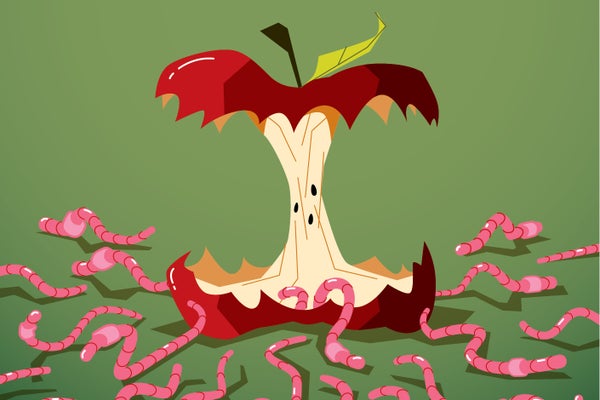
Public education in the United States is attacked. Whether at the local, state or federal level, political and religious groups have pushed reductions while diverting more money for private school vouchers, trying to modify the programs and remove the books from the children’s reading lists. By not favoring free and equitable public education, the American government steals our young people from the skills and critical knowledge that stimulates innovation and democracy.
These efforts are strongly under the teaching of science in our classrooms, if not directly class work, then on its fundamental engines – curiosity, imagination, ingenuity and innovation. To ask the types of questions of our natural world that would produce things such as artificial intelligence, spaceships, drugs, etc., children need an exposure to ideas that have shaped our progress as a company, the status quo against which we have moved away from making great changes for humanity, the declarations that we have questioned and then reassembled.
The attempt to suppress and control the education funded by taxpayers is contrary to a company that values evidence and knowledge. It is a concerted effort in controlling thought, racism, classic and sexism. It is not very democratic – nor very intelligent.
On the support of scientific journalism
If you appreciate this article, plan to support our award -winning journalism by subscription. By buying a subscription, you help to ensure the future of striking stories about discoveries and ideas that shape our world today.
In the United States, around 50 million children attend the public school, according to the National Center for Education Statistics. This number was closer to 51 million in 2019, but many children who left public school during the Covid pandemic did not return to public education. Children attending public schools exercise a right that was a privilege, because education in the United States was generally based on tuition fees until the middle of the 1800s. In 1870, around 78% of children aged five to 14 were enrolled in schools funded by taxpayers. In 2019 and 2020, between 80 and 90 percent of children who went to public school in the United States are high school graduates, according to the place.
Critical thinking and exposure to different ideas are the fundamental principles not only of democracy but also of creativity and innovation.
Some of the greatest battles concerning the right to complete knowledge have been carried out in public schools. They include the struggle concerning the ability to teach the evolution at the County School of Rhea in Tennessee, which was at the center of the Scopes test 100 years ago, and compete on the inclusion of climate change in manuals which serve millions of students of the public school in Texas and elsewhere. The country’s school districts have removed school library books that contain information on the evolution of bodies or explore mental health, not to mention those who discuss slavery, race and gender identity. Under the hold of protecting children from damage, censors rather seek to whiten the annoying truths which make them more difficult for them to maintain their profit and their social hegemony: the land heats up and humans are responsible; Slavery has occurred; Neither the race nor the sex is hierarchical.
Among the most blatant examples of the will to undermine public education are the programs of good schools. These efforts channel the dollars of taxpayers to private and parish schools, often to the detriment of long -term financing of public education. Often sold as “academic choice”, these legislative initiatives are defended as a way to help students escape poorly efficient public schools or give families with less means more options in education. But problems abound.
The Arizona Hemorrhage of money to maintain its good -flow program. In Indiana, educational gains in schools eligible for good are questionable. Joseph Waddington, a researcher in education at the University of Notre-Dame, said that the examination by others and others in the Indiana program showed that when children were initially passing to private schools, their mathematical scores fell significantly. It took them a while to bounce back. The researchers found no difference in the English scores. The idea in some corners has been that the programs of good stimulating the development of more religious or for -profit schools, which would, of course, enrich the entities that opened schools. But in many rural areas, there are no such schools. Many Texas counties have no private options. This lack was the basis of one of the greatest criticisms of the new Texas vouchers program, adopted during the legislative session in January 2025 of the State. Such examples raise the question of why these funds should not be used for public education from which everyone can benefit from.
Critical thinking and exposure to different ideas are the fundamental principles not only of democracy but also of creativity and innovation. In order for the United States to maintain its status of economic power and engine in the global economy, we need problems with problems, inventors, iterative thinkers and people who consider failure as part of progress. It is the field of science and mathematics, the field of history and geography, the field of widely -based and well -balanced education. Entertain the funds of public education while stifling certain ideas in public schools would certainly decrease our imprint in the world.
And although public education in the United States is a local and state problem, federal support is important. The efforts to dismantle the Ministry of Education, which helps disabled students, grants subsidies and funds to equalize educational opportunities and carry out research on different aspects of education, leave students at all levels of the mouth, in particular in less rich school districts. Schooling can be local, but national support is essential.
What is the appropriate financing for public education? Higher wages of teachers. Better buildings, not just stages. More reliable transport. More complete and influence manuals. Better laboratories. More subject options. Better training in trades. More preschool. Mental health services. Physical health services. More nutritious meals. Programs after better and free school.
The idea that we can finance public education in favor of alternatives denies reality and common sense. Public education offers the community, refuge and opportunities. It is a common good that we have to feed. The United States has become a world leader thanks largely to universal standard public education. We owe future generations to keep it so.


