Why Some Orcas Stay Close to Home While Others Roam — And Rarely Interact


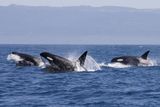
From the cliffs of the Shiretoko Peninsula, killer whales are a familiar sight. Pods are surfacing offshore, drawing tourists to one of Japan’s most famous wildlife destinations and anchoring the region’s identity as a marine hotspot. Yet for all their visibility, scientists struggle to answer a fundamental question: What types of killer whales live here?
New genetic research published in Marine Mammal Science helps answer this question. The orcas that roam the waters around Hokkaido belong to at least two profoundly distinct lineages – the fish-eating residents and the mammal-hunting transient travelers – whose differences in diet, behavior and evolutionary history may date back to the last ice age.
Learn more: Some orcas turn over juvenile white sharks and devour their livers
Different diets, different cultures among orcas
Although killer whales are classified as a single species, they are divided into populations called ecotypes. Each ecotype represents a specialized way of life – from what whales eat to how they hunt and socialize. In the North Pacific, scientists recognize three main ecotypes: residents, which feed primarily on fish; transients, which hunt marine mammals; and offshore orcas, another fish-eating group that tends to move farther from shore.
Resident and transient orcas may live in the same waters, but barely interact. They use different vocalizations, hunt different prey, and even raise their young differently. In some regions, these differences are so pronounced that scientists question whether the groups should be considered separate species.
Around Hokkaido, previous studies have suggested that fish-eating orcas and mammal-eating orcas were present – but the genetic data used to support this idea was limited.
A Closer Genetic Examination of Hokkaido Whales
To get clearer answers, researchers from Kyoto University and collaborating institutions analyzed the entire mitochondrial genome of 25 killer whales sampled around Hokkaido – a level of detail missing in previous studies. Because mitochondrial DNA is passed down through maternal lines, it provides a window into population history and long-term separation.
The analysis confirmed that Hokkaido orcas fall into two ecotypes: resident and transient, with no evidence of offshore whales in the region.
The two groups showed different genetic patterns. All resident whales shared the same mitochondrial haplotype – most common in the western North Pacific. The passing whales, in contrast, exhibited extraordinary diversity: eight distinct haplotypes among just 19 individuals, including seven never before documented.
This level of variation is higher than previously documented in transient killer whales anywhere else in the North Pacific.
From Ice Age refuges to modern conservation
The team thinks this genetic richness could be a legacy of the Last Glacial Maximum, when advancing ice sheets reshaped marine ecosystems. During this period, the waters around Hokkaido may have acted as a refuge – a place where transient orcas survived while other populations declined or shifted their ranges, preserving genetic lineages over thousands of years.
Beyond evolutionary history, the findings have real-world implications. In regions where orca populations are well studied, conservation strategies are often tailored to specific ecotypes, reflecting their different prey, behaviors and vulnerabilities. Around Hokkaido, such targeted management has proven difficult without clear ecological and genetic data.
“Clarifying the ecological characteristics of killer whales is crucial to achieving coexistence with them, as they are deeply linked to human activities such as tourism and fishing in Hokkaido,” says Momoka Suzuki, first author and corresponding author, in a press release.
As researchers continue to combine genetic data with behavioral observations, the picture of Hokkaido’s orcas becomes clearer, revealing not only iconic predators but also a living testament to how climate, evolution and ecology shape life in the sea.
Learn more: In a first, watch orcas team up with dolphins to boost their salmon-hunting success
Article sources
Our Discovermagazine.com editors use peer-reviewed research and high-quality sources for our articles, and our editors review the articles for scientific accuracy and editorial standards. See the sources used below for this article:




:max_bytes(150000):strip_icc()/Health-GettyImages-2173549385-f9e915aa1a394c52ae60fc50f43bf113.jpg?w=390&resize=390,220&ssl=1 "The Best Time of Day to Drink Coffee for Heart Health and Longevity")
