Giant ‘toothed’ birds flew over Antarctica 40 million to 50 million years ago

Imagine Antarctica today and what comes to mind? Large ice floes floating in the Southern Ocean? Perhaps an isolated outpost populated by scientists from around the world? Or perhaps colonies of penguins living in the middle of vast expanses of snow?
Fossils from Seymour Island, just off the Antarctic Peninsula, paint a very different picture of what Antarctica looked like 40 to 50 million years ago – a time when the ecosystem was lusher and more diverse. Fossils of frogs and plants such as ferns and conifers indicate that Seymour Island was much warmer and less icy, while fossil remains of marsupials and distant relatives of armadillos and anteaters hint at earlier connections between Antarctica and other continents in the Southern Hemisphere.
There were also birds. Penguins were present then, as they are today, but fossils related to ducks, hawks and albatrosses have also been discovered in Antarctica. My colleagues and I published a paper in 2020 revealing new information about the fossil group that may have eclipsed all other birds on Seymour Island: pelagornithids, or “bony-toothed” birds.
Giants of the sky
As their name suggests, these ancient birds had sharp bony spikes protruding from their saw-like jaws. Resembling teeth, these spikes would have helped them catch squid or fish. We also studied another remarkable characteristic of pelagornithids: their imposing size.
The largest flying bird alive today is the wandering albatross, with a wingspan of 11 ½ feet. The Antarctic pelagornithid fossils we studied have a wingspan almost double – about 21 feet in diameter. If you tilt a two-story building on its side, that’s about 20 feet.
Throughout Earth’s history, very few groups of vertebrates managed to fly – and only two reached truly giant sizes: birds and a group of reptiles called pterosaurs.

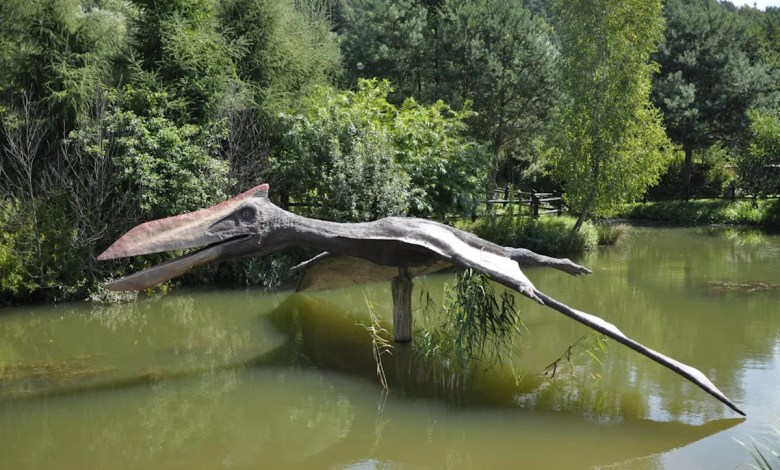
Pterosaurs ruled the skies during the Mesozoic era (252 million to 66 million years ago), the same period when dinosaurs roamed the planet, and they grew to sizes that are hard to believe. Quetzalcoatlus stood 16 feet tall and had a colossal wingspan of 33 feet.
The birds have their opportunity
Birds appeared while dinosaurs and pterosaurs still roamed the planet. But when an asteroid hit the Yucatan Peninsula 66 million years ago, dinosaurs and pterosaurs both perished. Some selected birds, however, survived. These survivors branched out and diversified to form the thousands of bird species still alive today. Pelagornithids evolved just after the extinction of dinosaurs and pterosaurs, when competition for food was less.
The first pelagornithid remains, recovered from 62 million-year-old sediments in New Zealand, were about the size of modern gulls. The first giant pelagornithids, those in our study, flew over Antarctica about 10 million years later, in a period called the Eocene epoch (56 million to 33.9 million years ago). In addition to these specimens, fossilized remains of other pelagornithids have been discovered on all continents.
Pelagornithids existed for about 60 million years before disappearing just before the Pleistocene Epoch (2.5 million to 11,700 years ago). No one knows exactly why, as few fossils have been recovered from the period at the end of their reign. Some paleontologists cite climate change as a possible factor.
Assemble it
The fossils we studied are whole bone fragments collected by paleontologists at the University of California, Riverside in the 1980s. In 2003, the specimens were moved to Berkeley, where they are now at the University of California Museum of Paleontology.
There isn’t enough material from Antarctica to reconstruct an entire skeleton, but by comparing the fossil fragments with similar items from more complete individuals, we were able to estimate their size.
We estimate that the pelagornithid’s skull was about 2 feet long. A fragment of a bird’s lower jaw preserves some of the “pseudo-teeth” that could have each measured up to an inch in height. The spacing of these “teeth” and other jaw measurements show that this fragment came from an individual as large, if not larger, than the largest known pelagornithids.
[Deep knowledge, daily. Sign up for The Conversation’s newsletter.]
Further evidence of the size of these Antarctic birds comes from a second pelagornithid fossil, from a different location on Seymour Island. A section of a foot bone, called the tarsometatarsus, is the largest known specimen from the entire extinct group.
These discoveries of pelagornithid fossils highlight the importance of natural history collections. Successful field expeditions return a wealth of material to a museum or repository – but the time required to prepare, study and publish fossils means that these institutions typically hold many more specimens than they can display. Significant discoveries can undoubtedly be made by collecting specimens during expeditions to remote locations. But equally important discoveries can be made by simply processing the backlog of specimens already available.
This article is republished from The Conversation, an independent, nonprofit news organization that brings you trusted facts and analysis to help you make sense of our complex world. It was written by: Peter A. Kloess, University of California, Berkeley
Learn more:
Peter A. Kloess does not work for, consult, own shares in, or receive funding from any company or organization that would benefit from this article, and has disclosed no relevant affiliations beyond his academic appointment.