Scientists turned to a red onion to improve solar cells — and it could make solar power more sustainable


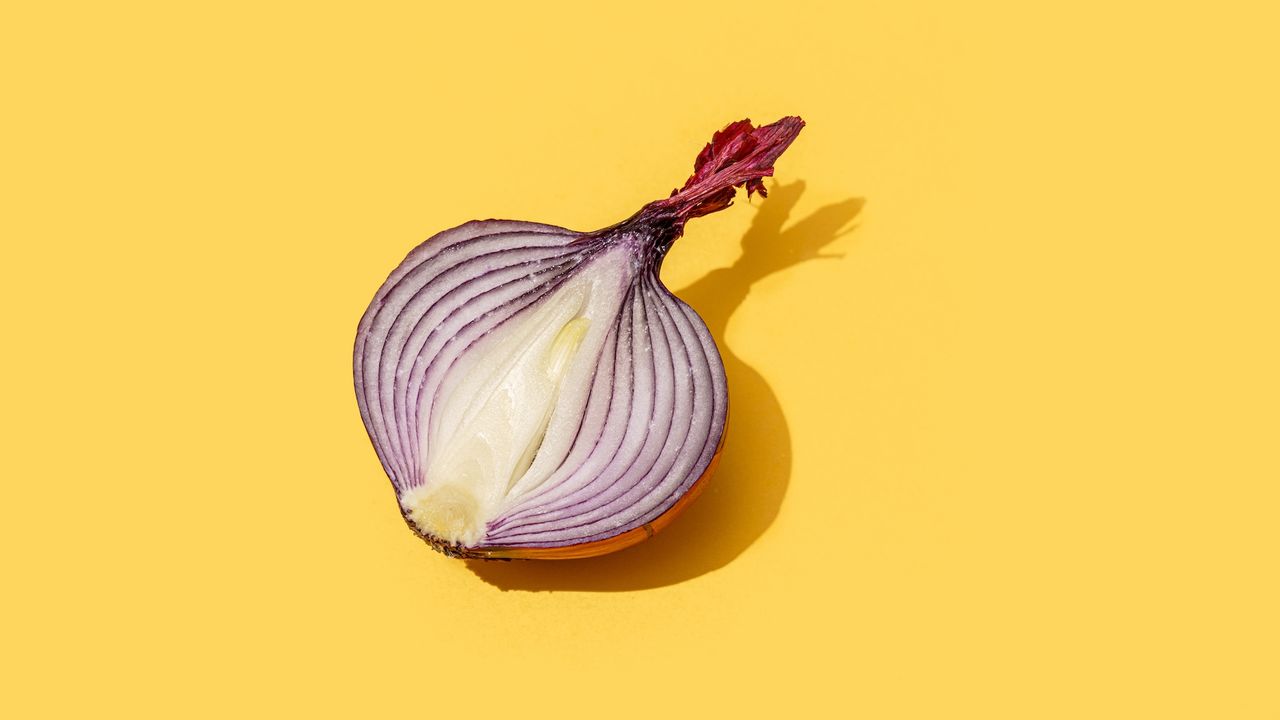
The red onion dye could be the missing ingredient necessary to strengthen ultraviolet (UV) protection for solar cells, according to scientists.
Solar cells are generally covered with an oil -based film to protect them from the degradation induced by UVs. These films include oil -based materials such as polyvinyl fluoride (PVF) and polyethylene (PET).
In the quest to stimulate the adoption of the film made from more durable and organic materials, nanocellulose has become a favorite. Nanocellulose is derived from plant -based materials and is produced by decomposing fiber cellulose on a nanometric scale.
The researchers behind the new study revealed that the combination of nanocellulose with a coloring based on red onion skin extract offered “very effective UV protection”. The team published its conclusions on February 24 in the newspaper Optical materials applied to ACS.
The study noted that a protective film made from this material eliminated 99.9% of UV radiation, up to a wavelength of 400 nanometers. In particular, the filter has also outperformed a UV filter based on commercial animals currently available on the market.
This represents a “promising option in applications where the protective equipment must be based on organic”, ” Rustem NizamovA doctoral researcher at the University of Turku in Finland, said in a statement.
Vital compromise
In the study, the researchers compared the sustainability of four protective films made from cellulose nanofibers. These were treated variously with an ED onion extract, lignin – a polymer found in the walls of certain vegetable cells – and iron ions.
While all these elements offered adequate protection against UV radiation, the option of red onion coloring has become the most effective.
Solar cells are faced with a critical compromise, with UV radiation less than 400 Nm proving harmful, noted the study. However, the transmission of visible light – wavelengths between 700 and 1,200 nm – is crucial to allow the cell to transform radiation into electricity.
In this spirit, the development of a material that protects the solar cell and facilitates energy absorption is essential. Lignine, for example, has a dark brown color, which “limits its use in transparent films”, according to the declaration.
“The transmittance of these films containing lignin is generally 50% between 400 and 600 nm and at most 85% above 600 nm,” added the researchers.
In comparison, the nanocellulose film treated with a red onion dye has exceeded the transmission of 80% light to longer wavelengths (between 650 and 1,100 Nm) and maintained performance over an extended test period.
This test period evaluated the sustainability and performance of filters by placing them under artificial light for 1,000 hours – the equivalent of about a year of sun in a climate in central Europe. Nizamov noted that this exam period “stressed the importance” of long -term tests for UV filters. “UV protection and light transmittance of other bio-base filters have changed significantly over time,” he said. “For example, the films dealt with with iron ions had good initial transmittance that reduced after aging.”
Nizamov said that the study has large -scale implications for a range of solar cells, in particular perovskite And organic photovoltaics, as well as in other industries where the use of an organic filter is necessary.
This could include food packaging, for example, where biodegradable solar cells could be used as energy sources for sensors in sterile environments.


