Gisèle Pelicot Shows Us Why “Shame Must Change Sides”


Fifty-one ordinary men raped an unconscious woman. Her case reveals the limits of anti-carceral feminism.
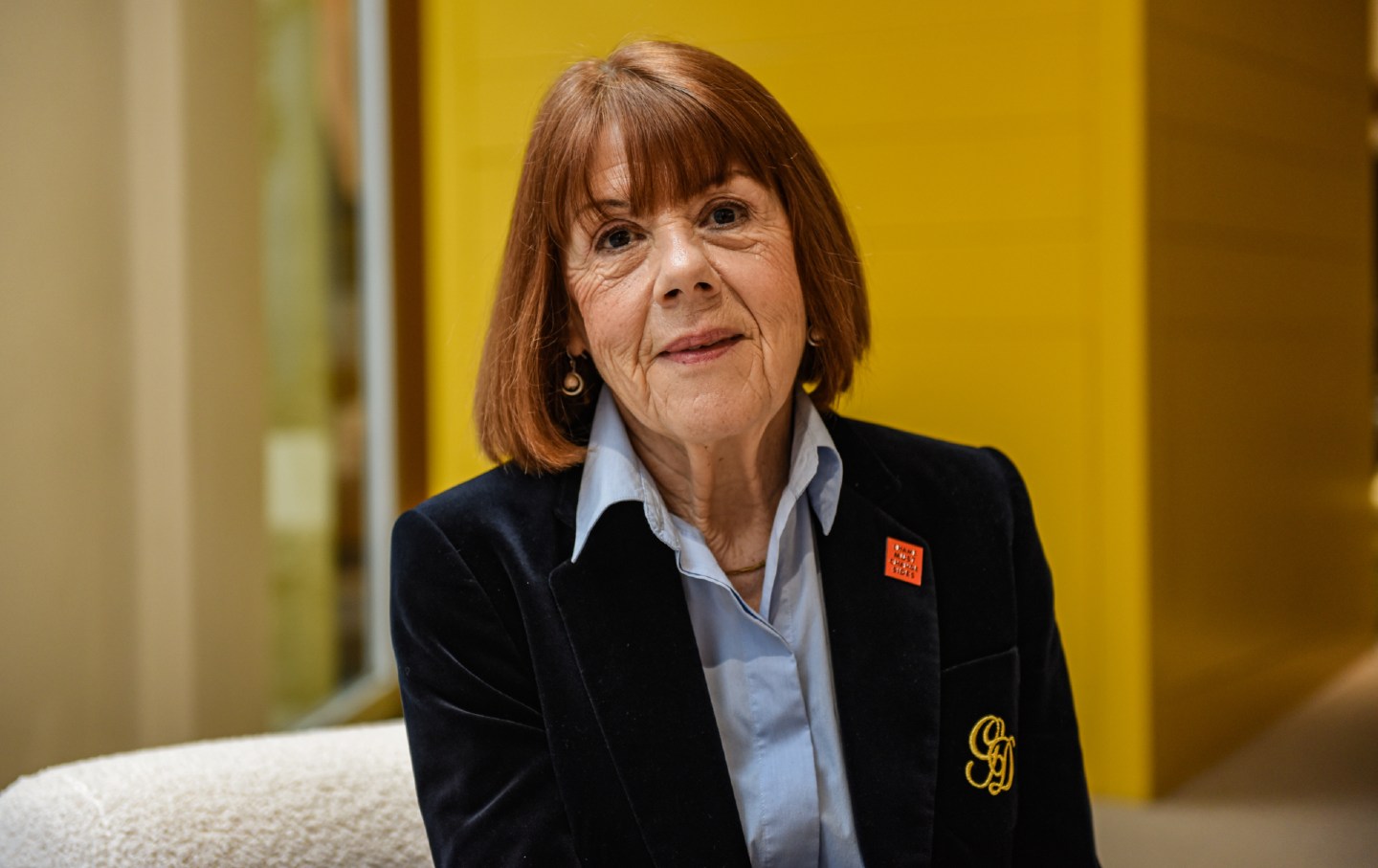
Gisèle Pélicot published the book A hymn to life in which she recounts her memories of discovering one morning in November 2020 that her husband was secretly drugging her and inviting strangers into her home to rape her.
(Alberto Paredes/Europa Press via Getty Images)
Gisèle Pelicot thought she had a good marriage. Sure, it had its ups and downs – there were money problems, and she and her husband had affairs – but the way she saw it, she’d had 50 years of quiet contentment. She had a good job, a devoted husband, two sons and a daughter, many grandchildren and a retirement home in the town of Mazan in Provence with a swimming pool and lots of countryside outside the front door.
As the whole world now knows, and as his recently published memoir A hymn to life described in painful detail, the reality was very different. From 2011 to 2020, her husband, Dominique Pelicot, drugged her and used a chat room called “à son insusu” (“without her knowledge”) to invite local men to rape her while she was unconscious. He might never have been discovered if he hadn’t been caught taking photos of women’s skirts in a supermarket. Police took his computer, and in a folder carefully labeled “abuse” were hundreds of videos of local men assaulting his wife’s orifices, often with his help.
What happened next stunned the world. Gisèle Pelicot revealed her identity and chose an open trial so that the world could see what happened to her and by whom. Only Dominique admitted that he was a rapist; the other 50 men on trial treated the proceedings as a joke and insisted they had done nothing wrong: it was just kinky sex; she only pretended to sleep; and anyway the husband gave permission, so how could it be rape? Unfortunately, some wives and girlfriends of the accused blamed themselves: they didn’t satisfy their husbands, so what are you waiting for? Even sadder, around twenty men in the videos could not be identified and are free to rape again.
Current number

I think of Gisèle when anti-carceral feminists oppose the prosecution of people accused of sex crimes. I suppose they would mourn the conviction of her rapists: Dominique was sentenced to 20 years and the others to sentences ranging from three to 15 years. (The prosecution had asked for 10 to 18 years.) After all, with a few exceptions, these were normal middle- and working-class men, ages 26 to 74. There was a truck driver, a computer scientist, a journalist, a banker, a mechanic and a baker. One of them was even his next door neighbor. Not all of them were ideal citizens: one was an HIV-positive retiree who refused to wear a condom. Another was a garden store employee who, perhaps taking inspiration from Dominique, drugged and raped his own wife for five years. A third missed the birth of his daughter to rape Gisèle. Yet it can be assumed that they had much to contribute to their community and family when they were not busy raping. We even greeted Gisèle politely at the bakery.
As Anna Krauthamer wrote in a recent article Nation “Why I Didn’t Report My Rape,” about her all-night sexual assault by six men in a Las Vegas hotel:
The simple answer to the question of why I never reported the rape is that I believe in the abolition of police and prisons. The less simple and less articulated answer is that prosecuting and potentially incarcerating others is inconceivable to me, even when they have hurt me more than I ever thought possible.
Imagine if Gisèle Pelicot had done the same thing: there would be 51 men free to rape again, and, since in this alternative anti-carceral story Gisèle would have chosen to do nothing, why not? Krauthamer writes: “I don’t want to ruin my rapists’ lives and I don’t know if they have children. » What if they did? Some of Gisèle’s rapists had children: Dominique himself has three. But what kind of father is a gang rapist?
Four years after her rape, Krauthamer remains tormented. I doubt her rapists feel the same way. Why should victims absorb their own suffering rather than letting rapists suffer for what they did? And why is rape the crime that anti-carceral feminists so often focus on? We assume it’s because rape is particularly horrible, but I think it’s the opposite: in reality, they don’t think rape is that bad, so women should forgive and move on. After all, forgiving men is women’s work.
I also think of Pelicot whenever I hear progressives and leftists talk about “the Epstein class.” Yes, Epstein’s crimes were made possible by our grotesque inequalities of wealth and power and the impunity they so often convey. He was a great evil wizard of sex crimes, flying all over the world in his magical plane, consorting with royalty, billionaires, politicians and famous academics, transporting “girls” to his mansions and private island for orgies, pulling strings and bestowing largesse on his friends to keep them close. His wealth allowed him to operate in a world of the rich and powerful, who apologized and protected each other. All this is acquired.
But class is only part of the story. Dominique Pelicot was an electrician, and he was not very successful. The men who responded to his invitation were also ordinary. And clearly, they weren’t the only men interested in this kind of sex: there were enough of them that there was a chat room dedicated to them. Indeed, we have no idea how common this type of rape is. (brilliant novel by Miriam Toews Women who speak is based on a real case of mass, drug rape in an isolated Mennonite farming colony.) Indeed, since the trial, other cases of “chemical submission” – now a crime in France, thanks to Gisèle Pelicot – have come to light. For example, some 200 women accused a senior French official of drugging their coffee with powerful diuretics during job interviews and forcing them to take long walks, watching them become increasingly desperate to urinate and sometimes even doing so in public, right in front of him. Would these women have come forward without the example of Gisèle Pelicot?
Within each social class, men tend to have power over women in that social class and those below. It’s not universal: some men are more interested in sexual coercion than others, some women are more vulnerable than others. But men who commit sex crimes mostly get away with it, and society mostly shames women. Often, the woman blames herself. This is the brilliance of Gisèle Pelicot’s demand that “shame must change sides”.
But for that to happen, the men’s identities must be made public and a social message must be sent that sex crimes are crimes. No mistakes, no misunderstandings, neither caused by alcohol or drugs, nor by not having enough sex at home, nor by not letting yourself be “led” by a girlfriend or convincing yourself that the victim “really wanted it”. Dominique is now under investigation for a rape and murder that occurred in the 1990s. It’s terrifying to think of a seemingly normal man with such an evil and secret life. Gisèle, however, found peace and a new love. Her rapists were ordinary men, and she is an ordinary woman. But it was she, not them, who changed the world for the better. May she enjoy her happiness for a long time. Nobody deserves it anymore.
Even before February 28, the reasons for Donald Trump’s imploding popularity couldn’t have been clearer: rampant corruption and billions of dollars’ worth of personal enrichment during an affordability crisis, a foreign policy guided solely by his own abandoned sense of morality, and the deployment of a murderous campaign of occupation, detention, and deportation on American streets.
Today, an undeclared, unauthorized, unpopular and unconstitutional war of aggression against Iran has spread like wildfire across the region and Europe. A new “forever war” – with an ever-increasing likelihood of US troops on the ground – could very well be upon us.
As we have seen time and time again, this administration uses lies, misdirection, and attempts to flood the zone to justify its abuses of power at home and abroad. Just as Trump, Marco Rubio, and Pete Hegseth offer erratic and contradictory justifications for attacks on Iran, the administration is also spreading the lie that the upcoming midterm elections are threatened by non-citizens registered to vote. When these lies go unchecked, they become the basis for further authoritarian encroachment and war.
In these dark times, independent journalism is the only one that can uncover the lies that threaten our republic – and civilians around the world – and shine a light on the truth.
The Nation‘s experienced team of writers, editors and fact-checkers understand the scale of what we face and the urgency with which we must act. That’s why we publish critical reporting and analysis on the war with Iran, ICE violence at home, new forms of voter suppression emerging in the courts, and much more.
But this journalism is only possible with your support.
This month of March, The Nation must raise $50,000 to ensure we have the resources to produce reports and analysis that set the record straight and empower people of conscience to organize. Will you donate today?


