Invisible to the Naked Eye, Our Brains Emit Light — and We Are Learning How to Decode It


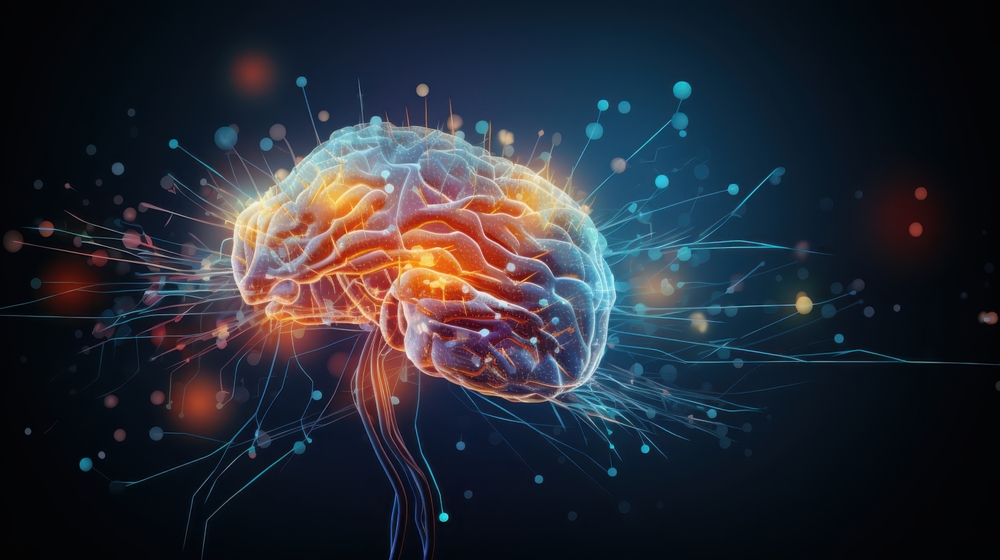
In a discovery that looks like science fiction, researchers have shown that human brains emit lights of light that can cross the skull. These signals are so tiny and weak that they are a million times darker that we can see, but new research shows that they could carry significant clues to the brain function.
In a study published in iscienceScientists at Algoma University and Wilfrid Laurier University in Ontario, as well as Toft University collaborators in Massachusetts, have decided to understand whether ultra-wek photon emissions, or UPEs, could be used to follow mental states. Their results open to a new completely passive way of monitoring brain activity.
What is brain light?
The UPEs are tiny amounts of light released by living tissues, which researchers have known for decades. Described for the first time in 1923, these weak glows were produced when excited molecules have returned to a state of rest, often as a by-product of metabolic processes such as energy consumption and oxidative stress. While all parts of the body emit certain ups, the brain gives off more than most because of its intense activity and its dense concentration of molecules of light.
Until recently, this phenomenon was more a curiosity than a practical tool. But it starts to change. Scientists have found that UPEs seem to move with changes in our mental state, fluctuating with sleep watch cycles, hormone levels, even cognitive efforts. The wavelengths of this light can also vary depending on age and brain health. Researchers now suspect that the ups can not only be by-products of brain activity, but could really play a role in the way cells communicate.
Despite growing interest, the ups have rarely been used in practice because of their difficulty in detecting. Light is incredibly weak and easily drowned by other signals, so it was not clear if it could be measured reliably or used to deduce something significant on the brain function.
Find out more: The brain treats information like the waves of the ocean
Measure brain light
To find out, the research team recruited 20 healthy adults and placed them in a completely dark room. Using sensitive photodetteurs called photomultiplicators tubes, they measured light emissions from two regions of the head: the back, where the brain treats visual information and sides, which take care of sound. In addition, the participants wore EEG (electroencephalography) Caps to follow the electrical activity of their brain.
More than 10 minutes, the participants were invited to close and open their eyes and listen to simple sounds, known tasks to affect cerebral rhythms. The researchers discovered that the ups were not only random static. The emissions followed slow rhythmic models and moved predictable during the various tasks. For example, the ups have changed significantly when people opened or closed their eyes, aligning with well -known changes in the activity of brain waves.
Above all, these light emissions were influenced by any external stimulus; They were completely natural passive signals from the brain itself.
New technology to measure brain activity
The idea of using ups to monitor the brain has an intriguing advantage on current imaging tools. TEP, IRM analyzes and even near infrared (FNIR) spectroscopy involve applying energy to the brain, which can in some cases influence activity that researchers are trying to study.
On the other hand, tools such as EEG and magnetotephalography (MEG) passively record electrical or magnetic signals without affecting the brain. The ups could offer a similar and light -based alternative.
Although the results are promising, the researchers point out that this is only the beginning. More sensitive detectors and filters will be necessary to unravel different lengths of brain light. Finally, automatic learning could help interpret these models and even detect the signs of brain disorders.
For the moment, this is a remarkable reminder: our brains don’t only think – they shine.
Find out more: The AI system of brain scanner can describe what you see
Article Sources
Our writers at Discovermagazine.com Use studies evaluated by high -quality peers and sources for our articles, and our publishers examine scientific precision and editorial standards. Review the sources used below for this article:
Having worked as a biomedical research assistant in laboratories in three countries, Jenny excels in translating complex scientific concepts – ranging from medical breakthroughs and pharmacological discoveries to the last nutritions – into accessible and engaging content. His interests extend to subjects such as human evolution, psychology and stories of eccentric animals. When it is not immersed in a popular scientific book, you will find it to catch waves or sail on the island of Vancouver on its longboard.