Great Salt Lake Changed More in the Last 200 Years Than in Millennia — And It’s Because of Us


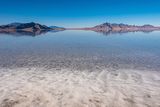
Utah’s large salt lake has always been an environmental change barometer. But new research reveals that over the past 200 years, human activity has pushed this emblematic body of water in a state unlike all that is seen in the last two millennia.
By studying the isotopes of carbon and oxygen preserved in the sediments of the lake bed, the geoscientists have reconstructed a dramatic history on the way in which agriculture and rail construction have reshaped the chemistry, salinity and the ecological balance of the lake.
“The lakes are large integrators. They are a point of focus for water, for sediments, and also for carbon and nutrients. We can go to lakes like this and look at their sediments, and they tell us a lot about the surrounding landscape, “said Gabriel Bowen, professor and president of the Department of Geology and Geophysics at the University of Utah, in a press release.
Published in Geophysical research lettersThe new study discovers not only how the lake reacted to the climate and human pressures over time, but also highlights the fragile future of the Salins Terminal lakes in the world.
Isotopes unlock 8,000 years of history
To dig into the rich history of the lake, the researchers analyzed two sets of sediment nuclei. The first nucleus has captured almost 8,000 years of history, withdrawing when the vast freshwater Bonneville lake has shrunk in the large modern salt lake. The second nucleus only represented the last centuries, covering the critical window when the European settlers have transformed the watershed.
Carbon isotopes have revealed changes in the way organic matter has entered and lived through the lake, while oxygen isotopes helped to reconstruct the delicate balance between evaporation and water from the terror. Together, these chemical signatures have offered a powerful calendar of environmental change.
Learn more: The shipwrecks and the lost cities date back to the surface while Lake Mead Dry
Human impact on the big salty lake
The sediment file has shown two deep disturbances of the last 200 years, both motivated by human actions.
The first occurred in the middle of the 19th century and involved a Mormon colony in 1847. After this colony, irrigation agriculture quickly spread around the large salty lake. Agriculture has loose the landscape of the desert, increased the amount of organic matter in the lake and considerably modified its carbon balance.
The second disturbance was more recent, which occurred around 1959 with the construction of the railway road to the Union Pacific which divided the north and southern arms of the lake. This barrier made by humans disrupted the natural exchange of natural water, causing a keen movement of salinity and balance, which are changes never seen before over thousands of natural variability of the lake.
Why the history of sediment counts for the future
Today, the Grand Lac Salé is at the heart of ecological, economic and cultural conversations in UTAH. Once a sprawling inner sea, the lake is now shrinking towards historic stockings, threatening the populations of migratory birds, the salum shrimp industries and air quality.
What makes this new study criticize is its ability to connect today’s crisis with a much deeper story. While scientists have long understood the ancient transformations of the lake and carefully monitors its current drying, the average scale – during the last centuries of human change – has been less clear so far.
“We have all these big observations, so much surveillance, so much information and interest for what is happening today. We also have a legacy of people who look at the enormous changes in the lake that have occurred on tens of thousands and hundreds of thousands of years. What is missing is the scale in the middle,” said Bowen in the press release.
This missing record now tells a story that gives to think: humans have already pushed the Grand Lac Salt in invisible conditions for millennia. Researchers hope that new information will help the lake’s successful management and conservation in the future.
Learn more: Drought at Lake Powell reveals a preserved world which was once lost
Article Sources
Our Discovermagazine.com writers use studies evaluated by high -quality peers and sources for our articles, and our publishers examine scientific precision and editorial standards. Review the sources used below for this article:


