Green sea turtle no longer Endangered


In a victory for ocean conservation, green turtles (Chelonia mydas) have come back from the brink of extinction. The International Union for Conservation of Nature (IUCN) has upgraded the keystone species from endangered to Least Concern. The global conservation organization moves species between categories once new data indicates changes in their population, threat levels or habitat.
“The ongoing global recovery of the green sea turtle is a powerful example of what coordinated global conservation over decades can achieve to stabilize and even restore populations of long-lived marine species. Such approaches must focus not only on the turtles, but also on keeping their habitats healthy and their ecological functions intact. Sea turtles cannot survive without healthy oceans and coasts, and neither will humans. Sustained conservation efforts are essential to ensure this recovery lasts,” Roderic Mast, co-chair of the IUCN Species Survival Commission’s Marine Turtle Specialist Group, said in a press release.
Measuring up to five feet long and weighing between 300 and 400 pounds, green sea turtles are one of the largest sea turtle species. Their plant-based diet gives their body fat its characteristic green hue. They are found all over the world, mainly in the subtropical and temperate regions of the Atlantic, Pacific and Indian Oceans, as well as the Mediterranean Sea. They are also considered expert navigators and have returned to some of the same grasslands for thousands of years.
Green turtles were first listed as endangered in the 1980s. For decades, they were hunted for their decorative shells and their meat used to make turtle soup. Their eggs were also considered a delicacy and dug up from their nests on the beaches. As their numbers declined in the late 20th century, conservation measures were implemented including patrolling beaches during the nesting season, protecting female turtles and their eggs, releasing hatchlings into the sea, helping fishermen, reducing the unintentional capture of reptiles in their nets, and more education on reducing the number of turtles killed for their meat and eggs.
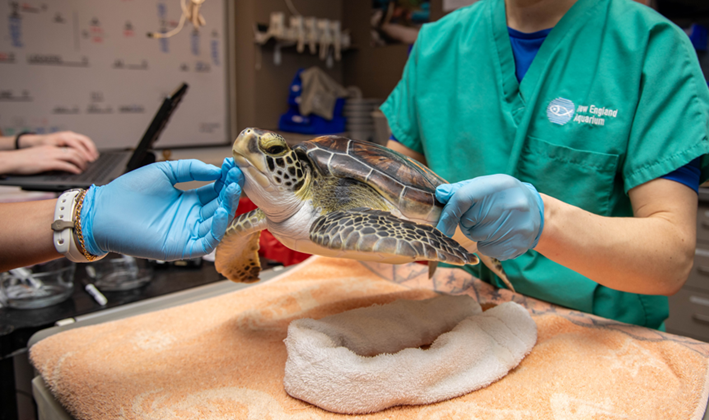
“This is a major victory for sea turtles that illustrates the power that global conservation efforts can have over time,” Dr. Letise LaFeir, chief of conservation and stewardship at the New England Aquarium, said in a statement.
The New England Aquarium in Boston is home to Myrtle. The green sea turtle, approximately 75 to 95 years old, has been delighting visitors for generations. The Aquarium’s rescue and rehabilitation team also spends several months each year caring for sick and injured green turtles at its sea turtle hospital in Quincy, Massachusetts. In June, 17 endangered or threatened sea turtles were released into the waters off Cape Cod, including three green sea turtles.
Despite these recent improvements, green turtles are still well below their historic numbers and face ongoing threats, including habitat loss and climate change. For example, feverish baby turtles are hatching on Raine Island, Australia. They are also frequently caught accidentally in fishing nets, further harming their populations.
The IUCN list now includes 172,620 species, of which 48,646 are threatened with extinction. Additionally, there are seven living species of sea turtles, two of which are listed as critically endangered (Hawksbill and Kemp’s Ridley sea turtles).
“The best way to save green sea turtles for future generations is through collaborative research and science-based protections. We hope the work we do will help keep the species moving in a positive direction,” added Dr. Kara Dodge, research scientist at the New England Aquarium.

Shop Amazon’s Prime Day Sale


