Guard against a corrupted Windows install with a system restore point


If you have ever had a bad Windows update or system corruption, you will know that it can cripple your operating system or operating system and render it useless. This is why you need to create a restore point before something goes wrong. A restore point is like an insurance policy that protects your operating system before the worst happens. Here’s how to create one.
What to do:
- In the Windows search bar, type restore. Then click on Create a restore point.
- When the new window opens, click Create. Make sure to put a description of your restore point. Click Create again after entering your description.
You have now created a restore point. Here’s how to use it if you ever need it.
- Right click on Windows icon and select Settings.
- Click Systemthen scroll down and select Recovery.
- In Advanced Startup, tap Restart now. Then click Troubleshooting > Advanced Options > System Restoree.
- A new window will appear. Click following then click on the restore point and click following Again.
- Restart your PC when prompted.
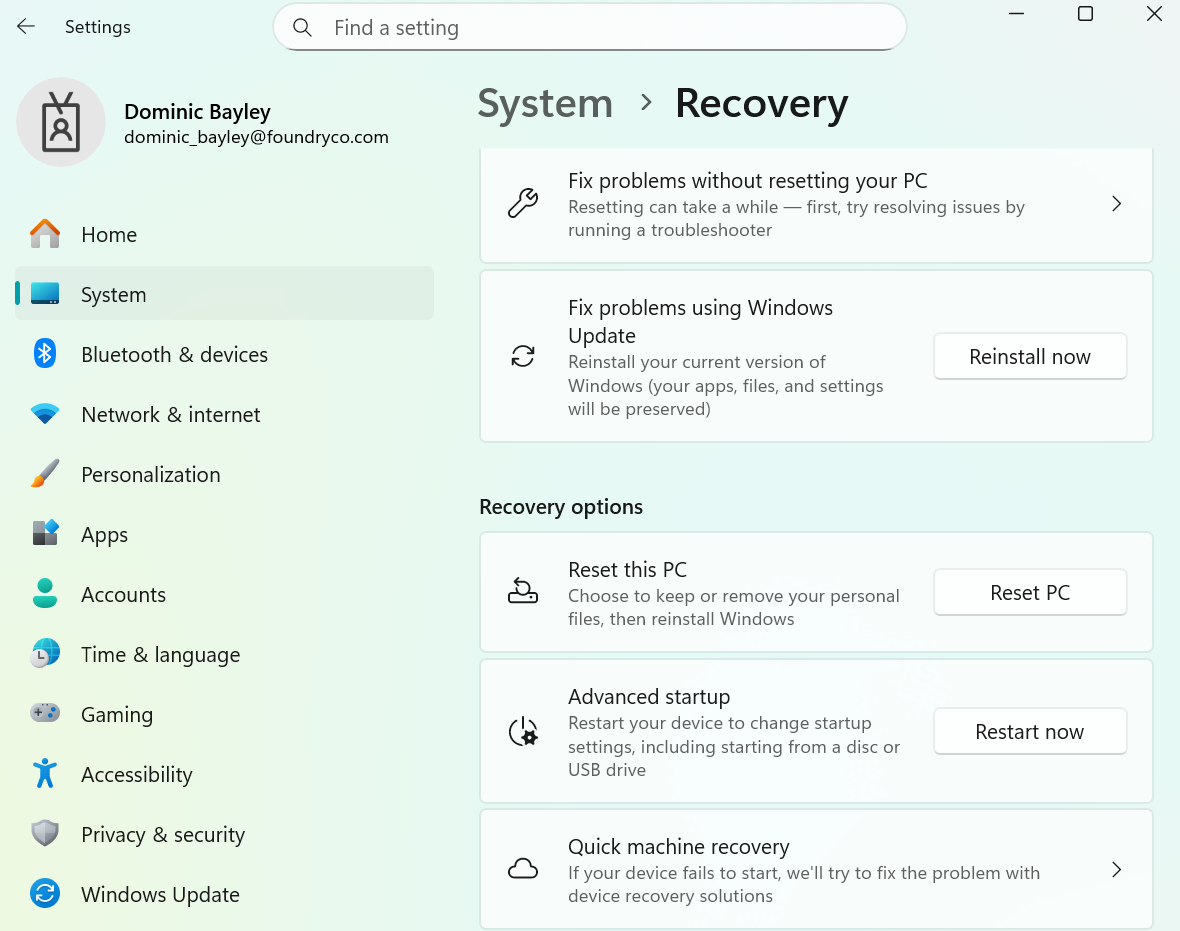
Dominic Bayley / Foundry
That’s it. Your computer should now be restored to the point where you saved the restore point, i.e. to its last working state.
Just something to note: System Restore is different from creating a backup. It works specifically on the underlying Windows system rather than anything on your hard drive. For this reason, it does not back up old copies of your personal files. It will not delete or replace any of your personal files when you restore. So don’t count on this as a full backup: for this you will need either an external drive or cloud storage.
That’s the end of this edition of Try This. For more tips and tricks, be sure to subscribe to our PCWorld Try This newsletter.


