Neurotic robots like C-3PO appear more relatable to people, study finds : NPR


Robots with neurotic personalities, at the C-3PO of the reputation of Star Wars, can be related to people, according to a new study.
Gregory_dubus / Getty Images
hide
tilting legend
Gregory_dubus / Getty Images
Although neurotic robots are a must of science fiction-just think of the C-3PO in Star Wars or Marvin in the Galaxy Hoor-Cask Guide-they were not really a research goal on the way people react to the personalities of the robots.
But a recent study found that a highly neurotic robot caused interesting answers.
“A majority of participants have in fact mentioned how much they found the neurotic robot,” said Alex Wuqi ZhangResearcher at the University of Chicago. “They found it much more relatable.”
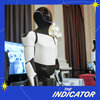
The experience involved a robot in human form in white plastic. People who visited a museum in Chicago were invited to come into a room and interact with the robot, which was described as a restaurant greetter. The bot and the person had to sit together and answer a few simple questions.
“The first is:” What are the three things you are grateful? “” Said Zhang.
When the robot had received a very extroverted personality, he spoke of being “super grateful” for the “incredible people” that he was able to meet every day. “This is the best part of my work, hands down!” The enthusiastic robot.
But when the robot had received a highly neurotic personality, he spoke more temporarily, swiveling his response with filling words like “UM”. He said it was grateful to have a job where he could keep things organized so that she could stay focused and avoid “unexpected problems”.
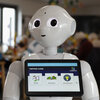
The experience also included a third version of the robot with a more typical robot personality that was bland and flat. People generally did not like that one.
Overall, they evaluated the extraverted robot as the most pleasant to interact.
But the neurotic robot has been described as surprisingly capable of understanding deep emotions.
A person pointed out that the neurotic robot “seemed to be a person who was trying to get out of it in the world”, while another commented: “I think we both seem to make an effort to think of ourselves and make a lot of inner contemplation.”
“We found a lot of joy and pleasure to see this personality,” said Sarah SeboComputer researcher at the University of Chicago and one of the study authors. “We estimated that there was a lot of novelty to try to explore, as, what does it mean for the robot to express neuroticism.”
“But at the same time,” she says, “I think there is also a question of knowing when it would be really useful.”
Massively, previous research on the personalities of robots has focused on a single personality trait: extraversion, which implies being outgoing, social and affirmed.
The emphasis on extraversion is understandable, says Lionel RobertWith the University of Michigan, given that robots are sold to perform skills based on skills that require an appearance of positivity and confidence, such as customer service.
Neurotic features – such as anxiety, concerns about performance, as well as fear and sadness – were not considered useful.
“For example, imagine if your autonomous vehicle was neurotic,” said Robert. “This is not a trait you would be satisfied.”
People don’t want to pay a lot of money for a robot car that doesn’t seem sure, he said.
However, if you build a robot actor, a little neuroticism could be useful.
And robots can sometimes irritate people by accepting everything they say or being tirelessly, underlines Sooyeon Jeong of the Purdue University.
She remembers a student who used a chatbot as a resonance box and found it too cheerful.
“He became frustrated,” she recalls. “He really wanted to use the agent to practice some of the difficult conversations or the social interactions he would have in the real world.”


