He wanted a “meet-cute” story— but met a matchmaker instead. The rest of Gen Z might not be far behind.


New Yorker Shardil Ahmad always imagined meeting his future girlfriend in a cafe: he would see her leafing through a book, approach curiously and they would strike up an easy conversation.
“I really describe myself as a romantic guy — I’m really into ‘meet cute’ and stuff like that,” Ahmad, 28, said, recalling a time he met a woman on the subway.
So when his mother suggested a matchmaker, the first-year medical resident was skeptical.
“I wanted to be the one to discover this person,” he said.
But after a few months, Ahmad, who had little free time outside the hospital after working six days a week, decided to sign up.
He joins a growing number of Gen Z singles seeking alternatives to algorithms amid reports of widespread dating app fatigue and a decline in user numbers. For some young people looking to make connections in real life (IRL), matchmakers make sense.
“I’m just letting someone take the wheel,” Ahmad said.
CBS News 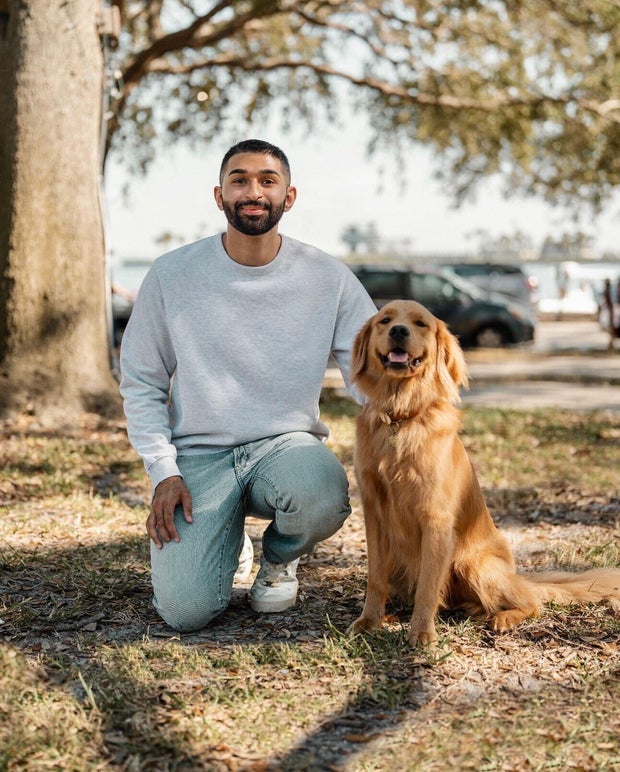
After the wave of swipes, interest in dating apps wanes
During the COVID-19 pandemic, dating apps saw record highs; Tinder recorded 3 billion swipes in a single day. Match Group, the parent company of dating apps like Tinder and Hinge, reported an increase in subscribers compared to the previous year.
Six years later, some disenchanted daters are disconnection. Match Group recently reported a 5% decline in paid subscribers compared to the same period last year, as Gen Z takes advantage of the in-person opportunities they missed during the pandemic.
The free press: Tough Love: Do I like being single too much to fall in love?
Maria Avgitidis, founder of matchmaking agency Agape Match and a fourth-generation matchmaker, says she has seen an increase in awareness among young singles. Matchmakers across the country told CBS News they’re seeing an increase in younger clients craving in-person connection and moving away from dating apps.
“A lot of them graduated from high school or college via Zoom, so they really want that intentionality of real-life experiences,” Avgitidis said.
Even as Gen Z delays marriage and parenthood, the majority ultimately want these things, according to the latest available data from the Pew Research Center. Nearly 70% of adults ages 18 to 34 who have never been married say they want to get married someday, with men and women equally likely to say they would like to get married.
“If you’re not dating to get married, why are you dating?” » said Ahmad.
Over the past decade, Avgitidis said he’s seen people burned out on online dating and looking for things a profile alone can’t reveal.
“The language has changed dramatically about why someone was using us,” she said, noting that things like values and politics don’t always show up in a dating app’s profile. She noted that members of Generation Z especially tend to consider things like lifestyle, hobbies and having a life plan.
“They really appreciate authenticity,” she said. “It’s not so much about fitting into a certain aesthetic.”
Matchmaking is in, but love is expensive
A growing interest in matchmaking has been reflected in popular culture, from reality shows such as “Indian Matchmaking,” which has since expanded into “Jewish Matchmaking” and “Muslim Matchmaker,” to films such as “Materialists” starring actress Dakota Johnson as a jaded Manhattan matchmaker, Lucy.
Matchmaking services can cost anywhere from a few thousand to a hundred thousand dollars, depending on what is included. Some high-end matchmaking companies charge between $15,000 and $25,000 for arranged matches. Avgitidis said that at Agape, services can range from $30,000 to $100,000.
Working with a matchmaker is a multi-step process, typically involving a thorough initial investigation, a screening interview and a consultation before a match is made, experts said. Matchmakers create detailed profiles of their clients and their potential matches, including information about their compromises, preferences, and religious and political ideologies.
For Ahmad, the financial aspect contributed to his initial hesitation to use matchmaking services.
“How am I going to spend so much on love?” he said.
But verified matches and intentional dating ultimately seemed like a time saver for Ahmad, who said he recognizes that services may be inaccessible for some people his age.
“I would recommend anyone to do it if they have the time and financial ability,” he said.
Gen Zers who want the experience of matchmaking, but feel intimidated by the price, still have options in the world of matchmaking. Some matchmaking agencies have free databases, where you can submit a profile that will be considered as a potential match for a paying client. Agencies also offer packages that may include one-on-one coaching sessions, dating app profile feedback, and dating support communities.
When in doubt, Avgitidis reminds dates that good old meddling from family and friends is always an option. After all, dating used to be a collective experience, Avgitidis said, with friends and family members involved.
“One day we all started sliding around on the couch alone,” Avgitidis said. “We’re not supposed to go out alone.”


