Help yourself to stronger immunity


March 3, 2026
3 min reading
 Add us on GoogleAdd SciAm
Help boost your immunity
Supplements, surprising treatments, immunity-boosting vaccines and even exercises can help the immune system do its job.
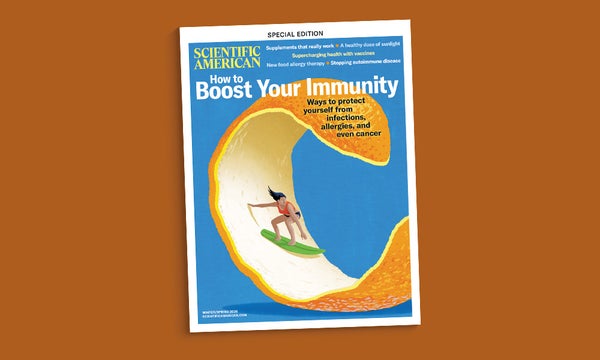
You contain multitudes. Within you are billions of defenders, ready to protect your health from threats occurring both outside and inside your body. It’s your immune system, and it consists of a complex combination of cells and proteins capable of detecting and destroying cold-causing viruses, infectious bacteria, and even wayward versions of your own cells that are on their way to becoming cancerous.
But sometimes, when faced with the flu, an allergy, an autoimmune disease like multiple sclerosis, or a life-threatening tumor, your immune system might need a little help.
He could benefit from an advantage, a boost, additional resources to keep you healthy. Supplements, surprising treatments, immunity-boosting vaccines and even exercises can help the immune system do its job. The big question is: which ones work best? Tons of supplements and vitamins that promise to help with immunity line the drugstore and supermarket aisles, and friends and family all have their favorite teas and creams that they swear help. The choices can be confusing.
On supporting science journalism
If you enjoy this article, please consider supporting our award-winning journalism by subscription. By purchasing a subscription, you are helping to ensure the future of impactful stories about the discoveries and ideas shaping our world today.
That’s where science comes in. For the articles in this special edition, we researched immune boosters backed by randomized controlled trials — the best way to compare treatments to see which is most effective. We also looked for studies involving large groups of people. And we interviewed experts in immunology and specific diseases.
Omega-3 fatty acids are praised for how they reduce harmful inflammation. The same goes for the yellow ingredient in turmeric, curcumin. Learn more about these supplements. Regular use of the former can reduce the risk of heart attack and the latter can alleviate osteoarthritis symptoms. Vitamin D, on the other hand, is not the panacea as once claimed. It turns out that most people make enough of it themselves, because our skin uses energy from the sun to create the vitamin. Additionally, it is found in fortified milk and in fish like salmon.
But vitamin D appears to reduce the risk of developing certain autoimmune diseases like lupus and psoriasis. And sunlight itself can be a good remedy for autoimmune diseases, balancing your immune response to reduce the symptoms of multiple sclerosis and type 1 diabetes, as our story explains.
Stuffed with a cold or an allergy? This is usually due to tissue swelling caused by your immune response. Your best treatment may be the over-the-counter decongestant pseudoephedrine. And saline nasal sprays work great. For food allergies, learn about new immune system medications and treatment protocols that have significantly helped children with life-threatening reactions to peanuts. Animal allergies can be relieved through an approach called hyposensitization.
To treat diseases such as cancer, doctors have exploited the immune system’s precise targeting of antibodies to guide chemotherapy directly to cancer cells, as we describe here. But medications are not the only treatment. Regular exercise, as simple as several hours of brisk walking a week, leads to longer survival for some cancer patients and more immune cells attacking their tumors.
Mysteries about immunity persist, including why stimulation of a major nerve called the vagus nerve appears to enhance the protective effects and why women get more autoimmune diseases than men. But scientists are trying to turn the information gleaned from probing these mysteries into cures. So further boosts to the immune system could be coming soon.
It’s time to defend science
If you enjoyed this article, I would like to ask for your support. Scientific American has been defending science and industry for 180 years, and we are currently experiencing perhaps the most critical moment in these two centuries of history.
I was a Scientific American subscriber since the age of 12, and it helped shape the way I see the world. SciAm always educates and delights me, and inspires a sense of respect for our vast and beautiful universe. I hope this is the case for you too.
If you subscribe to Scientific Americanyou help ensure our coverage centers on meaningful research and discoveries; that we have the resources to account for decisions that threaten laboratories across the United States; and that we support budding and working scientists at a time when the value of science itself too often goes unrecognized.
In exchange, you receive essential information, captivating podcasts, brilliant infographics, newsletters not to be missed, unmissable videos, stimulating games and the best writings and reports from the scientific world. You can even offer a subscription to someone.
There has never been a more important time for us to stand up and show why science matters. I hope you will support us in this mission.

:max_bytes(150000):strip_icc()/Health-GettyImages-PomegranateVsCranberryJuice2-31a7a9c09c9e41d2aafe80b4c8e31f2a.jpg?w=390&resize=390,220&ssl=1 "Which Is Better for Blood Pressure and Urinary Health?")


