HEPA air filters’ latest advantage is lowering blood pressure, study finds


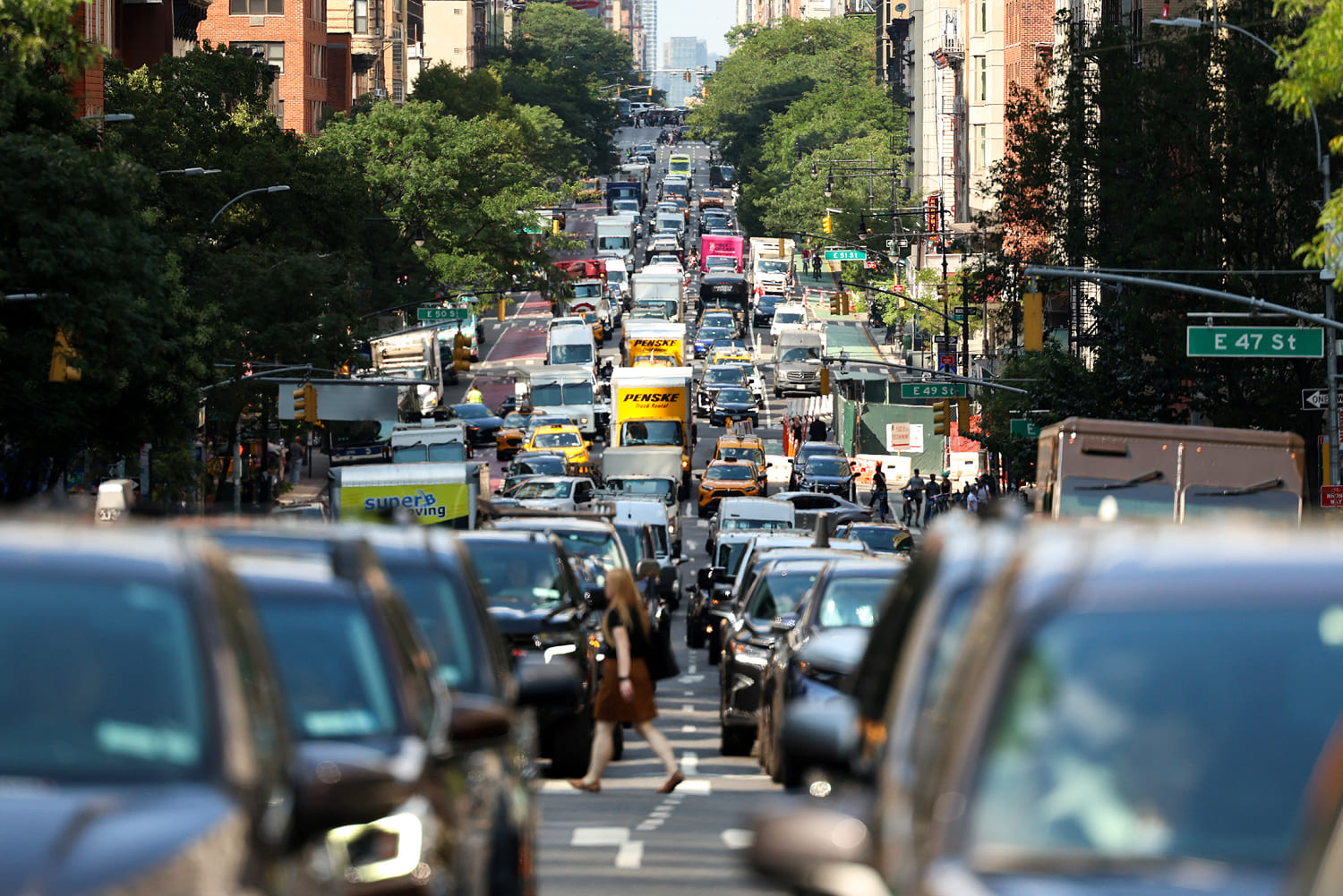
People whose houses are close to highly frequented highways can reduce their blood pressure by operating an air purifier with a HEPA filter, a study revealed.
According to the report published Wednesday in the Journal of the American College of Cardiology.
Doug Brugge, principal author of the study and professor and president of the Department of Public Health Sciences at Uconn Health in Farmington, recognized that 3 points may resemble a small reduction.
“But medical literature shows that even on this magnitude, there may be a significant advantage in terms of reducing the risk of serious cardiovascular results, such as the heart attack and strokes,” he said.
According to the new research, almost a quarter of Americans live near the busy roads. People may not realize that they are exposed to air pollution linked to traffic because it is invisible, odorless and can be easily missed, said Brugge. However, high levels of the smallest particles found in air -related air pollution are known risk factors to develop high blood pressure and heart disease.
The blood pressure is measured with two numbers: systolic pressure (the upper number) and diastolic pressure (the lower number). A reading of less than 120/80 mm Hg is considered normal.
Almost half, about 119.9 million, from adults to the United States suffering from hypertension, or high blood pressure, according to 2023 estimates of centers for Disease Control and Prevention.
To determine if the installation of two portable air purifiers and available in the trade with HEPA filters could improve heart health, Brugge and its colleagues have sought healthy volunteers whose houses were near the roads that exposed them to high levels of tiny particles of vehicle emissions, as well as particles associated with tires and brakes.
The researchers randomly assigned 154 volunteers to two groups. One would have two HEPA filters in the most common rooms used in their homes – one in the living room and the other in the bedroom. The other would receive simulated filters. Then the groups would be switched.
After a month of life with HEPA filters, volunteers who had slightly high blood pressure at the start of the study saw a 2.8 -point drop in systolic blood pressure, the upper number that the American Heart Association considers the strongest predictor of future heart problems.
On the other hand, those who live with Sham filters have seen a drop of 0.2 points.
People with normal blood pressure have not seen the use of HEPA.
The type of air filters used in the study was comparable to that of consumers can easily buy in a store or online, said Brugge.
The new study is “intriguing,” said Dr. Matthew Alexander, assistant professor of medicine at the Cardiovascular Medicine Division at the Vanderbilt University Medical Center in Nashville, Tennessee.
Everyone’s blood pressure has not changed, just those that have more than 120 systemic pressures at the start, said Alexander. “It was a modest, but clinically significant effect,” he added. “And this would correspond to a reduction of approximately 6% of the risk of unwanted heart events, such as heart attacks, strokes or cardiovascular death.”
Alexander would like to see more studies, those with more participants and a wider range of blood pressure.
Like Steven Chillrud, pollution expert and research professor at the Lamont-Doherty Earth Observatory at Columbia University in Palisades, New York.
It is likely that the filtering would even help people who do not live near the roads, because traffic is not the only source of air pollution, said Chillrud.