Aging Rates Vary by Country. Politics Might Be Why


Aging rates vary according to the country. Politics could be why
Social inequality and the decomposition of democratic institutions are linked to accelerated aging, but education seems to slow down the process
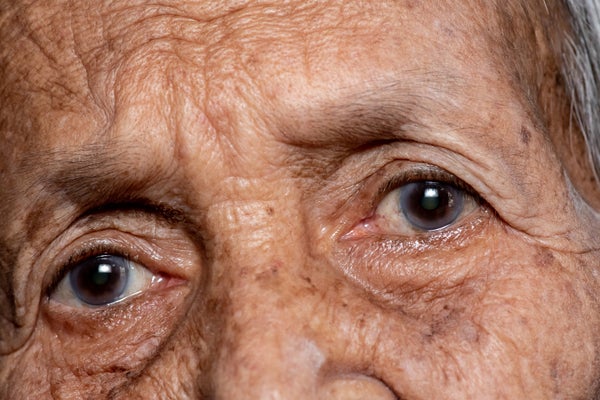
Social inequality and weak democratic institutions are linked to faster aging, as are other environmental characteristics such as high levels of air pollution, finds a study covering four continents. Education was one of the main factors that protected faster aging.
The study has also shown that aging is accelerated by less surprised factors such as high blood pressure and heart disease. But the link with social and political influences could help explain why aging rates vary from country to country, according to the authors.
“This is a very important study,” explains Claudia Kimie Suemoto, geriatrician at the University of São Paulo in Brazil who was not involved in the work. “This gives us the global perspective of how these dependent factors shape aging in different regions of the world.”
On the support of scientific journalism
If you appreciate this article, plan to support our award -winning journalism by subscription. By buying a subscription, you help to ensure the future of striking stories about discoveries and ideas that shape our world today.
Political polarization and uncertainty mean that “we live in a world of despair”, and that people age, says the main author Agustín Ibañez, who directs the Latin American Institute for the Health of the Brain of Santiago. “We do not think of the health impacts that it will have in the long term.”
The study was published today in Nature Medicine.
Age gaps
The study included 161,981 participants from 40 countries: 7 in Latin America, 27 in Europe, 4 in Asia and 2 in Africa. The only process of harmonization of these data sets – such as verification that the variables have been measured in a similar way in different countries – has taken about 3 years, explains Ibañez.
Researchers have examined previous research to identify the possible factors that accelerate or slow down aging and which could be compared between countries. They have fed the data from these factors in an automatic learning model that predicts a person’s chronological age. This allowed them to calculate “the biobehavioural age gap” of each person: the difference between their true chronological age and their age as planned by the model.
For example, if you are 50 years old but the model predicts that you are 60, you have a 10 -year biobehavioural age gap.
Schooling protects
The main medical risk factors for faster aging were high blood pressure, hearing disorders and heart disease. Other risk factors included an unhealthy weight, alcohol consumption, sleep problems, diabetes and altered vision.
The factors that offer the best protection against rapid aging were education, the ability to carry out daily life activities and solid cognitive capacities. Other protective factors included physical activity, good memory and the ability to work well.
Egypt and South Africa have had the fastest aging, while European countries have shown the slowest aging, and nations in Asia and Latin America were in the middle.
Accelerated aging was strongly linked to the markers of the eroding of democracy – such as restricted voting rights, unfair elections and restrictions on the freedom of political parties. “We didn’t expect that,” said Ibañez. Faster aging was also linked to the drop in national income levels, exposure to air pollution, social inequalities and gender inequalities.
The researchers had data points up to 4 years apart for 21,631 participants, allowing a comparison over time. In these data sets, a larger biobehavioural age difference predicted a greater drop in cognition and the ability to perform daily tasks.
Stress toll
The way in which physical aging is linked to the socio-economic and political environment of a person is not clear, but Ibañez assumed that the mechanism could be the physical effects of stress on the body and the brain. “Inflammation is a huge potential path,” he says.
One of the limits of work with data from so many countries, known as Ibañez is that researchers had to omit many variables, such as smoking, which are known to strongly affect aging, but have been measured in a very different way in all countries.
Another limitation, known as Suemoto, is that 4 years of follow -up data “are very limited for the aging process”. She would like to see data points at 10 or 20 years apart.
Suemoto and Ibañez are enthusiastic about the possibility that public policy can be adapted to the factors that contribute most to aging in a specific nation.
Curiously, the model predicted that some people were biologically younger than their chronological age. Perhaps the study of the factors that these people have in common could indicate interventions to protect others from premature aging, says Ibañez.
This article is reproduced with permission and was first publication July 14, 2025.


