Police in Venezuela block protesters calling for higher wages, pensions

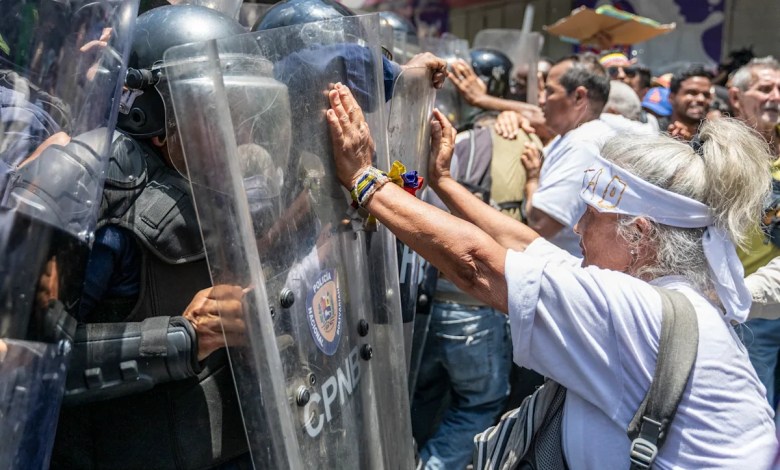
Union leaders, retirees and public sector workers in Caracas, the Venezuelan capital, marched to the presidential palace to demand higher wages and dignified pensions, but were met with police blockades.
Thursday’s protests took place the day after interim President Delcy Rodriguez went on national television to ask for patience from public and private sector workers as her government works to improve the country’s economy.
For years, workers’ salaries have not allowed them to meet basic needs. Many public sector workers survive on about $160 a month, while the average private sector employee earned about $237 last year.
“Call elections and leave. That’s what Venezuelan workers want today,” said José Patines, a union leader on the march, describing what he would like to see from the country’s interim government.
“Because if, on May 1, they come with a raise of a few dollars, no, we don’t need it. We want a salary with purchasing power.”
National police officers were deployed early Thursday to downtown Caracas to intercept the march.
On several occasions, the demonstrators managed to cross the first barriers. Reinforced roadblocks eventually stopped the crowds, leaving the majority of protesters about two kilometers from the presidential palace in Miraflores.
No injuries or arrests were immediately reported during the clashes between police and demonstrators.
Rodriguezin his speech, promised workers a wage increase on May 1. She did not disclose the amount but said it would be done in a way to avoid the inflationary surge that followed the latest minimum wage increase.
“This increase, as we have indicated, will be a responsible increase,” Rodriguez said. “Likewise, in the near future, as Venezuela gains more resources to sustain wage improvements and worker incomes, we will continue to move forward on this path. »
Venezuela’s minimum wage of 130 bolivars, or $0.27 per month, has not increased since 2022, putting it well below the United Nations extreme poverty measure of $3 per day. However, many public sector employees earn more through bonuses and other allowances that can bring their monthly income up to $160.