Holiday traditions for US troops stationed overseas this season


NEWYou can now listen to Fox News articles!
As families across the United States gather for the holidays, thousands of U.S. service members are spending the season overseas, marking the occasion away from home while continuing their duties.
U.S. troops remain deployed in Europe, the Middle East and the Indo-Pacific, supporting missions ranging from NATO deterrence operations to maritime patrols and humanitarian assistance. While Christmas abroad rarely resembles celebrations at home, service members often find ways to recognize the holiday within the confines of their mission and location.
At overseas installations, troops typically decorate work spaces, living areas, and dining areas with lights, trees, or makeshift decorations. Many bases host special holiday meals, often with commanders and senior enlisted leaders serving food.
Chaplains typically hold Christmas services when schedules and safety permit, sometimes in chapels, sheds or temporary facilities. For Sailors deployed at sea, Christmas is often celebrated between watches, with decorated mess decks and elaborate holiday meals based on operational requirements.
The holiday season also brings awareness efforts from senior leaders. In recent days, War Secretary Pete Hegseth has issued Christmas appeals from the Pentagon to service members stationed around the world, including in South Korea, Kuwait, Norway, Greenland and aboard a Navy aircraft carrier operating in the Pacific. The calls were intended to thank service members for staying vigil away from home and to recognize the range of missions that continue during the holidays.
AMERICANS TURNED CHRISTMAS DINNER INTO PATRIOTIC DUTY DURING WORLD WAR I WITH WAR RECIPES
In Japan, where thousands of U.S. military personnel are stationed year-round, bases often emphasize community morale and traditions during the holidays. At Yokota Air Force Base, leaders delivered baked cookies to Airmen living in dormitories as part of the installation’s annual “Cookie Crunch,” a tradition aimed at supporting those spending the holidays away from their families.
Other facilities in Japan and the Pacific typically host concerts, meals, and volunteer events sometimes attended by communities from the host country.
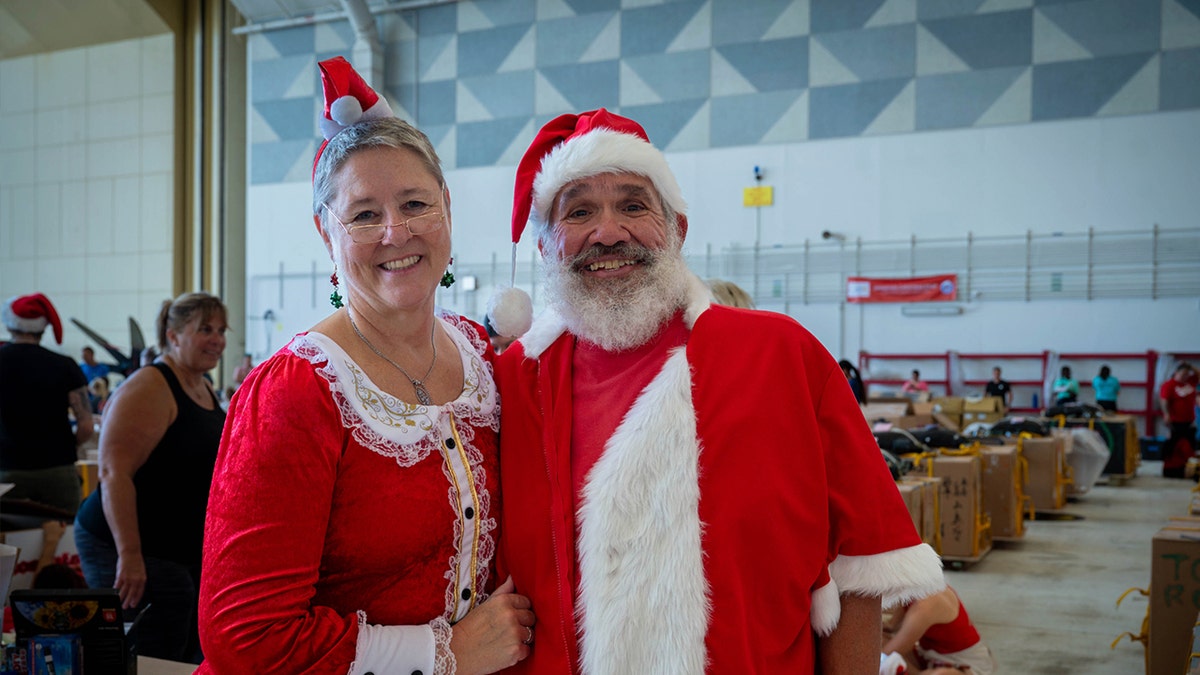
Operation Christmas Drop 2025 volunteers smile for a photo at Guam Air Force Base. (Senior Airman Alexzandra Gracey/Air Force)
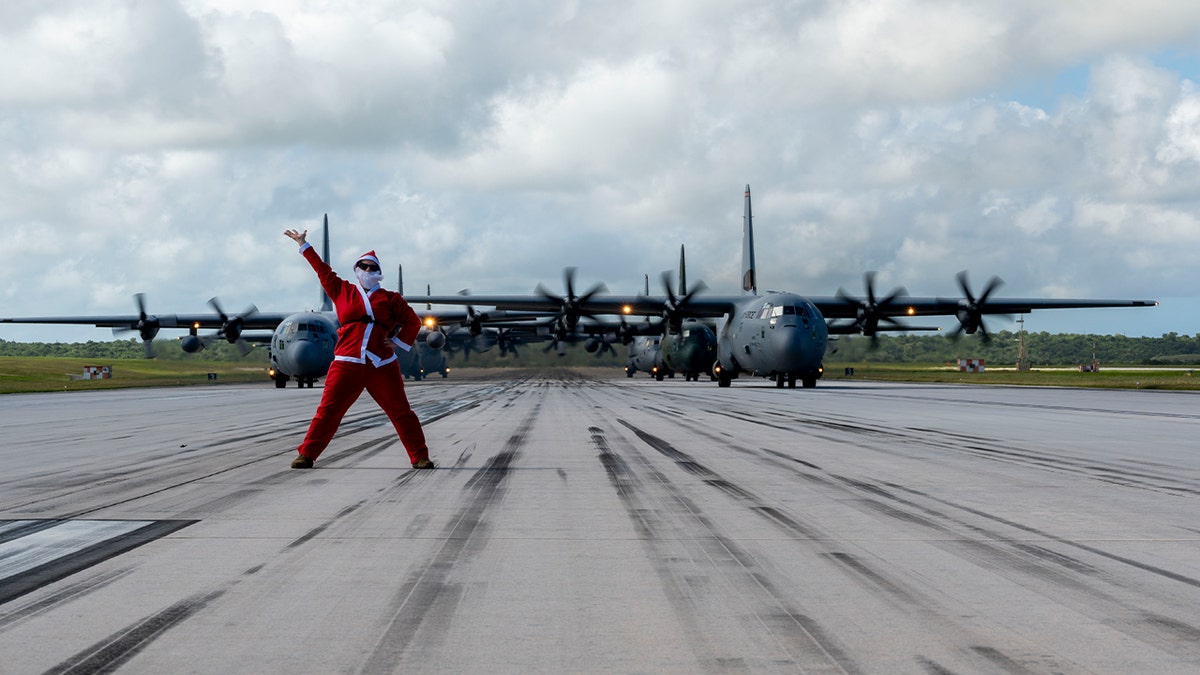
Operation Christmas Drop highlights the capabilities of the United States and its allies and partners to rapidly mobilize and project power and airlift operations at a moment’s notice. (Senior Airman Samantha White/Air Force)
The military reveals how much turkey is shipped around the world to ensure U.S. troops enjoy the Thanksgiving meal.
Elsewhere in Japan, the US Band of the Pacific played Christmas music for local audiences, using seasonal concerts as a way to engage surrounding communities during the holiday period.
One of the Army’s most visible holiday efforts in the region is Operation Christmas Drop, the War Department’s longest-running humanitarian airlift mission. The operation, now in its 74th year, recently concluded at Andersen Air Force Base, Guam, where multinational teams prepared and delivered hundreds of aid packages by C-130 aircraft to isolated Pacific island communities.
The mission combines humanitarian assistance with airlift training and regional cooperation.
Vacation experiences also vary depending on the type of mission. In countries like Japan and parts of Europe, many U.S. soldiers serve accompanied missions, meaning their spouses and children live with them overseas.
Bases in these regions often host larger holiday events and family-oriented activities.
In contrast, deployments to the Middle East and parts of Africa are generally unaccompanied, with service members living on bases or in forward locations without the presence of their families. In these environments, holiday celebrations are generally more restricted and conditioned by operational and security constraints.
This distinction also affects leave. Troops stationed overseas on long-term missions may be eligible to return home for the holidays if schedules permit, while military personnel deployed on rotation or combat deployments generally remain in place, with units maintaining normal personnel and mission requirements throughout the season.
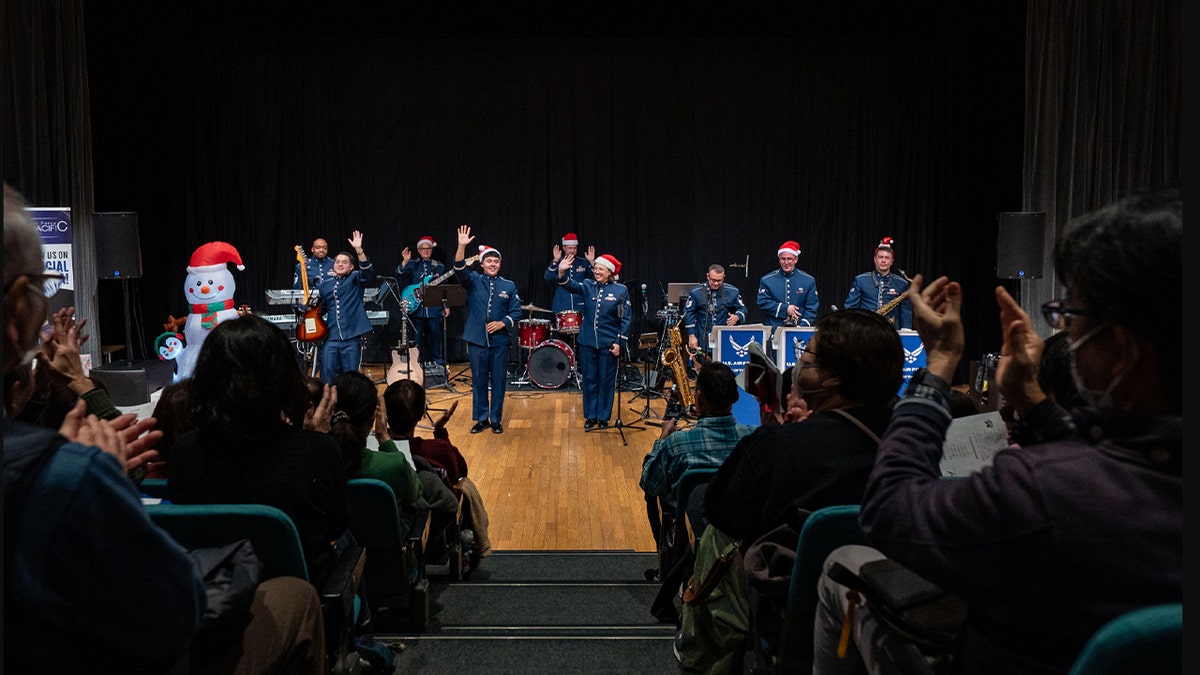
In Japan, the US Band of the Pacific played Christmas music for local audiences, using seasonal concerts as a way to engage surrounding communities during the holiday season. (Airman 1st Class Kayla Karelas/Air Force)
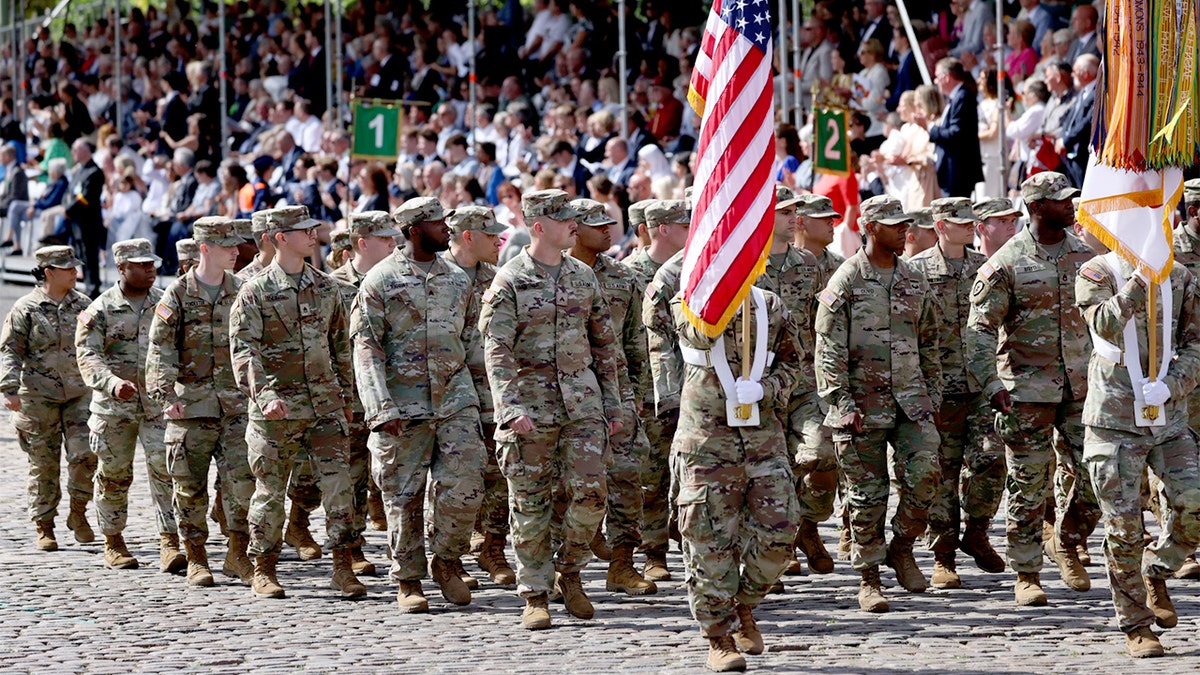
Soldiers of the American army participate in the military and civilian parade for National Day 2025, Place des Palais – Paleizenplein, July 21, 2025, in Brussels. (Xavier Piron/Photonews via Getty Images)
Across Europe, U.S. forces are celebrating the holidays while supporting NATO missions and forward presence efforts. Senior leaders are using this season to recognize the sacrifices of those stationed abroad. In a holiday message to troops, U.S. Army Command Sgt. Maj. TJ Holland encouraged Soldiers to spend time in local culture and connect with family when possible.
U.S. Air Force Gen. Alexus G. Grynkewich also thanked the service members and their families for their service.
CLICK HERE TO DOWNLOAD THE FOX NEWS APP
For many deployed troops, United Service Organizations (USOs) play a key role during the holidays. Across Europe, the Middle East and the Indo-Pacific, USO centers, mobile vehicles and expeditionary teams provide festive meals, seasonal decorations and spaces where service members can rest and connect.
Mobile USO teams often reach personnel stationed in remote or demanding locations, providing brief opportunities to recharge.
For deployed units, holidays are often celebrated quietly rather than ceremonially. Traditions differ depending on location, mission and security environment, but service members continue to find small ways to recognize the season before returning to the routines of deployment.