
January 14, 2026
2 min read
 Add Us On GoogleAdd SciAm
Horses Can Smell Your Fear, Bizarre Sweat Study Finds
Horses that were presented with cotton pads soaked in a scared human’s sweat showed more signs of fear themselves
Camille Loiseau/500px via Getty Images
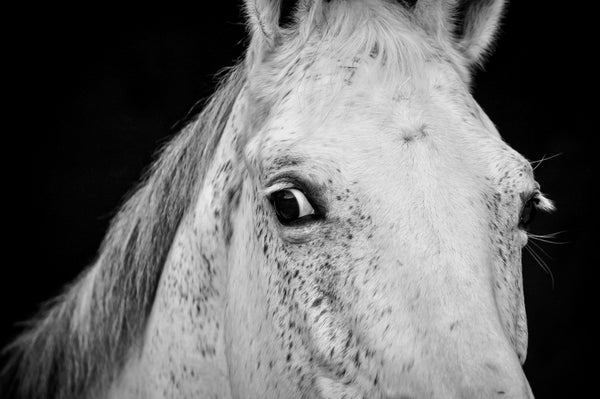
Horses can smell human fear—and it changes their behavior.
That’s the takeaway of a rather unusual experiment that involved making horses smell material soaked in human sweat and observing what they did next. The findings were published today in PLOS One.
Horses exposed to samples of sweat from people who had had a scary experience appeared more afraid themselves: the animals were easily startled, hesitated to come up to the researchers and became less likely to interact with unknown objects.
On supporting science journalism
If you’re enjoying this article, consider supporting our award-winning journalism by subscribing. By purchasing a subscription you are helping to ensure the future of impactful stories about the discoveries and ideas shaping our world today.
“Our emotions are central when interacting with horses,” says Plotine Jardat, lead author of the study and a horse behavior and welfare researcher at France’s National Research Institute for Agriculture, Food and Environment. “If your horse does not cooperate on an exercise you are proposing, maybe trying it another day when you feel differently can be a game changer.”
Researchers already knew that horses can respond to humans’ emotional cues, including facial expressions and tones of voice. But the new study went further by investigating whether horses could smell different emotions emanating from humans without those visual or oral cues.
In the experiment, a group of people with cotton pads under their armpits watched movie clips geared to produce a sense of joy; these included the dance scene in the film Singin’ in the Rain and the song “We Go Together” from the movie Grease. The researchers then asked the participants—armed with new cotton pads—to watch 20 minutes from the horror film Sinister to stimulate fear.
The sweat samples were then stapled into a custom muzzle for the horses to wear. To limit the stress on each test horse, an “audience horse” served as a witness to the behavior tests.
The researchers first measured how often a test horse would interact with the experimenter depending on what it was smelling, both while it was being groomed and while the experimenter stood slightly apart from the animal. Horses that smelled the fear samples touched the experimenter less than those in a control group or those that smelled joyful sweat samples.
The team then tested the horses’ reactivity by opening an umbrella near a bucket of food. Once again, horses that smelled the fear sweat showed a different reaction than those that smelled anything else. Their physical reactions to being startled were stronger, and their heart rates were higher.
The last test involved presenting the horses with a novel object—a sculpture of sorts, made of linoleum, plastic and string. The researchers recorded how often a horse gazed at the object and how often the animal touched it. The horses in the fear group touched the novel object less often and stared at it from a distance more than their peers did.
Taken together, the horses’ reactions indicate they can sense fear from odor alone, the researchers conclude. What the study doesn’t answer is why horses can apparently do this: the ability could be a result of domestication, or it could stem from some underlying mammalian characteristic. But regardless, perhaps don’t go up to a horse immediately after watching a horror film.
It’s Time to Stand Up for Science
If you enjoyed this article, I’d like to ask for your support. Scientific American has served as an advocate for science and industry for 180 years, and right now may be the most critical moment in that two-century history.
I’ve been a Scientific American subscriber since I was 12 years old, and it helped shape the way I look at the world. SciAm always educates and delights me, and inspires a sense of awe for our vast, beautiful universe. I hope it does that for you, too.
If you subscribe to Scientific American, you help ensure that our coverage is centered on meaningful research and discovery; that we have the resources to report on the decisions that threaten labs across the U.S.; and that we support both budding and working scientists at a time when the value of science itself too often goes unrecognized.
In return, you get essential news, captivating podcasts, brilliant infographics, can’t-miss newsletters, must-watch videos, challenging games, and the science world’s best writing and reporting. You can even gift someone a subscription.
There has never been a more important time for us to stand up and show why science matters. I hope you’ll support us in that mission.


