How 3D printers are transforming everything from homes to jaw surgery


The news of Murray Leinster Things passPosted in 1945, includes what can be the first description of 3D printers:
But this manufacturer is both effective and flexible. I feed magnetronic plastics – what they do with houses and ships today – in this moving arm. He makes drawings in the air according to the drawings he scans with photos. But the plastic comes out of the end of the drawing arm and hardens as it comes … according to the drawings only.
Practical 3D printers, or additive manufacturing, as it is also called, has existed since the 1980s. After some theoretical experiences, American Bill Masters has developed and patented several techniques that made the foundations for the first commercial 3D printers. 40 years later, 3D printers have become so cheap and easy to use that any interested person can get one.
Rapid development
For a long time, technology was only used as a means of quickly creating prototypes before the production of a final design in a more mature and cheaper process such as injection molding. For a long time, it was also possible to print 3D objects in various plastic materials, but in recent years, applications and materials have been widened.
“What I have seen is that 3D printers have gone a long way in recent years. The hardware and software have improved, but more importantly, the ecosystem has matured. is now an evolution where 3D printers spread from specialists to broader use in industry and among consumers, “explains Chris Fotheringham, game developer and entrepreneur who just begins a new company combining 3D and AI printers.
Brian Loudon
Brian Loudon, a design consultant based in Glasgow, says that even the old proven techniques have evolved a lot in recent years. This is particularly true for filament printers, also known Fdm Or Fff (As in the manufacture of merged filament) – The type of 3D printer that most people know, which is nourished with long strands, for example, in ABS plastic.
“After a key patent on FDM expired in 2009, there was an explosion of consumer printers at low cost which made it possible to use 3D printers in various hobbies. Large price discounts have also helped small design and engineering studios like mine. Printer vibrations and more, with clean impressions despite high speeds. »»
“What used to take a whole day of work can now be done in an hour,” explains Brian Loudon. Now he can have an idea in the morning, produce a CAD model and have an early afternoon.
Resin -based printers, who use liquid polymer, have also become much faster.
New materials are opening up new possibilities
Like Chris Fotheringham, Brian Loudon highlights the many new materials that can be used with modern 3D printers as an important part of development, giving as an example the Markforged company, which filament with carbon fiber. This allows you to print fittings and other components that require high resistance and heat resistance.
The metal has come strong in recent years as a material used for additive manufacturing. Researchers at the Chalmers University of Technology in Gothenburg, for example, have made great progress to materials that can make properties similar to casting or forge.
Concrete is another example. Several companies from around the world today manufacture various buildings on site using huge 3D printers that build layers in layers. A Japanese manufacturer has recently developed another technology that mixes at the cutting edge of technology with techniques of thousands of years. Lib Work uses the soil, lime and natural fibers and its buildings have reached the highest level of safety of earthquakes.
In 2024, the University of Maine unveiled the largest 3D printer in the world, which can print objects up to 29 meters long. Called Factory of the Future 1.0, it is intended to be used mainly to make house rooms for renovations of historical buildings. With up to 227 kilograms printed per hour or more than five tonnes per day, it is not an easy task.
Mikael Wallerstedt
Can create structures previously impossible
Cecilia Persson, professor at the University of Uppsala, discusses another exciting consequence of developments in additive manufacturing: the possibility of creating forms and structures that have not been possible before.
Can 3D printers do something that has never been possible before?
“Yes, they can!” I generally give two examples, one in the manufacture of components and one in materials. You can optimize structures, for example, to minimize the use of materials but obtain the same resistance, for sustainability for example, including fuel backup with lighter components. In other words, you have a completely different type of freedom. Glass glass.
Brian Loudon also tells how 3D printers allow lighter components by optimizing the three -dimensional structure, as for extremely effective heat exchangers that could not be manufactured using traditional methods such as CNC machines or injection molding.
Make a big difference in medical technology
Cecilia Persson’s research focuses on how additive manufacturing can be used in medical technology.
“3D printers are mainly used for three different things: anatomical models to practice and / or explain surgical procedures, surgical guides – that is to say specific aids to surgery – and specific implants for patients and / or implants with specific properties that cannot be obtained with other manufacturing methods, or are much easier with printers 3D. Examples of specific impacts for patients are so far from the jawn and jaw droppings.
It underlines an article in the issue in 2023 of Tandläkartidningen which shows how 3D printers are already used to rebuild damaged jaws, allowing patients to receive dental implants which otherwise could not have been attached anywhere. (* Beware of the graphic images of surgical procedures.))
A Persson area is currently seeking the development of degradable materials for temporary implants, such as replacement bones that decompose as the body’s bones reproduce.
Brian Loudon
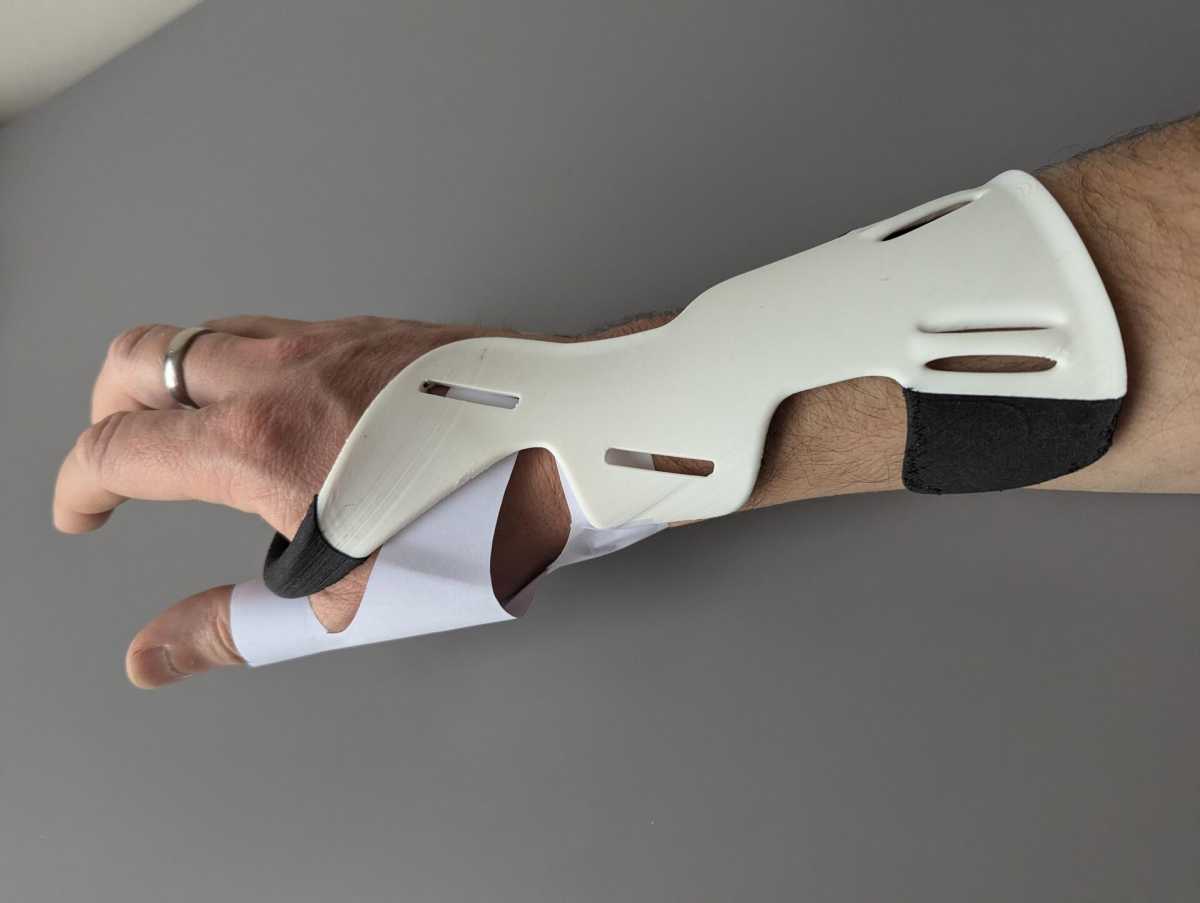
Brian Loudon also works with customers developing medical devices of various types. He often uses 3D printers in combination with 3D scanners to produce, for example, different types of supports that exactly correspond to the body of a patient.
He explains: “I also used 3D printers that manage more than one material to develop new supports for arthritis patients with the National Center for Prosthesics and Orthotics in Glasgow. The finished product will be molded by injection with a rigid nucleus and the same exterior, and multi-material printers. ”
Personalized design and flexible manufacturing
Brian Loudon has been working with 3D printers for prototyping and design development for over ten years. For him, the advantages of being able to move from an idea to a more or less instantly obvious physical prototype, but it also sees the technology used more and more to manufacture end products.
“This is one of the big changes that we are starting to see. Perhaps not entirely on the scale required for mass production, but Adidas and Nike, for example, began to make intermediate soles with 3D printers and in Formula 1 McLaren uses 3D printed components in their cars. An interesting trend that has now been supported by a major brand of consumption is the impression of spare parts. Fixable philips With Prusa Research to encourage users to repair instead of throwing gadgets when a piece breaks.
Chris Fotheringham believes that the ability to produce unique and personalized conceptions will lead to enormous growth on the side of consumers because consumers will be able to solve problems and achieve their ideas themselves. He quotes the example of how 3D printers are used in the cosplay hobby to produce costume pieces with incredible details.
In various hobbies, 3D printers have long changed what is possible for individuals to do themselves, and also what role the manufacturers play. This is particularly true for miniature games and model railways. 3D printers allow you to print spare parts and components that manufacturers have never sold separately. Users can also design and print completely new components and accessories. In the past, many people have built hand landscapes using materials such as cardboard, polystyrene and cell panels, the use of 3D printers has become commonplace.
Privat
“On the industrial side, the potential is even higher. I see 3D printers as a way to locate manufacturing again. Countries will be able to make exactly what they need at home. Look, for example, how Ukraine used 3D printers in its own defense, ”explains Fotheringham.
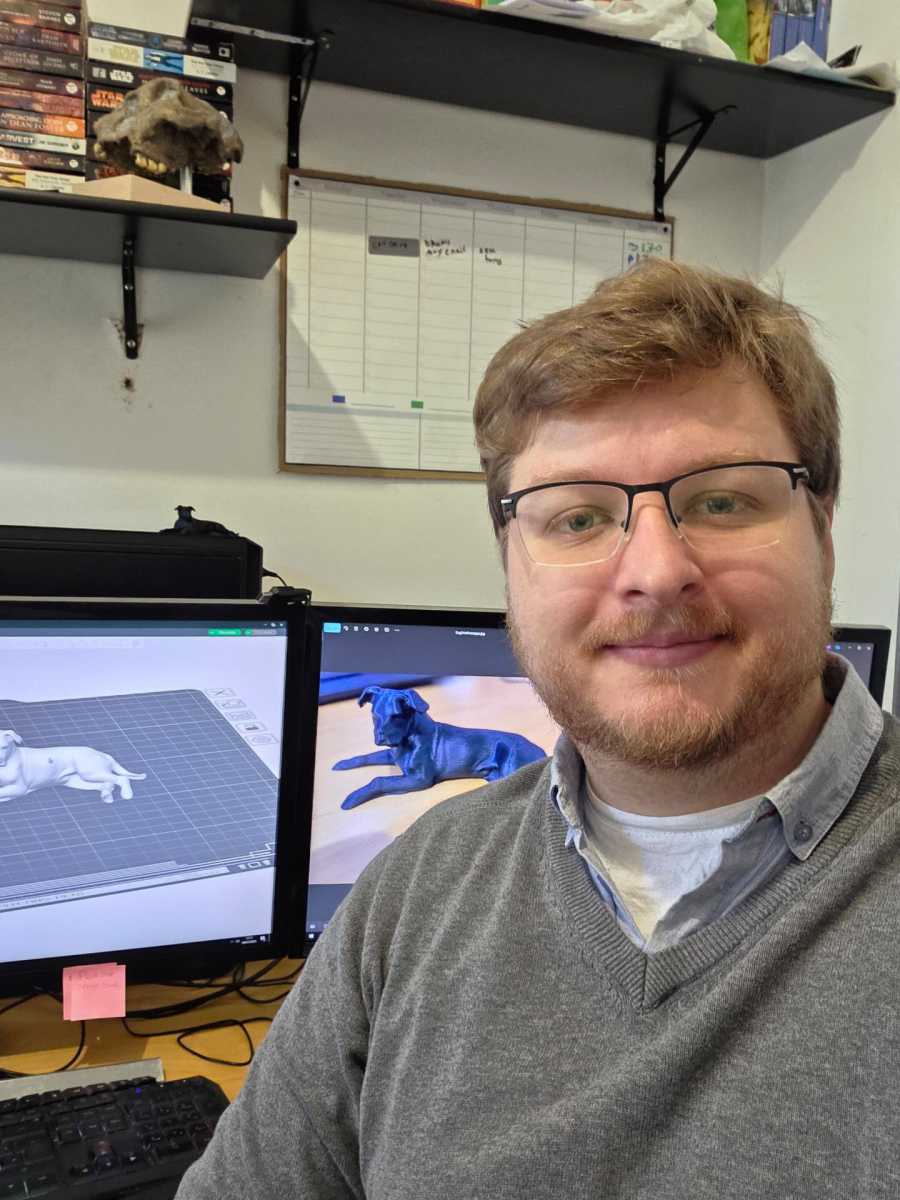
Its new company is developing AI -based software that transforms two -dimensional images into 3D models that users can then print without any prior knowledge. In the opposite image, you can see an example of a dog figure that Chris Fotheringham made to test and present the software.
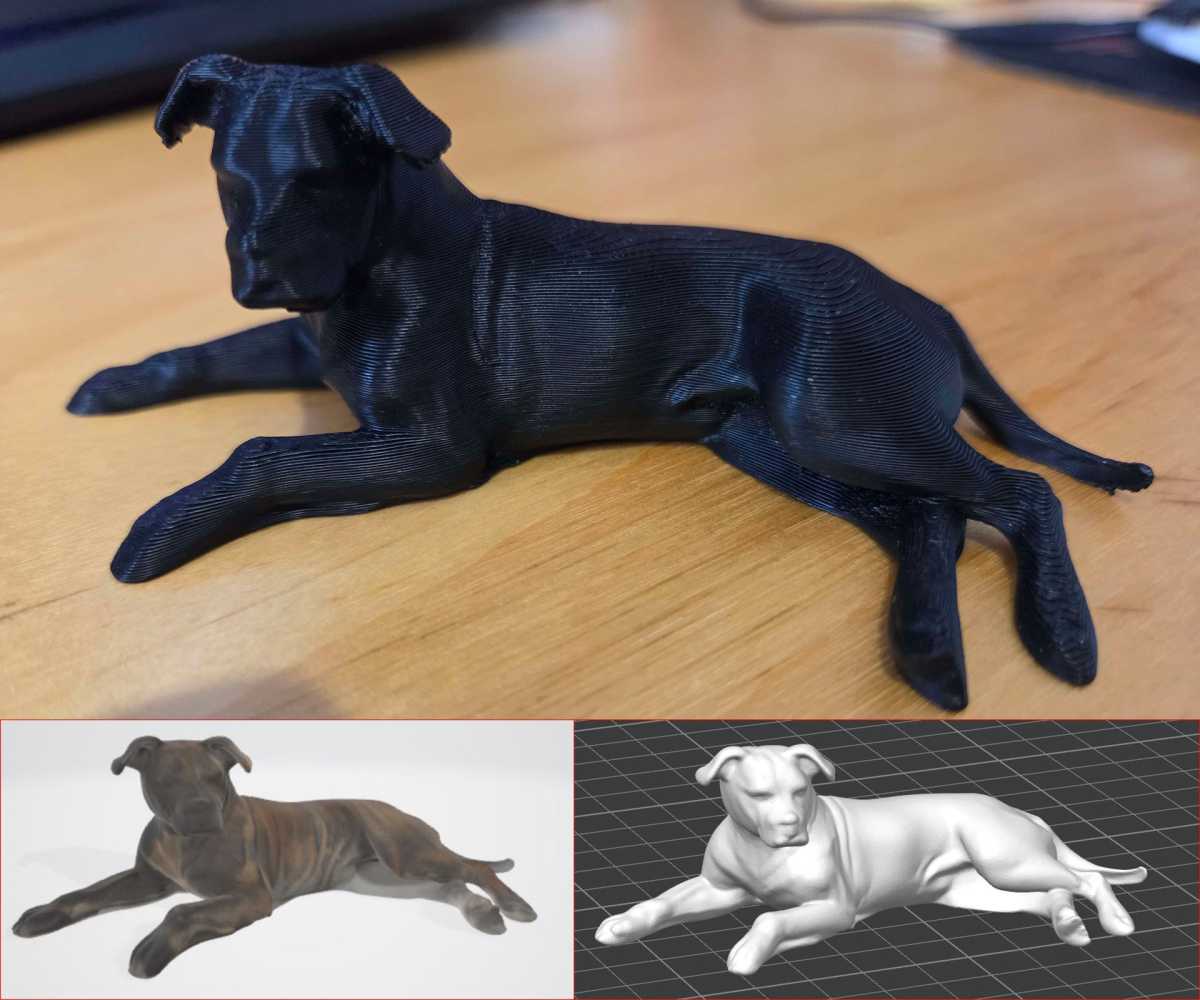
Chris Fotheringham
“One of our long -term objectives is to create a catalog of printable household products, to help people return to a repair culture.”
This article originally appeared on our publication Sister PC För Alla and was translated and located in Swedish.


