How a Democrat’s House win in Nebraska could erase the ‘blue dot’ & harm LGBTQ+ rights

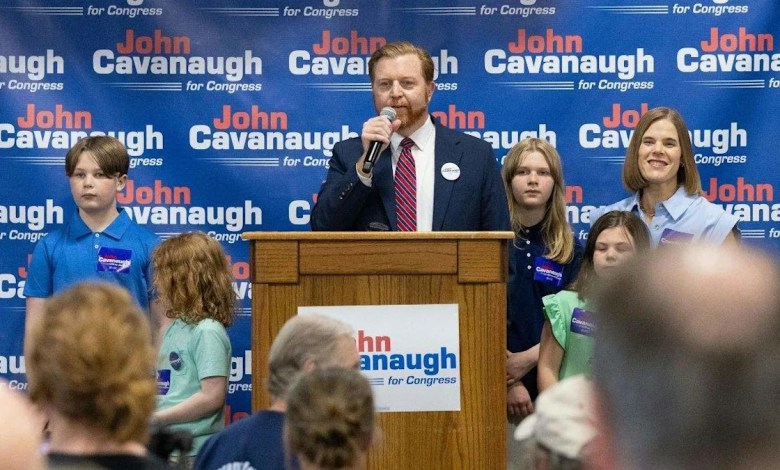
A closely watched congressional race in Nebraska is becoming a flashpoint not only in the battle for control of the U.S. House of Representatives, but also in a broader fight for LGBTQ+ rights.
At issue is Nebraska’s 2nd Congressional District, with the Omaha-based swing seat being vacated by retired Republican Rep. Don Bacon. Democrats view the district as one of their best pickup opportunities in 2026. But as Policy First reported, a possible Democratic victory scenario could also help Nebraska Republicans advance anti-LGBTQ+ legislation and eliminate the state’s “blue dot,” the single Electoral College vote that Democrats captured in recent presidential elections.
The stakes are raised by a crowded and competitive Democratic primary.
As Nebraska Public Media reported, at least a half-dozen Democratic candidates are vying for the seat, including business executive Denise Powell, former federal official Kishla Askins, Douglas County Clerk Crystal Rhoades and others, in a race that is attracting national attention and significant fundraising. Powell dominated fundraising through 2026, while several candidates sought to distinguish themselves in a contest seen as critical to Democrats’ chances of taking back the House.
Nebraska and Maine are the only states that divide electoral votes by congressional district. Nebraska’s system allows the Omaha-based 2nd District to award an electoral vote separately from the statewide winner, creating the “blue dot” that Democrats carried in 2020 and 2024.
The dilemma centers on Democratic candidate and state Sen. John Cavanaugh.
If Cavanaugh wins the House seat, he will have to resign from the Nebraska Legislature, where he represents a heavily Democratic district. Under Nebraska law, Republican Gov. Jim Pillen would appoint his replacement, who could serve until 2028.
The Nebraska Legislature is unique in the United States: a unicameral, officially nonpartisan body, composed of 49 senators. In practice, however, party alignment determines key votes, and small changes in party composition can determine whether lawmakers can maintain or break filibusters.
Related: After 30 years in uniform, Nebraska veteran who survived ‘don’t ask, don’t tell’ runs for Congress
This is important because Nebraska Republicans are just a few votes short of advancing measures that are stalled in the legislature, including winner-take-all presidential voting and bills targeting LGBTQ+ people, particularly transgender Nebraskans.
According to the American Civil Liberties Union’s legislative tracker, Nebraska has several anti-LGBTQ+ bills under consideration this year, part of more than 500 such bills the organization says it will track nationally in 2026. In Nebraska, these measures fall into categories including health care restrictions, public accommodation bans, and “gender redefinition” proposals that seek to legally define male and female. women in a manner that excludes transgender and non-binary people from recognition under state law.
A Republican-backed effort to move Nebraska to a winner-take-all electoral college system was blocked in the Legislature this week after a filibuster, dealing a blow to Pillen and his allies. The measure did not garner enough votes to overcome Democratic opposition, Nebraska Examiner reports.
A Democratic strategist involved in Nebraska politics sharply criticized Cavanaugh’s candidacy in these terms.
“Time and time again, when given the opportunity, Republicans have attacked the rights of the LGBTQ community, causing lasting damage,” the strategist said. The lawyer. “John Cavanaugh knows what’s at stake, and he knows that a Republican governor would appoint his replacement to the Legislature. Any politician who prioritizes his own career ambitions, as Cavanaugh does – especially at this moment in history – is not an ally.”
Cavanaugh’s campaign rejects that argument, saying Democrats can flip the Omaha-based House seat without sacrificing their influence to Lincoln.
Yet the broader concern raised by advocates and some Democrats is less about intent and more about consequence.
THE Nebraska Examiner reported that Republican end-of-session efforts to pass two major anti-transgender measures failed Tuesday. One proposal would have banned certain gender-affirming medical care for minors, while another would have limited the use of public restrooms based on sex assigned at birth. Both measures were reinstated through last-minute amendments, but ultimately failed to meet the legislative deadline.
“Democrats need to take back the House in November to stop Trump, and Cavanaugh is the candidate most likely to flip this seat,” said Katie Bartizal, Cavanaugh’s campaign manager. The lawyer.
Bartizal said Republicans do not currently have the votes needed to bypass filibusters in the Nebraska Legislature and argued that Democratic gains elsewhere would offset any vacancy created if Cavanaugh wins.
“To block anything in the Nebraska Legislature, you need 17 votes. Currently, there are only 16 Democrats in the Legislature, which means Nebraska has the blue dot and has blocked some anti-LGBTQ+ bills because a handful of Republicans voted with Democrats,” Bartizal said. “With strong local candidates running in key seats, a historic investment by the Democratic Legislative Campaign Committee, the deep unpopularity of MAGA Republicans, and Cavanaugh running a strong campaign that will advance legislative candidates, Democrats will win at least two legislative seats in November, more than making up for the loss of Cavanaugh’s seat.”
Bartizal added: “Democrats don’t have to choose between protecting the blue dot and flipping NE-02 blue.”
This article originally appeared on Advocate: How a Democratic House victory in Nebraska could erase the ‘blue dot’ and harm LGBTQ+ rights.
RELATED