‘How a prescription to grow a sunflower helped me fight anorexia’


Malcolm Prior and Jenny KumahBBC News Rural Affairs Team

 Andy Alcroft/BBC
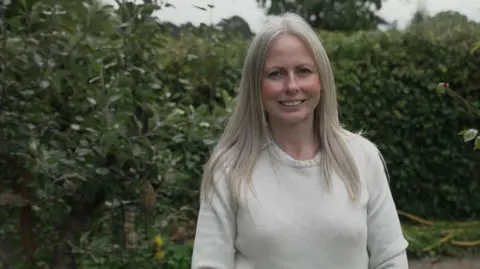
For Emily Hough, nature was too often simply something “out there,” a world apart, a view from a hospital window.
Years spent in specialist mental health units in Birmingham and London, treated for the eating disorder she had suffered from since the age of 12, meant she felt little connection to the countryside and little interest in the everyday flora and fauna around her.
That was until five years ago, when a hospital occupational therapist gave him an unusual prescription: grow a sunflower.
“I’ll be honest, I’ve never planted anything in my life,” Ms. Hough said.
“But I planted this sunflower, and just watching it grow, watering it, and giving it shade, helped me feel connected for the first time and really be able to appreciate what was around me – and how I can make a difference in nature and what nature can actually do for me.
“I was in the hospital at the time, so it was very limited. Five years later, here we are today.”
 Getty Images
Since her early days, Ms Hough, now 35, has embraced what the NHS officially calls “green social prescribing”, whereby GPs and health professionals refer patients to organizations that offer nature-based activities, whether that’s hiking, birdwatching, swimming, or running a city garden.
It is meant to complement other, more common treatments and therapies and is a key part of the government’s 10-year plan for the NHS in England.
The scheme may not work for everyone, but for Ms Hough, who has now moved from Solihull to live in the countryside, the benefits have been huge.
She has now been discharged from hospital and become what the NHS calls an “expert by experience” (EbE) – someone who uses this experience to design and evaluate new health services.
She helped shape the Royal Society for the Protection of Birds (RSPB) flagship ‘nature prescribing’ program for the West Midlands, launched earlier this year.
On Friday, World Mental Health Day, the program marks the training of its 100th healthcare professional, with enough resources to help 1,000 patients access nature-based activities.
 Andy Alcroft/BBC
But the future of green social prescribing is uncertain.
Although a four-year national pilot project that ended in March was judged a success by an independent evaluation of its first two years, there are concerns that responsibility for funding such programs will be left to charities.
Organizations including The Wildlife Trusts, the RSPB and the Ocean Conservation Trust are calling on the government to put more funding into nature conservation programs and roll them out beyond their original seven trial areas.
Dom Higgins, head of health and education for The Wildlife Trusts, said: “It is unequivocal that nature improves mental health.
“I think the time for questioning the evidence is really over and people within the system, the NHS and policymakers understand that.
“It’s just that we need a mechanism to make it available everywhere. It’s time to get serious about funding prevention and opportunities for people to create good health in the neighborhoods where they live and work.”
The national pilot saw almost 8,500 people take up nature activities in its first two years, with more than half living in socio-economically deprived areas.
Chris Dayson, professor of voluntary action, health and wellbeing at Sheffield Hallam University, who was part of the team which evaluated the program, said it provided “a really statistically significant increase in wellbeing” for patients.
The evaluation also found that the program delivered an economic and social return – including putting people back into work – of £2.42 for every £1 invested.
Asked by the BBC, the government made no comment on the future of the green social requirements, but said the evaluation of the second two years of the trial program would be published “in due course”.
“Spectacular results”
Although green social prescribing is designed to complement, not replace, conventional medical treatments and therapies, there are concerns that it will not address broader social issues related to mental health.
Rob Poole, professor of social psychiatry at the Center for Mental Health and Society, said that while he was not against green social prescriptions, it was an “inadequate response to the social determinants of health, such as substandard housing, poverty and deteriorating social infrastructure.”
“These are not about lifestyle choices. They cannot be solved by time-limited interventions, even if green activities make you feel good in the short term,” he said.
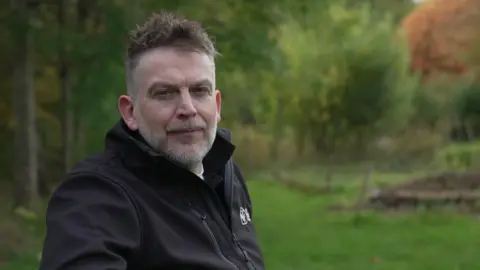
But Shannon Kang, an NHS health and wellbeing coach at Birmingham University Medical Practice, who was recently trained in prescribing natural products by the RSPB, said she had seen “dramatic results” – with a reduction in patients’ anxiety and stress levels.
For Ms. Hough, connecting with the natural world changed her life: “I was skeptical. For years, I walked around without appreciating nature. But I truly believe that nature really helped save me. It gave me hope.”
If you have been affected by any of the issues raised in this article, help is available via the BBC action line page.