How Amsterdam Island Turned into an Unlikely Haven For Feral Cows


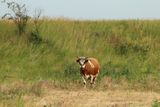
In 1871, a farmer abandoned five cattle on a small, inhospitable island in the middle of the southern Indian Ocean. Against all odds, this small herd not only survived but thrived, adapting to its new hostile environment and multiplying, reaching a population of around 2,000 individuals by the late 1980s.
Obviously this shouldn’t have happened. The founding group was too small and the genetic diversity too low to maintain a viable population for any length of time. So why has this band of cattle been so successful? According to recent research, this could be due to a chance combination of genetics and climate.
Learn more: This cow’s use of a multi-tool challenges assumptions about animal intelligence
A Brief History of Wild Cows on Amsterdam Island
In 2010, conservationists made the difficult and controversial decision to cull hundreds of wild cattle that had improbably colonized Amsterdam Island, a 55-square-kilometer volcanic dome. Although there are no permanent human settlements on the island, it is home to a number of plant and animal species, including the endemic (and endangered) Amsterdam albatross, and the unruly herd was becoming a problem.
The cows had arrived on this isolated sub-Antarctic island more than a hundred years earlier, after being abandoned by a French farmer from Réunion. This is despite the island’s harsh conditions, including a constantly cool and humid climate, limited resources and incessant winds, as well as the small size of the original herd and its weak gene pool.
In addition to a short-lived population collapse caused by disease, the number of cattle on the island multiplied rapidly, reaching around 2,000 in the 1950s and 1980s.
The key to cow survival on Amsterdam Island
It is not uncommon for an invasive species to thrive after finding land free of predators and natural competitors. But it helps to have a large founder population with a high level of genetic diversity, and that’s what makes Amsterdam Island cattle unusual. According to records, the original population numbered only five cattle — a fact supported by recent research published in Molecular biology and evolution.
The study authors reached this conclusion after analyzing historical DNA samples from 18 cows on the island of Amsterdam. The analysis suggests a sharp decline in population size around 22 generations earlier, coinciding with their reported abandonment on Amsterdam Island in 1871.
By comparing these samples with global cattle populations, the team also determined the genetic origin of the cattle. This is where the key to their survival lies.
About a quarter of their ancestry belonged to the Indian Ocean zebu. The remaining 75 percent belonged to European taurine cattle, related to today’s Jersey breed. Above all, the conditions in Jersey are not very different from those on the island of Amsterdam.
“Our genomic results suggest that mutations already present in the genome of these founder animals played a role in the rapid adaptation of the Amsterdam Island cattle population to wild life within a few generations,” Laurence Flori, a scientist at France’s National Institute for Research on Agriculture, Food and the Environment, who participated in the study, told Discover.
Adjusting to life on Amsterdam Island
Observers noted that Amsterdam cows quickly turned feral and behaved more ferociously than domestic cattle.
Records suggest that the island’s herds adopted complex social hierarchies, commonly seen in wild bovids. This includes groups including females and young males, as well as separate groups including adult males, with mixed groups forming early in the breeding season.
It has also been suggested that isolation may have led to the decline of livestock, although the Molecular biology and evolution disputes it. Dwarfism, in which large animals become smaller than their mainland counterparts, usually occurs over thousands of years.
The authors of a 2017 Scientific report The paper says cattle on Amsterdam Island have shrunk to about three-quarters of their body size. However, other researchers claim that the cattle’s small size stems from the modest stature of the original breeds.
Regardless, examples of feralization in cattle are extremely rare, which is why Amsterdam cows “represent a very interesting genetic resource for studying this complex process,” Flori said.
Learn more: As an ancient cow species cultivated for seagrass beds, it shaped its environment around 21 million years ago
Article sources
Our Discovermagazine.com editors use peer-reviewed research and high-quality sources for our articles, and our editors review the articles for scientific accuracy and editorial standards. See the sources used below for this article:


