How China Made an Antarctic Station Run on Majority Clean Energy


Five years ago, the electrician engineer Sun Hongbin received what many would consider as an impossible task: to build an energy of full -fledged energy in the middle of the coldest temperatures of the earth, the howling winds and the semi -annual darkness.
China then built its fifth Antarctic research station, called Qinling, on the inexpressible island of the Bay of Terra Nova. And the national government pushed the concept of “green expeditions” to protect the unique environment of Antarctica, while studying and questioning the continent. “Thus, having a system that would provide most of Qinling’s energy with renewable power corresponded to this objective,” explains Sun.
But conventional solar and wind facilities are not up to temperatures that drop below –40 degrees Celsius, winds up to 300 kilometers per hour (km H) and ferocious blizzards. These conditions can break the wind turbines, greatly reduce the performance of solar panels and prevent batteries from loading and unloading properly. And of course, the six months of the polar night ago, when the sun never rises above the horizon.
On the support of scientific journalism
If you appreciate this article, plan to support our award -winning journalism by subscription. By buying a subscription, you help to ensure the future of striking stories about discoveries and ideas that shape our world today.
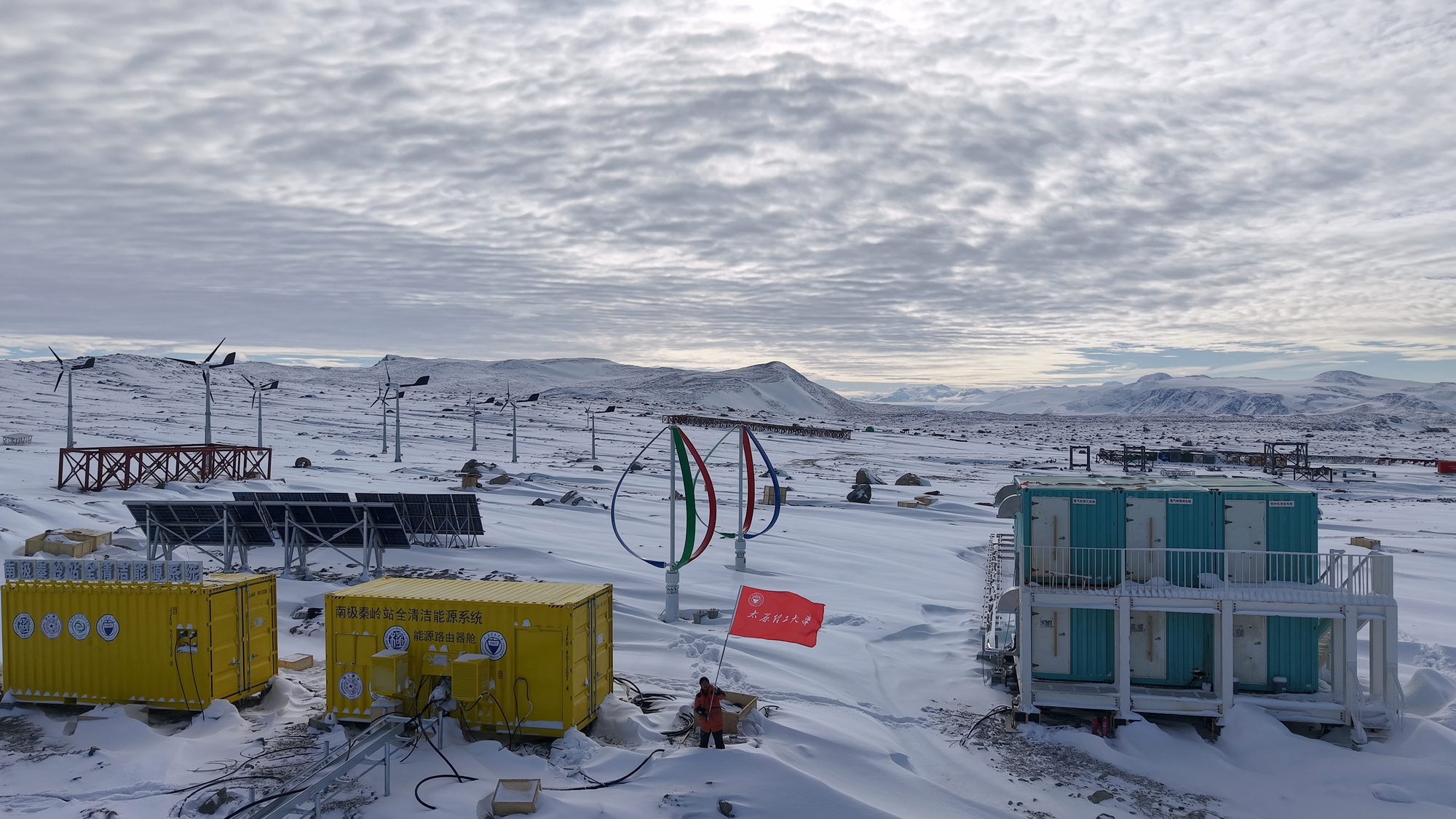
The clean qinling research station in China in Antarctica includes solar panels, wind turbines, a hydrogen energy system and batteries.
Members of the 41st Chinese Antarctic Shipping Team
“It was a huge challenge” to build a system for the coldest, darkest and most distant continent from the earth, explains Sun, now president of the University of Taiyuan technology in China and chief scientist for clean Polar energy at the Polar Research Institute of China.
But at the end of 2024, his team went to the station to install a system that put $ 14 million to develop. It consists of 10 wind turbines, 26 solar modules, a hydrogen energy system, a container full of gel-resistant lithium-ion batteries and an intelligent grid that can predict and balance supply and demand. The entire renewable system is running and, according to Sun, should provide half of the average annual energy needs of the base.
“The use of clean energy is a huge progression to keep the continent clean,” explains Kim Yeadong, president of the National Korean Committee on Polar Research in South Korea, which was not involved in the project. “Other stations will probably have to learn how they achieve so much clean energy. I think it’s remarkable. “
Where diesel power is king
An analysis pre -printed in 2024 of 81 research bases in Antarctica revealed that 37 had installed renewable energy sources such as solar panels and wind turbines. But the proportion of renewable energies used by these bases was “often weak”, the researchers wrote. Until now, an exception has been the Belgian Princess Elisabeth station, which is only endowed during the Antarctic summer. It works completely on the wind and solar energy, taking advantage of daylight almost 24 hours. Despite this, the vast majority of stations still depend on diesel generators to keep their crews warm, fed and safe. The main reason why is simply that “they are used to using diesel,” said Daniel Kammen, energy teacher at the University of California in Berkeley.
But relying on diesel fuel has drawbacks: it is logistically difficult and expensive to transport large and liquid fossil fuels in such a distant location, often surrounded by sea ice. Highly specialized resources – generally including ice and military staff – are necessary to make the difficult to supply, which generally takes place once a year.

The area along the Ross Sea is known for its strong wind.
And the issues are high for the relatively virgin ecosystem and easily disturbed of the Antarctic. “Each station with oil or other fuel has spills,” explains Kammen. Although the major oil spills have been rare, any contamination can have serious consequences on the ground and the water of the Antarctic, because it takes a lot of time for the oil to break down at subzero-zero temperatures. This does not mention the toll that burning fossil fuels take the Antarctic ecosystem by climate change.
There is therefore an important incentive to move away from diesel. However, “conventional wind turbines, solar panels, battery storage and hydrogen energy systems are designed to operate above –30 degrees [C]But the conditions of the Antarctic Stations are often much worse, “notes Sun.” In Qinling, for example, the wind blows blow at 73 km for more than 100 days each year. When this happens at cold temperatures, wind turbines become brittle and break easily. »»
In addition, battery and hydrogen technologies – which are used to store wind and solar energy for subsequent use – were “not good enough” in the past to guarantee that energy supplies for the bases would be reliable 24 hours a day and throughout the year, says Kammen.
Come and clean
To overcome these obstacles, Sun and his team built a 2000 square meter laboratory at the University of Taiyuan to simulate the extreme weather conditions of Antarctica. It has commands that can lower the interior temperature to –50 degrees C, a wind machine that can explode bursts up to 216 km h and snow generators that can concoct instant blizzards.
More than four years of testing, the team has developed a number of renewable energy systems ready for Antarctica. A design is a turbine that avoids the holes -shaped blades of a traditional windmill; Instead, it has the shape of an upset egg, with the two ends of each curved blade attached to a central pole. This design reduces the surface of the blade pushed by the wind, minimizing the constraint on the structure while capturing enough force to produce electricity. And it lowers the center of gravity of the turbine to help prevent it from overthrowing the wind, says Sun.
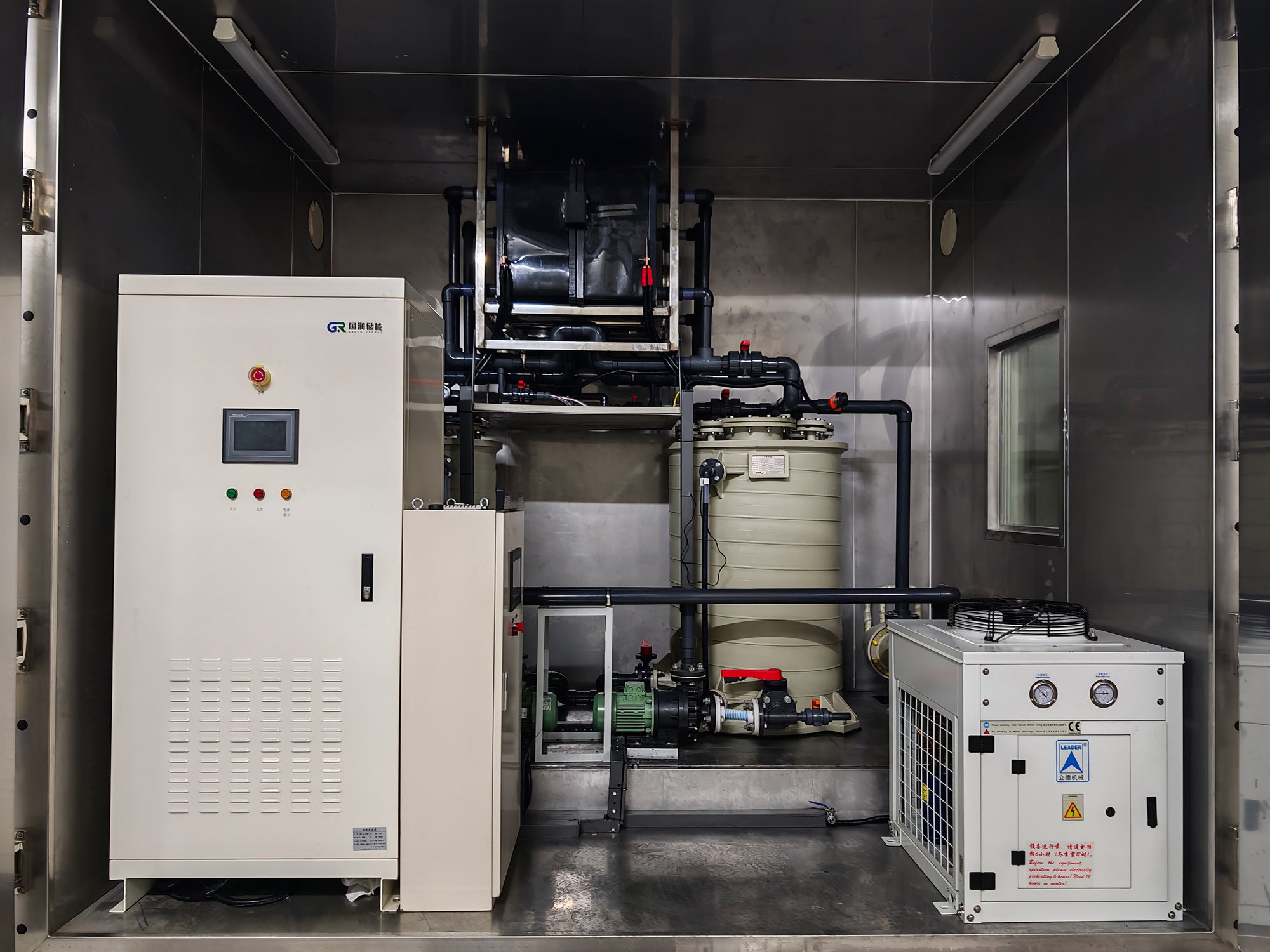
A set of batteries tested in a laboratory at the Taiyuan technology university in China to see if they can operate in Antarctica.
His team also installed turbines conventionally but use blades made with carbon fiber – a strong and light material that can withstand temperatures as low as –50 degrees C, according to Wang Bin, one of the engineers who went to Antarctic to build the system. These blades are also shorter than standard to reduce contact with winds and increase structural resilience, says Wang.
For the solar energy system, a special support frame was built to fix the panels on the ground so that they can better resist the blows of wind and heavy snow. And instead of the usual aluminum alloy, the frame is made of fiber reinforced plastic. The latter has a lower thermal conductivity, explains the Sun team, which means that the temperature of the frame changes much more slowly when the cold settles and therefore does not deform so easily.
Instead of storing power in the most commonly used types of lithium-ion batteries, which work poorly at temperatures below zero, the team used lithium-titanate batteries. Their chemistry allows lithium ions to move more easily inside the battery during the load and discharge processes at extremely low temperatures. Scientists have also built a thermal case around the batteries to keep them warm and designed a system to collect and store their heat waste, which can be rendered in the case when its internal temperature becomes too low, adds Wang.

The Chinese Qinling station should have more than half of its energy from the renewable system.
Members of the 41st Chinese Antarctic Shipping Team
But perhaps the most important stage that the team has crossed has been to bring hydrogen energy to Qinling to help power the station during the long and dark winter.
To produce renewable hydrogen, a device called electrolyzer is powered by wind and solar energy to divide the water molecules into oxygen and hydrogen. The latter goes to high pressure tanks that can store it for more than a year; When full, reservoirs alone can operate the entire base for approximately 48 hours, according to Sun’s team. To do this, hydrogen is directed to an electrochemical device called fuel cell, where it reacts with air oxygen to produce electricity, with only water and heat as by-products. The first is recycled to use in a new electrolysis, and the second is stored to warm the electrolyzer when it becomes too cold to work.
The renewable system can currently produce 60% of the overall production of the Qinling energy system when it operates at full explosion, the remaining 40% from diesel. But Sun and his team are determined to increase this percentage and also provide energy systems specific to other Chinese polar bases. “Sixty percent is an excellent start, but you have to speed up,” says Kammen. “The objective must really be 100% renewable energies all year round.”
It’s time to defend science
Before closing the page, we must request your support. American scientist has been a defender of science and industry for 180 years, and we are thinking at the moment is the most critical moment of this two -centuries story.
We do not ask for charity. If you become a digital, printed or unlimited subscriber In Scientific American, you can make sure that our coverage is focused on significant research and discoveries; that we have the resources necessary to report the decisions that threaten laboratories in the United States; And that we support future scientists and workers at a time when the value of science itself is often not recognized. Click here to subscribe.


