How did animals survive the asteroid that killed the dinosaurs?


Around 66 million years agoA gigantic asteroid has crashed into Earth and wreaked havoc on a global scale.
Superheated rock from the impact was thrown into the air, creating a mushroom cloud that heated Earth’s upper atmosphere to a scorching 439 degrees Fahrenheit (226 degrees Celsius). Kilometer-high tsunami waves rushed across the Gulf of Mexico and disrupted ocean basins halfway around the world. Fires raged, burning animals and plants. Shockwaves spread, blowing up everything in their path. And the particles from the collision, including the sulfur, shot upward, blocking the sun and falling as acid rain.
In total, 75% of Earth’s species have disappeared, including non-avian species. dinosaurs. So how did some animals – including species of birds, turtles and mammals – survive the catastrophic asteroid collision and its aftermath?
Subscribe to our newsletter

(Image credit: Marilyn Perkins / Future)
Sign up for our weekly Life’s Little Mysteries newsletter to hear about the latest mysteries before they appear online.
It turns out that size played a crucial role. Earth’s largest predators and herbivores – like dinosaurs Tyrannosaurus rex And Triceratopsand marine reptiles like plesiosaurs and the giant Mosasaurus — were doomed from the moment of impact, Kenneth Lacovarafounding executive director of the Edelman Fossil Park and Museum at Rowan University in New Jersey, told Live Science. This is because their enormity meant that they were more likely to be injured in the initial explosion, were unable to hide in a safe location during the apocalyptic aftermath, and required enormous quantities of food to survive in a time when food was scarce.
It’s not surprising that size is linked to survival, Lacovara said. On land, “it’s pretty clear in terms of correlation that you have to be small and you have to be a burrower to get through this event,” said Lacovara, who is also a professor of paleontology and geology at Rowan University. Small animals, such as certain lizards and mammals, which were no bigger than badgers at that time, they were more likely to find shelter from the asteroid’s immediate and long-term aftereffects. Other small animals requiring less food, such as certain turtles and fish, were sheltered in the water.
The avian group that led to modern birds have survived probably because they were small and had powerful wings and pectoral muscles that allowed them to fly well and escape dire situations or find new opportunities. Their chicks were also growing quickly, meaning they could soon fend for themselves and not burden their parents.
This has led to a global change in the average size of animals on Earth. On land, most of the largest surviving animals were about the size of a domestic cat; In the water, the largest survivors were about the size of a “regular shark,” Lacovara said.
What the survivors ate
Diet is likely another important factor, said Roger Bensoncurator of dinosaur paleobiology at the American Museum of Natural History in New York. Herbivores and those who ate them were particularly hard hit, as the sun was blocked for up to 15 hours. decade. Even with size on their side, some smaller creatures, like certain species of lizards and turtles, became extinct because their diets depended too much on photosynthesis plants, Benson said.
Aquatic ecosystems were a little more protected from the initial asteroid impactparticularly in deeper oceans and freshwater ecosystems. But as photosynthesizing plankton died from lack of sunlight, food systems collapsed and large marine animals starved to death. Those who consumed dead organic detritus had a better chance of survival. Some of these resilient sea creatures including sea sponges, sharks of the Carcharias genus and molluscs, including the lineage that led to today’s chambered nautilus (Nautilus pompilius).
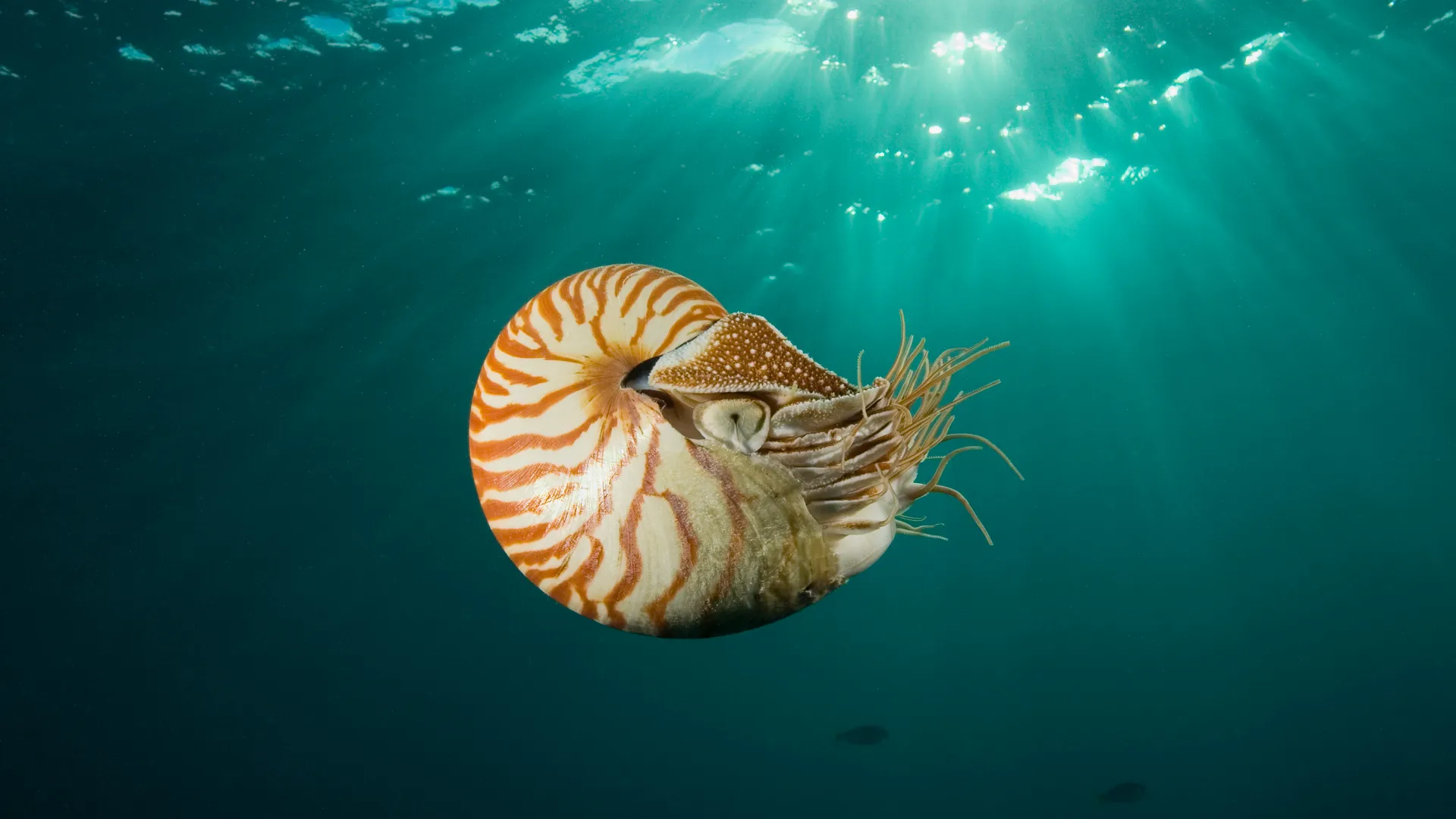
Animals that ate dead organic detritus had a better chance of survival after the asteroid impact, like the lineage that led to today’s chambered nautilus (Nautilus pompilius).
(Image credit: Stuart Westmorland via Getty Images)
Seed eaters, including birds, and foraging insectivores, such as the arboreal primate Purgatorius janisaehad a better chance of surviving because their food sources seeds and insects were not destroyed by extreme temperature changes and lack of sunlight.
A common theory is that species with more general diets had a better chance of surviving drastic environmental changes. For example, Coracis Purgatorya small mammal, survived mass extinction thanks to its varied diet of insects, fruits and seeds. (This trend is true for modern animals facing climate change: those with generalist diets, like crows and raccoons, should fare because they have a wide range of foods to fall back on in case a food source disappears.)
Some species were lucky if their prey were also survivors. Some species of aquatic turtles, such as Rememdium of Hutchemys, had an adaptive dietary habit of eating shelled creatures that lived on detritus in aquatic ecosystems. A Study 2026 found that this adaptation, called durophagy, was linked to relatively high survival rates during this mass extinction.
Certain behaviors, such as a greater ability to reproduction or behavioral flexibility in a changing environment, could have enabled survival, Benson said.
Mysterious exceptions
Despite current evidence, there are still unknowns about surviving mass extinctions. Recent research indicates that we don’t know why certain adaptations helped some species but not others.
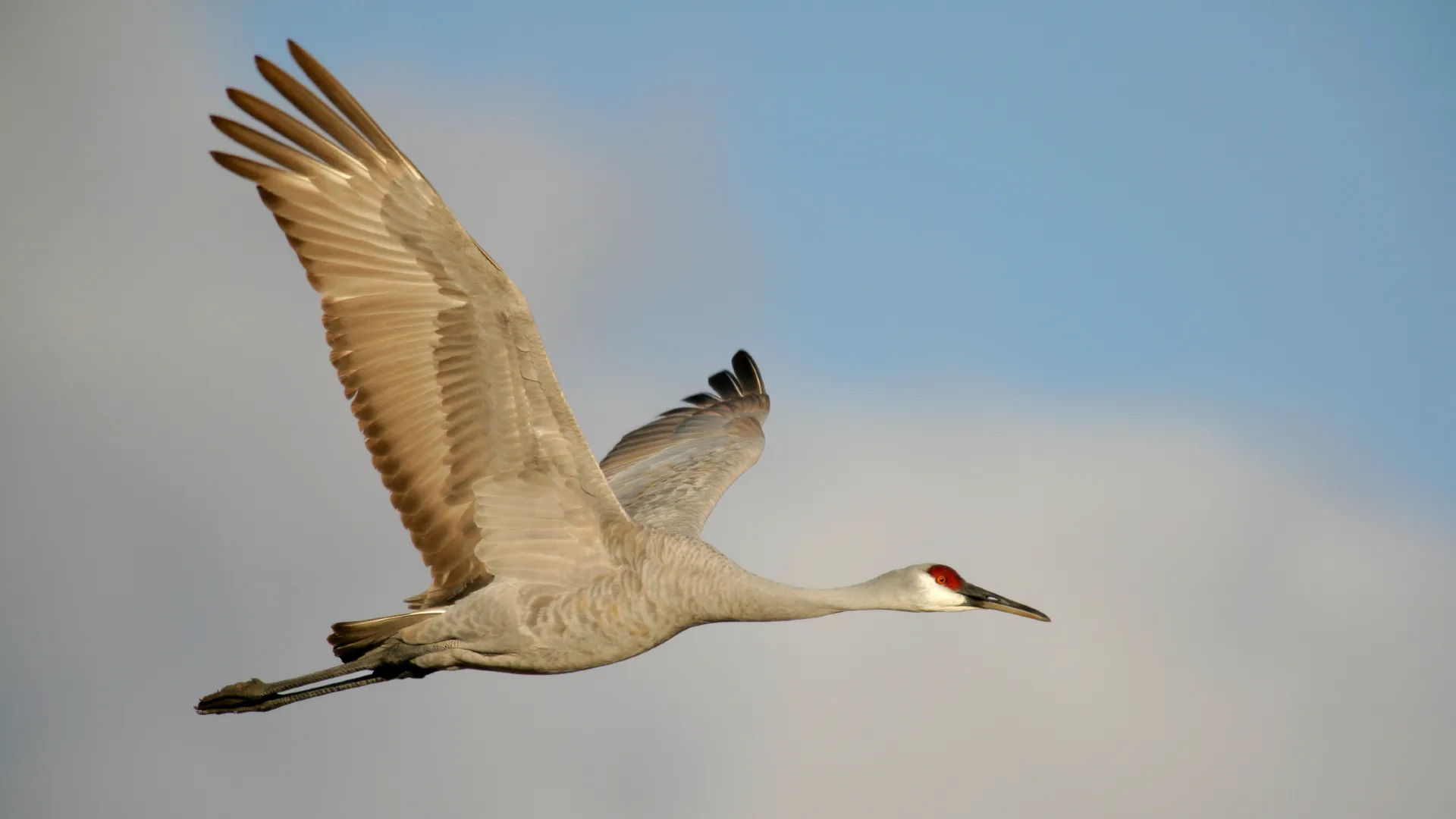
The avian group that led to modern birds (like this Sandhill Crane, pictured above) probably survived because they were small and had powerful wings and chest muscles, had fast-growing chicks, and ate seeds.
(Image credit: Arthur Morris via Getty Images)
For example, many current species of bivalves feed on microscopic aquatic organisms that rely on sunlight to survive. However, among the aquatic bivalves that survived the asteroid and its impacts, sun dependence did not strongly determine survival. In another case, nocturnal lizards that survived near the impact site are known to have small litters, which argues against the hypothesis that fecundity would be advantageous following extinctions. However, the slow metabolism of these nocturnal lizards was likely helpful to their survival, and they persist today, the study note.
And the discovery that a great, land crocodile (Tewkensuchus salamanquensis) that survived an asteroid impact in what is now Argentina raises questions about how this 660-pound (300-kilogram) species survived. This also raises the question of whether the asteroid’s impacts were not as strong in the Southern Hemisphere as in the Northern Hemisphere. For example, the great diversity of plant fossils discovered in present-day Argentina suggests the plants were able to regrow more quickly at the southernmost latitudes.
“We also don’t know why mammals emerged from extinction as the dominant macrofauna,” Lacovara said. One theory is that mammals are more resistant to fungal infections than reptiles, giving mammals a better chance of surviving fungal infections. “mini age of the mushroom” who followed mass extinction.
After all, how evolution that occurred after the mass extinction is part of human history. The animals that survived ultimately marked the beginning of the age of mammals, including humans, which continues to this day.
What do you know about fangs? Test your knowledge with our Quiz on crocodiles!
TOPICS


