How latest block of Trump’s birthright citizenship order tests legal landscape after Supreme Court ruling on injunctions


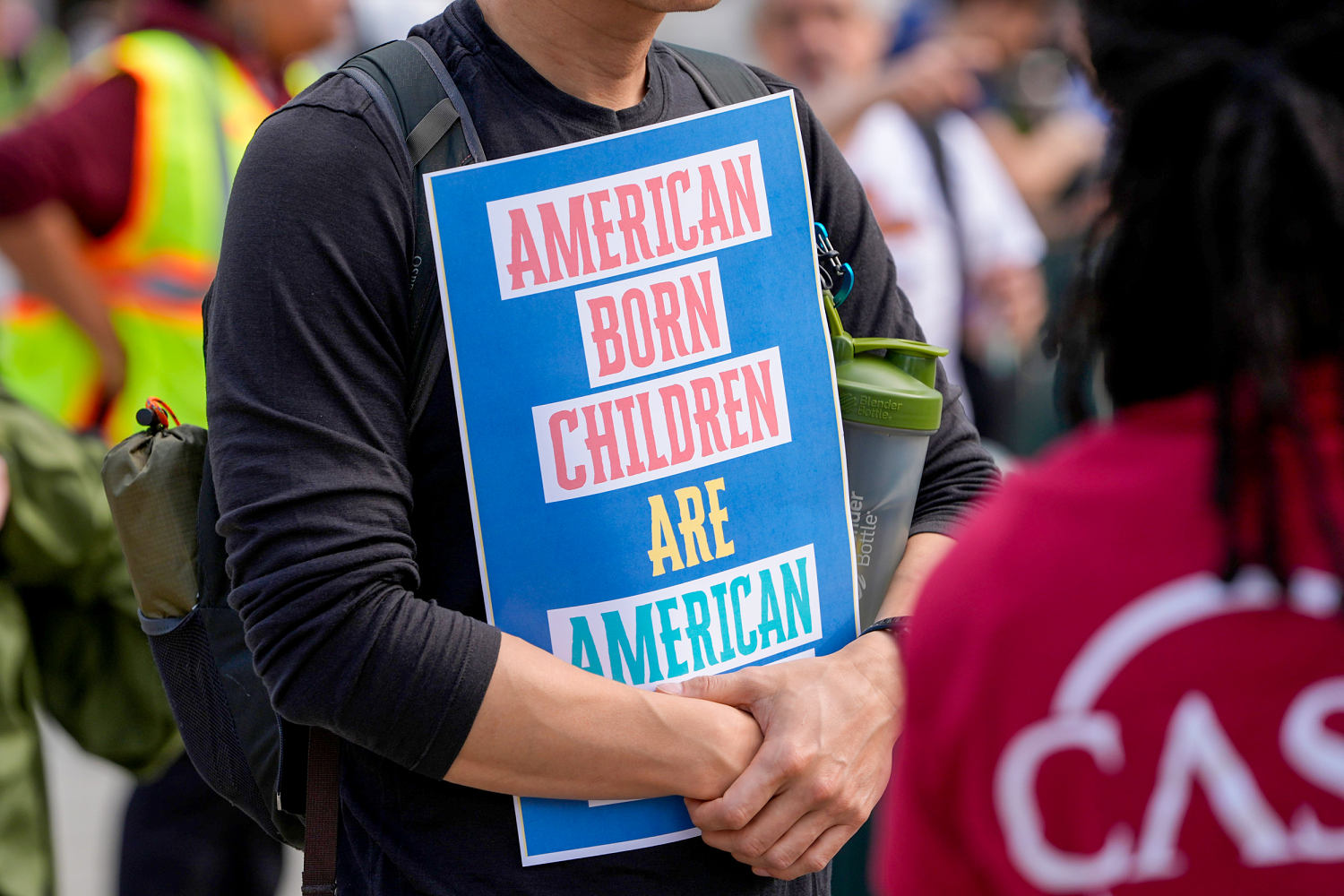
The decision of a federal judge from temporarily preventing the Trump administration from stripping citizenship of the birth law for certain babies born in the United States is an early test of the legal landscape, after the Supreme Court has considerably limited the capacity of judges to issue national blocks of presidential policies.
Thursday morning, in New Hampshire, the American district judge Joseph Laplante granted a status of collective appeal to a legal action which aims to protect babies who would be refused the citizenship of the right of birth and granted a temporary block from the order of President Donald Trump to enter into force throughout the country.
The decision brought hope to pregnant women and groups that brought a blow two weeks ago when the Supreme Court largely limited the ability of federal judges to use one of the strongest tools at their disposal – the use of national injunctions to prevent federal policies from entering into force.
The decision of the Supreme Court would have enabled the image of Trump to come into force on July 27 in certain parts of the United States
The next day, immigrants and their lawyers pivoted to seek a status of collective appeal for babies and immigrant parents in the hope of finding another way to arrest the president.
“It was clear that the decision of the Supreme Court had closed a very important door for stimulating policies, but that also opened other doors,” a elder from the Migration Policy Institute told NBC.
The Supreme Court has not yet decided on the question of whether Trump’s decree is unconstitutional and that multiple contesting proceedings that dispute it remain in progress.
But its decision on June 27 left an important avenue open so that the applicants are trying to end the federal government policies nationwide thanks to the use of collective appeals.
“This case is an early test on how litigants will adapt to the legal landscape after the death of the Supreme Court to national injunctions,” Chishti said. “It takes normally months, if not years, for a modified landscape to be observed. But as this is such an important constitutional question, we are fortunate to review the landscape in the two weeks. ”
As part of the Trump plan, citizenship of the birth law would be limited to those who have at least one parent who is an American citizen or permanent resident. The order also denies citizenship to children whose mothers are temporarily in the United States, including those which visit the Visa renunciation program or as tourists, or who are students and whose fathers are not citizens or legitimate permanent residents.
In the written ordinance issued Thursday, Laplante wrote that the court certified the status of collective appeal to the following group in the publication of the national block of the order of Trump: “All the current and future persons who were born or after February 20, 2025, where (1) The mother of this person was illegally present in the United States and the father of the person in the United States. was legal but temporary, and the father of the person was not an American citizen or a legal permanent resident at the time of the birth of the said person. »»
Laplante, who was appointed by President George W. Bush, had previously denied having published a national injunction in a similar case earlier this year. Instead, he had issued a narrower order where he only prevented the policy from being applied to members of groups who are affected by the order of Trump.
A “viable” legal challenge
But his order has indeed prevented Trump’s executive order from being applied to the national level, at least temporarily.
“It was a decision which certified a preliminary class of people through the country of a skeptical judge as to national injunctions, and therefore I think that this shows that the mechanism of collective appeal is viable, that the courts are ready to entertain,” said Haiyun Damon-Feng, a professor of immigration law and constitutional at the Cardozo School of Law.
Cody Wofsy, the principal lawyer for the American American Liberties Union in the case, said after the hearing of the court on Thursday that the laplant order “was going to protect each child through the country of this executive decree without law, unconstitutional and cruel”.
White House spokesperson Harrison Fields said in a statement to NBC News that the decision was “an obvious and illegal attempt to bypass the clear ordinance of the Supreme Court against Universal Aid”.
“The decision of this judge does not take into account the rule of law by abusing procedures for certification of collective appeals. The Trump administration will fight vigorously against the attempts of these tribunal tribunals to hinder the policies that President Trump was elected,” Fields said in the press release.
The Trump administration has seven days to call on the temporary Laplante block before a superior court, and the question could be at the Supreme Court to determine whether the judge’s order is in accordance with the decision of last month.
“This is not the end law of the question of the right of birth. We will probably see more fights taking place on the procedure, on the question of class certification, as well as the question of the citizenship of birth law on merits,” said Damon-Feng.


