‘I don’t like it when doomers are out scaring people’: Nvidia on why AI rhetoric damages the US chances to lead in the AI race


AI will save us or be the end of us. This is not a fact or even an opinion; it’s a TL;DR reduction of the very real tension between supporters of AI and those who fear it.
Interestingly, this tension sometimes resides in just one person. It’s completely fair and reasonable to use ChatGPT for basic deep data searches and for quick answers on how to talk to an uncooperative child, but also to worry that that same AI may know too much about you and could, in its own way, start acting on your behalf and do things you never intended. On a large scale, we fear that AI will control weapons, or even trigger a catastrophic war.
Article continues below
The call comes from inside the house
Decades after Turing, but still a few years before our current AI revolution, those building these AI platforms today were already sounding the alarm. From the grandfather of AI, Geoffrey Hinton, to Sam Altman, who in 2023 described AI’s worst-case scenario as “the lights going out for all of us,” few, even those close to the technology and development of these vast and powerful models, are safe from alarmists.
Consumers are also moving in the wrong direction. A recent Pew study found that “50% of Americans are more concerned than excited about the increased use of AI in daily life.” The researchers added that the number of people who are more concerned is actually increasing from year to year.
The rapid development of AI models and their increasingly agentive capabilities have surely only accelerated these fears, but also spread the scariest rhetoric about how AI will consume all our jobs or drive autonomous weapons to kill us.
This week, one of the main architects of AI’s meteoric rise, Nvidia CEO Jensen Huang, said it must stop.
Facts about AI, not an irrational fantasy
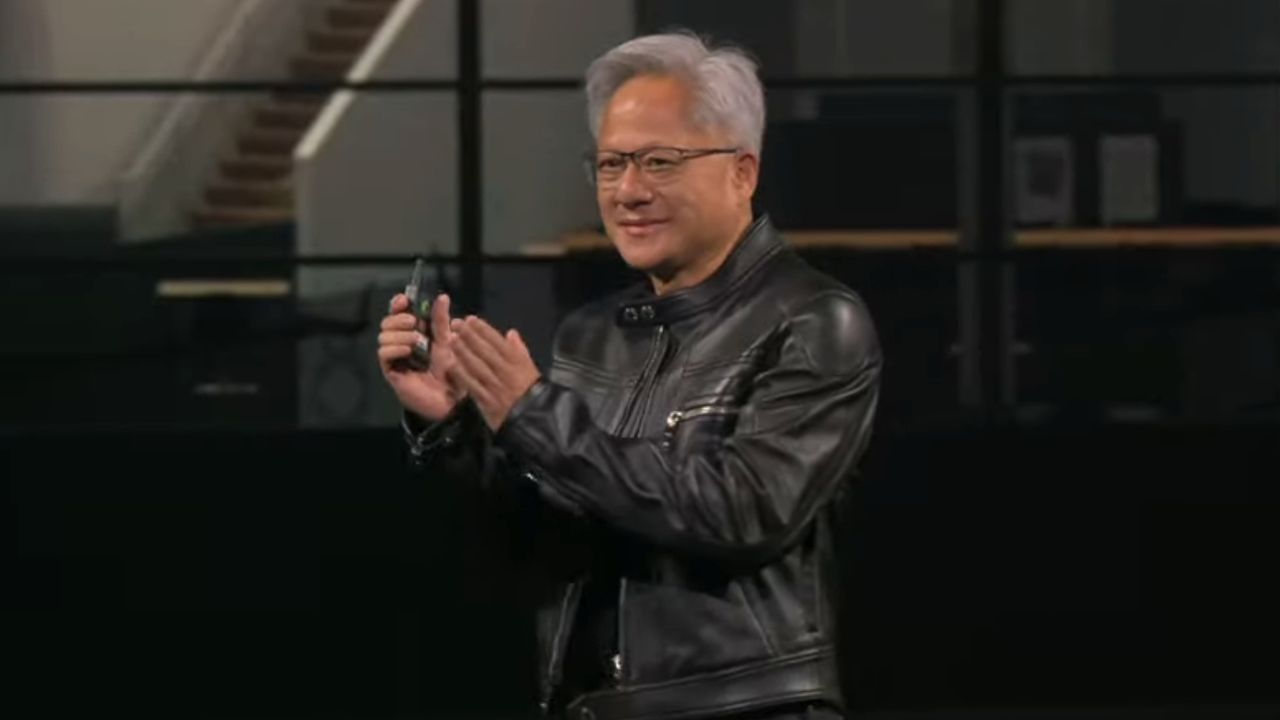
Huang, who had just spent nearly three hours touting Nvidia’s new Vera Rubin AI platform during his GTC conference keynote in California, sat down for a lengthy interview with Stratechery, where he issued a stark warning.
Jensen was talking about, among other things, efforts to continue selling H2O AI accelerators to China, something the Trump administration initially blocked before Huang convinced them otherwise.
The interviewer asked what Huang learned from his time in Washington, D.C., and Huang noted how “all the convicts were integrated into Washington, D.C.”
He spoke of “incredible stories,” calling them “inventions” that frighten policymakers.
I don’t like it when convicts scare people.
Jensen Huang
For Huang, it’s essential to understand that these tools and platforms are real (and doing real work) and not “some sort of mystical embodiment of science fiction.”
“I don’t like it when convicts scare people,” he told Stratechery. “I think there’s a difference between being genuinely concerned and warning people and … creating rhetoric that scares people.”
Clearly, as the company that sells most of the chips that help generate new models and even respond to prompts in the cloud, Huang has a vested interest in the survival and growth of AI. But he is also right.
Rational acceptance
AI, like so many rapid innovations disrupting society, is neither all good nor all bad. Like the Internet before it or the Industrial Revolution, we will make great progress with AI, but we will also experience significant pain, such as job changes and losses, and mistakes made by AI or by people who trust AI too much and know how to act confidently without being right.
But other things are true: AI will play a role in scientific and medical advances. It will revolutionize work and maybe even play. And it won’t go away either.
Fear of AI is not regulation or restrictions on AI. Even the pessimists in Washington know that this is a race the United States cannot afford to lose. China will not slow down. He will probably pay even less attention to safety and guardrails. If we all listen to our darkest thoughts about AI, China will win, and then our worst fears about AI will be realized not by models built in the West, but by those created by our main adversaries.
Follow TechRadar on Google News And add us as your favorite source to get our news, reviews and expert opinions in your feeds. Make sure to click the Follow button!
And of course you can also follow TechRadar on YouTube And TikTok for news, reviews, unboxings in video form and receive regular updates from us on WhatsApp Also.


