Pentagon places further restrictions on journalist access


Journalists who cover the Pentagon Ministry of Defense can no longer collect or report information, even if it is not classified, unless it has been authorized by the government, defense officials announced on Friday. Journalists who do not sign a declaration of agreement on new rules will have their press identification information, officials said.
Several press associations quickly condemned the new rules and said they were fundamentally changing the ability of journalists to cover the Pentagon and the US military. They called on the Trump administration to cancel the new requirements, arguing that they are inhibiting transparency to the American people.
The National Press Club has denounced the requirement as “a direct assault against independent journalism at the very place where independent control is the most important: the American army”.
Democratic legislators have also criticized the decision, Senator Jack Reed, Dr.I., classification member of the Senate Armed Services Committee, calling for restrictions “an ill -advised affront of freedom of expression and freedom of the press”.
“Secretary HegSeth’s restrictions on the press are part of a wider attempt at this administration to conceal false steps, stifle independent journalism and obscure the truth,” said Reed. “American journalists are not, should not and should not be simple stenographers for the ruling party or the Pentagon itself.”
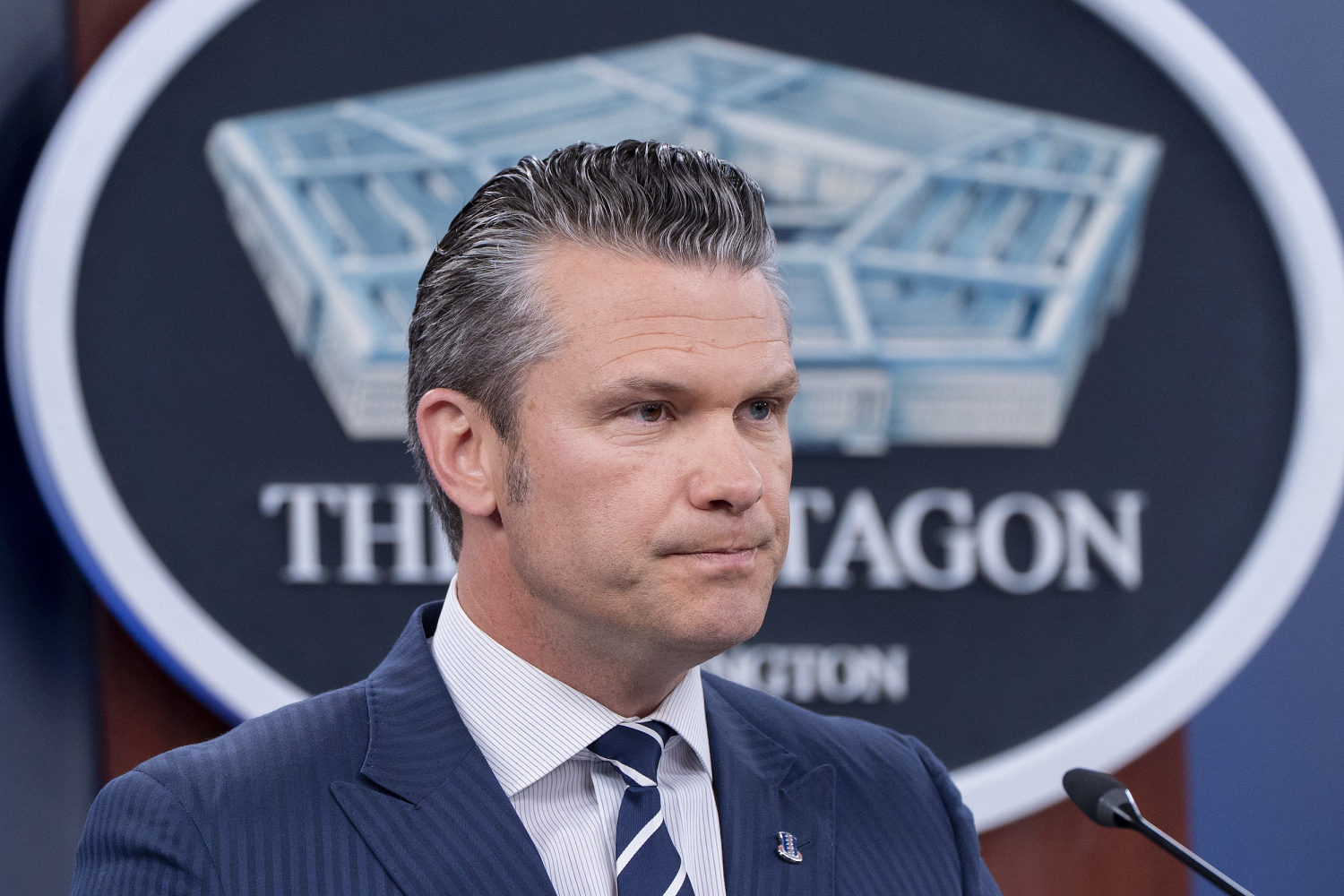
Defense secretary, Pete Hegseth, defended the new measures, writing on X Friday: “The” press “does not manage the Pentagon – people do it.”
The Pentagon sent a memo describing the new measures to its internal press corps on Friday afternoon as part of new security requirements.
Department of Defense “Information must be approved for public release by an appropriate authorization official before its publication, even if it is not classified,” said the memo, quoting that the ministry must “safeguard” classified national security information.
The service note has said that the Ministry of War – the new secondary name of the Ministry of Defense adopted as part of a brand change – can provide non -classified information controlled to individuals “when there is a legal government objective to do this”. In addition, only “authorized persons” with “favorable determinations of admissibility to access, signed approved non -disclosure agreements and having a need to know can have access to” classified national security information.
Those who do not respect the rule could be suspended or revoke their access to the Pentagon.
Access to the badges can be refused or revoked if a person is “reasonably determined to present a risk of security or security for staff or DOW goods,” said the note. A person can be considered as a risk of security based on “unauthorized access, an attempted unauthorized access or an unauthorized disclosure of the CNSI [classified national security information] or cooked [controlled unclassified information]. “”
New rules also include other physical restrictions for journalists. The large areas of the building are limited and journalists will require an escort to enter.
It is HegSeth’s last effort to confine the journalists of the Pentagon.
Earlier this year, the administration largely limited journalists to the press and the catering area. For decades, Pentagon journalists with badges could walk in the corridors and had access to all parts of the building except the building that were restricted or required security authorizations.
Mike Balsamo, the president of the National Press Club, said that Pentagon journalists provide essential information, informing the public about how the defense dollars are spent and how wars are waged.
“If the news of our soldiers must first be approved by the government, the public no longer obtains independent reports,” said Balsamo. “This only does what those in charge want them to see. This should alarm each American. ”
The company of professional journalists also demanded that the measure be canceled, qualifying the effort to “muzzle the press and refuse the American people the transparency and the responsibility they deserve”.
“This policy begins with prior restraint – the most blatant violation of press freedom under the first amendment – and is a dangerous step towards government censorship,” the company said in a statement. “Attempts to silence the press under the guise of” security “are part of a disturbing scheme of the growing government of government towards transparency and democratic standards.”