How Stingless Bees in the Amazon Became the First Insects With Legal Rights


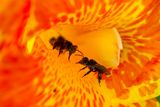
For the first time in history, the law recognizes an insect as a rights holder. In Peru’s central Amazon, Satipo authorities approved an ordinance recognizing native stingless bees as legal subjects with inherent rights.
The ordinance focuses on pollinators that help keep the rainforest alive. Stingless bees pollinate about 80% of the Amazon’s native plant species, from forest trees to crops that support wildlife, indigenous food systems and global markets. By recognizing them as subjects of law rather than biological resources, the law allows authorities to act when colonies or habitats are threatened, thereby reframing how conservation law defines protection.
“This order marks a turning point in the way we understand and legislate our relationships with [n]nature,” said Constanza Prieto Figelist, director of the Earth Law Center’s legal program for Latin America, in a press release.
Learn more: Ancient bees found nestling in fossilized bones – behavior never seen before
The bees that keep the Amazon alive
Globally, wild bees play a role in pollinating more than 90 percent of the crops that feed the planet, according to the Earth Law Center.
In the Amazon, stingless bees are among the most important species. Nearly half of the planet’s approximately 500 species of stingless bees live in tropical forests, many of them in the Amazon, where their decline has immediate ecological consequences.
As stingless bee populations decline, fewer flowers develop into fruits and seeds. Forest regeneration slows, wildlife loses food sources, and crop yields fall, particularly for fruit plants that rely on animal pollinators.
For Asháninka communities in the central Amazon, stingless bees are part of daily life. Families have practiced meliponiculture – the stewardship of stingless bees – for centuries, harvesting honey and wax for food, medicine, tools and ritual use. Knowledge of nesting trees, seasonal cycles and bee behavior is passed down from generation to generation and is closely linked to observations of forest health.
These same characteristics make stingless bees particularly vulnerable to habitat loss. Many species rely on specific tree species for nesting and occur in small, scattered populations. When forests are cleared or degraded, entire colonies can disappear all at once.
Deforestation, pesticide use, land conversion, invasive species and climate extremes – including floods and prolonged droughts – are accelerating these losses. As colonies decline, traditional beekeeping practices become more difficult to maintain, threatening both biodiversity and the transmission of indigenous ecological knowledge.
What the ordinance does
Conservation laws typically focus on protecting land or regulating how resources are used. But these tools often fail to protect pollinators from cumulative harm, especially when the damage comes from many small actions rather than a single threat.
The Satipo ordinance takes a different approach. Instead of treating stingless bees as resources to be managed, it recognizes them – and their ecosystems – as subjects of rights. According to the law, stingless bees are entitled to:
-
the right to exist and prosper
-
the right to maintain healthy populations
-
the right to a healthy and pollution-free habitat
-
the right to ecologically stable climatic conditions
-
the right to regenerate their natural cycles
-
the right to legal representation in the event of threat or harm
This allows authorities to intervene when activities such as deforestation, pesticide use or habitat destruction threaten bee colonies. Damage to pollinators can now be treated as legal damages.
A test case for conservation law
Similar legal frameworks have granted rights to rivers and forests in some parts of the world, but insects have remained largely invisible in the law. By extending legal recognition to pollinators, Satipo’s order tests whether conservation law can protect not only landscapes, but also the species that keep those landscapes functioning.
Learn more: This adorable new species of pumpkin toad can fit on the tip of a pencil
Article sources
Our Discovermagazine.com editors use peer-reviewed research and high-quality sources for our articles, and our editors review the articles for scientific accuracy and editorial standards. See the sources used below for this article:


