How Teen Mathematician Hannah Cairo Disproved a Major Conjecture in Harmonic Analysis


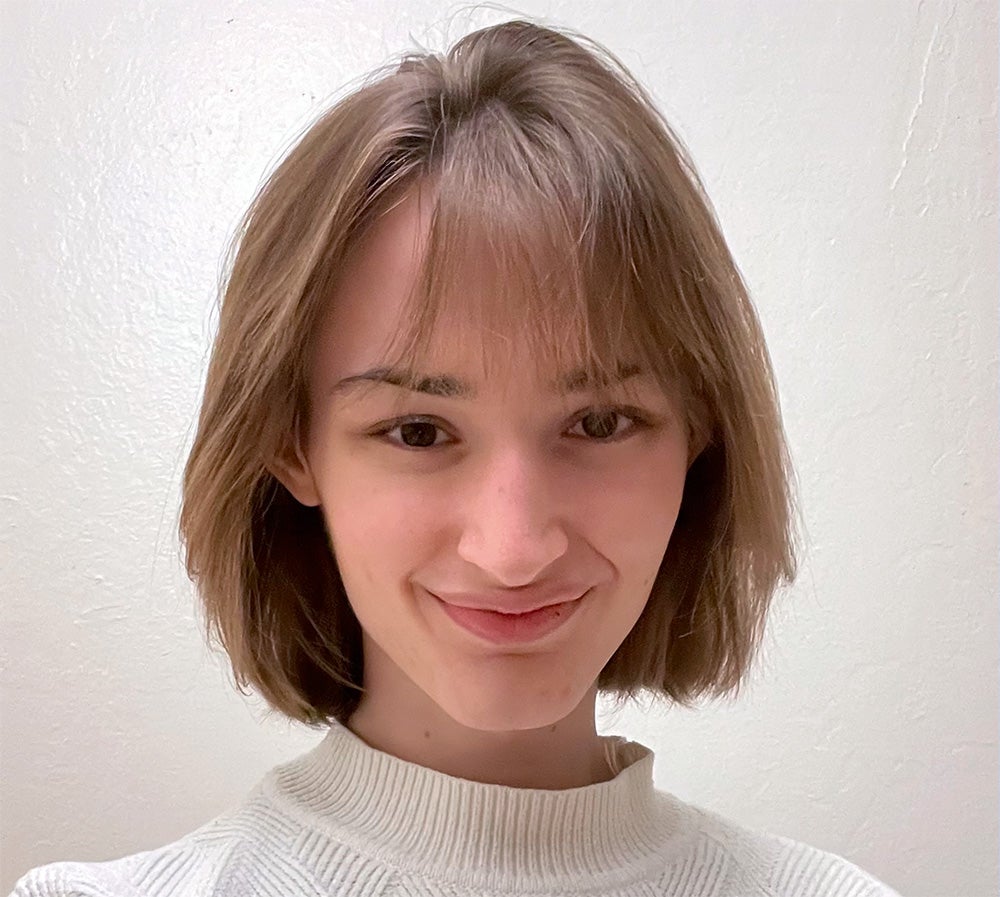
When Hannah Cairo was 17 years old, she refuted the conjecture of Mizohata-Takeuchi, a long-standing assumption in the field of harmonic analysis on the way the waves behave on curved surfaces. The conjecture was laid in the 1980s and mathematicians tried to prove it since. If the conjecture of Mizohata-Takeuchi turned out to be true, it would illuminate many other significant questions on the ground. But after hitting Wall after Wall tried to prove it, Cairo managed to offer a counterexample: a circumstance where the waves do not behave as planned by the conjecture. Therefore, the conjecture cannot be true.
Cairo was hung on the problem after receiving a simpler version of the conjecture to prove as an assignment of homework for a course it followed at the University of California in Berkeley. “It took me a while to convince [course instructor] Ruixiang Zhang that my proposal was actually correct, ”she says. Now, according to Zhang’s council, she has an article on the Arxiv.org preparation server and was invited to present her results at the international conference on harmonic analysis and partial differential equations in El Escalien, Spain.
On the support of scientific journalism
If you appreciate this article, plan to support our award -winning journalism by subscription. By buying a subscription, you help to ensure the future of striking stories about discoveries and ideas that shape our world today.
Cairo says that she likes to talk about her research and make presentations with colorful and descriptive slides (See examples below). When asked what she is studying, Cairo says, in short, “points, lines and waves”.
Born and raised in the Bahamas, Cairo moved to California at the age of 16, where she started taking lessons in UC Berkeley. Now, at 18, she is on a doctorate. Program at the University of Maryland to continue his research on Fourier’s theory of restrictions. Cairo has encountered many difficulties in its trip, but it has found comfort and belonging in the field of mathematics and in the work itself.
American scientist Talked in Cairo the way in which harmonic analysis is like laying stones in a still pond, her transgender identity and the reasons why she loves mathematics.
[An edited transcript of the interview follows.]
Beyond “points, lines and waves”, how would you explain your field of study, harmonic analysis?
Imagine that you are in a pond, and it is a very motionless pond, and lets you fall into a stone. You see these circular waves spread.
If you deposit two stones in the pond, you may notice this model called an interference model: instead of looking like circles, they overlap. You get high points, low points. And you get these interesting forms [where they intersect]. And if you had to use a whole bunch of ripples – when you obey? In the harmonic analysis, you can really prove that if you drop your stones in the right place in the pond, you can get any shape you want.

Clissure of Hannah Cairo’s presentation on the Mizohata-Takeuchi conjecture
My specialty is known as Fourier’s theory of restrictions, which is the sub-discipline of harmonic analysis in which I work, where we ask what type of objects can we build if we are not allowed to use certain types of waves. What if we are allowed to drop the stones in certain parts of the pond? You will not be able to get any object. In fact, you are only going to find a relatively small family of objects. What Mizohata-Takeuchi conjecture says is that the shape of the objects we get is concentrated along the lines.
What does it mean to be “concentrated along the lines”?
One way of thinking about the shape of the objects is to ask: what is curvature? There are different ways to define it. A possible way is to take a thin and long rectangle and to ask what part of your circle can be in this thin rectangle. What you will see is that it can’t much, because it leans, right? On the other hand, if you take something flat like the edge of a square, you can get an entire side of this square just on a thin tube. This therefore means that the square is not as “curved” as a circle.
For the Mizohata-Takeuchi conjecture, we say, consider this object that we build of these waves. And we mean that little will not be located on forms that do not contain many thin lines or rectangles.
So how did you manage to refute this conjecture?
I looked at these forms, and one thing I have done is that the specific type of waves used is concentrated along thick rectangles. It is actually something that is well known. So you end up looking at these waves that focus on the rectangles: you take these waves, and they meet, and they make these forms, but here [instead of circle waves] We use rectangular waves. So we have all these rectangular waves that meet each other. What I have achieved is that the shape of the place where they meet is not entirely at the right corner to agree with the direction in which these rectangles point.
However, the original fractal construction does not appear in your paper. What was your final counterexample?
What I discovered is that if you arrange these waves by taking a high -dimension hypercube and projecting it in a smaller space and taking only the waves that are in your region, so that’s how you can determine where to put them [to break the conjecture].
What are you first interested in mathematics?
I have always been interested in mathematics. I think that, for me, mathematics is an art. In my childhood, I was a bit alone. Mathematics were sort of sort of as an Imi almost. I think art cannot necessarily be a friend in all ways that a friend can be, but I think art is like a friend. And so, as long as I remember, I have always loved mathematics.
Tell me more about how mathematics were a friend for you. I think many people do not consider mathematics as very friendly.
There is an analogy that I like to do, which is to another form of art: painting. And I think that if we were to take a course on painting, you could memorize the dates and hours in which various forms of painting were developed – and perhaps even what paintings were used by painters. And then you can determine which processes you can use to determine what type of paint it is. I imagine that this is useful in the history of art, but it is not art … I should not say that. There may be an art to learn about painting. I will not pretend that there are none because I do not study painting. But I think math is a bit like that – at school, people learn [the mathematical version of] paint; They don’t learn painting.
Mathematics comfort me because it is a way of exploring – exploring ideas and thinking about it and building more ideas from other ideas. What is comforting is that it is independent of the world in some respects. If I have a sad day, a happy day, if I move to Maryland (I just moved to Maryland), mathematics are still there, and it’s always the same thing. It is also something that can occupy my mind.
You mentioned me that you are transgender. How did it affect your trip?
I think it is probably more relevant in my trip as a person than as a mathematician. Being Trans forced me to see things about the world that I might not have seen otherwise. It made me see the world differently and made me see people differently and made me see myself differently.
Fortunately, in the math community, I think most mathematicians are good with trans people. I think it was more important [in my day to day] that now. These days, that doesn’t really make a difference.
Why did you decide to respect the file now as being trans?
Trans visibility is important. People have ideas about who are trans people, and I think it is better to expand this. I may also hope that people who think that trans people are “less” than cisgenres may find themselves questioning this.
The other thing is that it is good for trans people to know that they are not alone. I think that part of what helps trans people to realize that they are trans is to know that there are more options for whom you can be as a trans person. It’s important for me.
Thank you very much for sharing this. Where is your favorite place to make mathematics?
If I try to be productive by writing something, then I like to be at my office and I like to listen to Bach. If I’m just trying to think about ideas, then my favorite place to do it is somewhere where I don’t have to pay attention to many others. I could just sit somewhere thinking about things, or I could go for a walk outside.
I also like to talk to other people of mathematics, which is another kind of mathematics. I really like to make presentations on mathematics. I have these handwritten slides with all these colors and drawings. Fortunately, in a harmonic analysis, I can make a presentation like this, then everyone is so happy, and they tell me that my slides are cute.

The last slide in the presentation of Cairo on the Mizohata-Takeuchi conjecture
What is the next step for your research?
I work on a research project with my advisor on Mizohata-Takeuchi and adjacent stuff and on a kind of different thing: the local Mizohata-Takeuchi conjecture.
The process of knowing more about this kind of mathematics is quite exciting – not only for me to know more about what exists, but for the community of mathematics as a whole to try to better understand this kind of thing. [That’s] Something that fascinates me.