New megafauna looked like spiky, 30-pound hamster


In the latest installment of old museum collections revealing new discoveries, two Australian researchers have solved a paleontological mystery with an Ice Age fossil first discovered more than 100 years ago.
The fossil was found in the Foul Air underground cave in Buchan, Victoria, Australia. This is the partial skull of a giant echidna from Owen (Megalibgwilia owenii), a now-extinct giant echidna that weighed 33.1 pounds and measured 3.3 feet long. The name of the genus, Megalibgwiliaconsists of “mega” (great or powerful in ancient Greek) and “libgwil” (the Wemba Wemba word for echidna).
“The apparent absence of the large, extinct Owen’s giant echidna Megalibgwilia owenii of Victoria is unusual given its wide distribution across the southeast of the continent, including Tasmania,” the researchers write in a paper recently published in the journal Alcheringa: an Australasian journal of paleontology. “This is the first example of Megalibgwilia identified in Victoria, and reconciles the otherwise disjunct southern distribution of the taxon across mainland Australia.
Although the fossil was recovered from a cave in Buchan, researchers identified it in the Victoria Museum’s paleontology collection. Tim Ziegler, head of the vertebrate palaeontology collection at Museums Victoria Research Institute, first spotted it in 2021 and discovered it came from a 1907 expedition led by naturalist and museum manager Frank Spry.
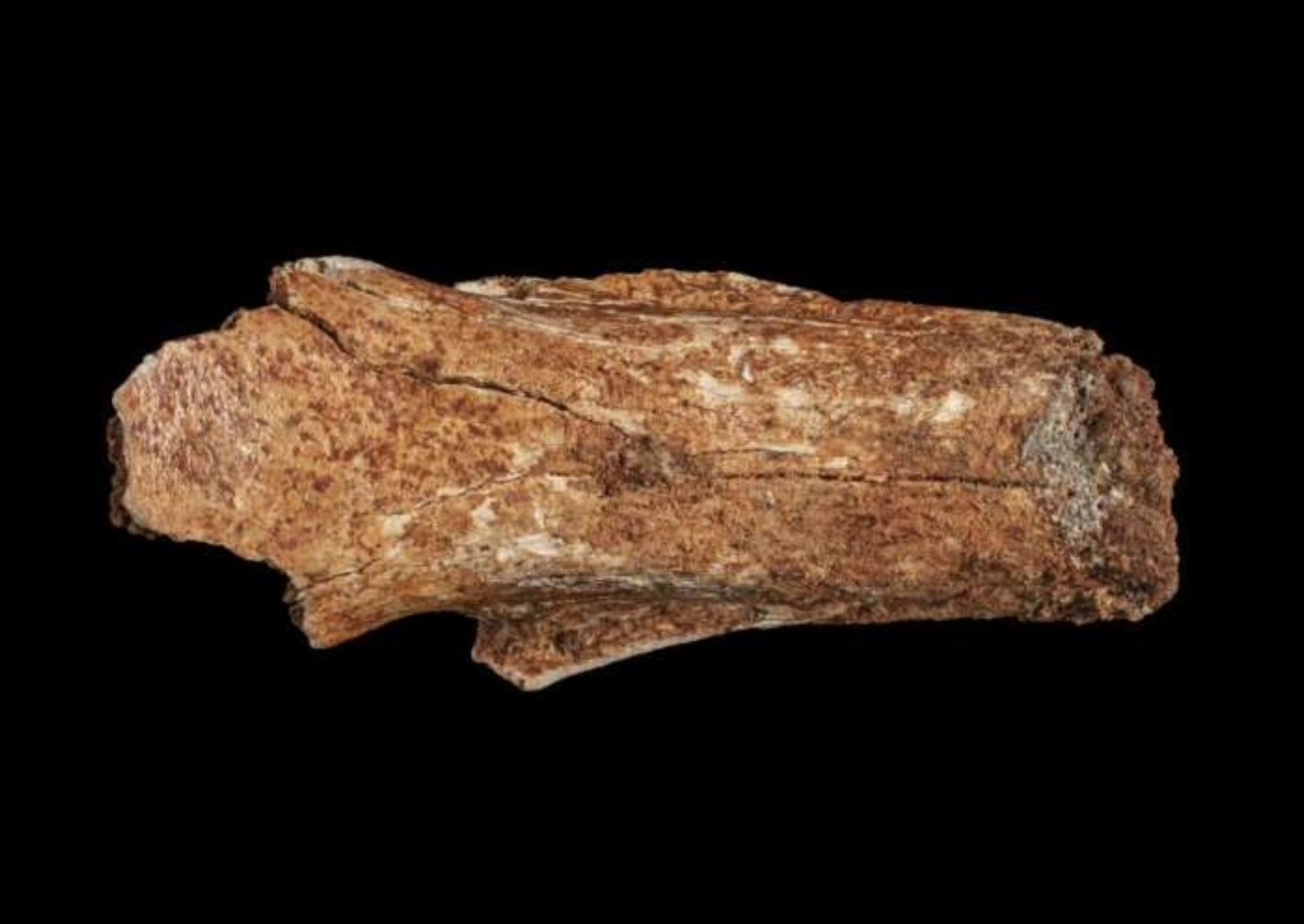
“Museum collections preserve the connection between science, heritage and people,” Ziegler, lead author of the study, said in a statement. “More than a century ago, Spry, scientists and locals studied the Buchan Caves with little more than ropes and kerosene lamps, and they inspired us to continue their work.”
Ziegler and co-author Jeremy Lockett, a vertebrate paleontology student at Deakin University, studied modern and fossil echidnas in other Australian museum collections, likely comparing them to that of Museums Victoria. Its characteristic straight-beaked snout, with which it is said to have crushed large insects and dug into Australian Ice Age soils, confirmed that it was indeed a giant Owen echidna.
“Previous research by Museums Victoria has shown that the Buchan Caves preserve an exceptional heritage of Australia’s unique megafauna,” Ziegler said. “The next amazing discovery could come from inside the museum, from ongoing fieldwork, or from the keen eye of a citizen scientist.” »
Today, echidnas are egg-laying mammals, with a bristly appearance and long noses, which live in particular in Australia and Indonesia. They measure 14 to 30 inches long, weigh 5.5 to 22 pounds, and are endangered. And sometimes these hedgehog-like creatures end up in shark vomit.

The best new PopSci 2025 releases


