A respectable and affordable Android option

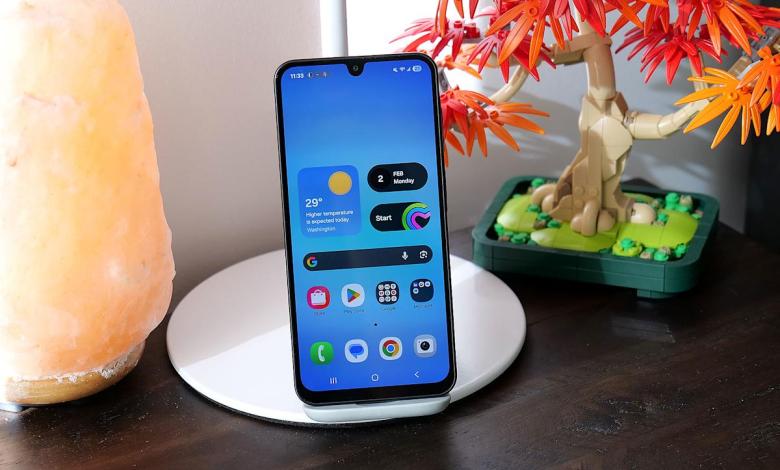
Buying a cheap phone can be a challenge. High-end handsets continue to benefit from more features, but on the other end of the spectrum, there are only so many things you can skimp on before a device becomes too compromised. With the Galaxy A17, Samsung is attempting to balance both sides of that equation with something that sports a solid design, bright screen, decent cameras, and respectable battery life for just $200. And despite a few flaws, the company has managed to make a capable phone that fits almost any budget.

Samsung
Even though its processor is a bit dated, for just $200, the Samsung Galaxy A17 is a solid choice among budget Android handsets.
- Solid construction
- Large and relatively bright screen
- microSD card slot
- Very affordable
- Poor performance
- Mono speaker
- Battery life could be a little longer
Design and display
The Galaxy A17 clearly demonstrates that not all plastics are the same. Despite its polycarbonate frame and back, the phone never feels cheap. Everything from its buttons to its camera module feels nice and tight. The optical image stabilization system used for its rear shooters does make some noise, although that’s something that even $1,000 flagships suffer from, so it’s not a big deal. Some small savings concessions include a teardrop cutout for its front selfie camera and a small chin under its screen, but given its price, these are completely forgivable. There’s also only one mono speaker and instead of an in-display fingerprint sensor, Samsung has integrated one into the power button on the side. But for some, the latter might actually be a bonus.

The Galaxy A17’s 6.7-inch OLED display is one of the phone’s best features thanks to solid brightness and a 90Hz refresh rate. (Sam Rutherford for Engadget)
Meanwhile, the A17 has one thing you don’t get on high-end handsets anymore: a microSD card slot (shared with its SIM tray) for expandable storage. This gives you an inexpensive way to expand the phone’s base 128GB of space, and given how scarce it is these days, it’s another win for people looking for a truly affordable device.
The Galaxy A17’s screen is also surprisingly nice for its price, as it sports a 6.7-inch OLED display with up to 800 nits of brightness. Granted, its refresh rate caps out at 90Hz instead of the 120Hz you get with a more expensive price tag. But again, considering the price, I’m not complaining. Especially when we remember that base iPhones were still equipped with 60Hz panels as recently as 2024.
Performance
One area where budget phones often struggle is performance, as skimping on RAM or CPU can save manufacturers a lot of money. And while the Galaxy A17 is generally a good fit given its price range, I really wish Samsung had opted for a slightly newer chip. The phone comes with just 4GB of RAM (although there are slightly more expensive versions with more), 128GB of onboard storage, and an Exynos 1330 SoC, the latter of which is almost three years old.

The Galaxy A17 comes with three rear cameras, but it’s more like two because one of them is a 2MP macro camera. (Sam Rutherford for Engadget)
At first I was really worried because during initial setup the phone was lagging and choppy. Fortunately, after logging in, giving the phone time to download updates in the background, and making sure all of its apps were up to date, performance improved significantly. To be clear, this thing still isn’t a speed demon and when you’re multitasking or quickly switching between heavy apps, you may notice some slowdown. I also wish touch input was a little more responsive, because sometimes when you tap an icon there’s a little delay before something happens. But fortunately it’s relatively minor and in most situations the phone is quite snappy.
Cameras
The A17 comes with a 13-megapixel selfie camera and three rear cameras, although in practice it’s more like two because one of them is a 2 MP macro camera, which isn’t very useful unless you’re taking a lot of close-up photos. That said, the phone takes better photos than one might expect given its price. In well-lit conditions, its 50 MP main and 5 MP ultra-wide cameras don’t have much to complain about. Images are sharp and feature vibrant colors.
However, in low-light situations, there’s a clear quality difference between the A17 and more expensive mid-range phones like the Pixel 9a. In a photo of fruit in my dimly lit kitchen, the A17’s photo looks soft and has washed out colors compared to what Google’s phone produces. Then, when I went out and took a photo of a car still buried after the recent snowstorm, the textures of the melting snow on the road, as well as various highlights and shadows, looked worse in the images from the A17. So while the phone may hold its own, camera quality remains one of the main reasons why you might consider upgrading to a more expensive handset.
Battery life

The bottom of the Galaxy A17 houses the phone’s USB-C port and its single mono speaker. (Sam Rutherford for Engadget)
For a phone with a 5,000mAh battery and a low-power chip, the Galaxy A17 didn’t last as long as expected. In our local video test, it lasted just over 23 hours (23:08), which is OK, but also five hours less than the Pixel 9a (28:04). On the other hand, its wired charging speed of 25 watts is more than sufficient. Don’t be surprised when you put it on a wireless charger and nothing happens because the phone doesn’t support it.
Conclude
If you’re limited to $200, the Samsung Galaxy A17 is a surprisingly impressive device. It features a solid build, decent cameras with a handful of different lenses, respectable battery life, and even a built-in microSD card slot for additional storage. You even get six years of OS and security updates, which is significantly longer than almost all of its similarly priced competitors. And while its performance could be smoother, it’s not slow enough to really worry about on such an affordable phone.

Even though the Galaxy A17 is made of plastic, the phone still doesn’t feel cheap. (Sam Rutherford for Engadget)
For those with some wiggle room in their gadget allocation, I’d seriously consider a version with 8GB of RAM, which is only $30 more. Alternatively, the Pixel 9a remains my favorite Android phone in terms of value for money and it costs $399 (down from its launch price of $499). But if money is tight, the Galaxy A17 offers everything you need without blowing your budget.


