How zoos are preparing animals for this weekend’s massive winter storm


January 23, 2026
2 min reading
 Add us on GoogleAdd SciAm
How zoos prepare for winter storms
This weekend’s freezing temperatures and snow won’t just affect humans: Zoo animals need to prepare for the coming storm, too.
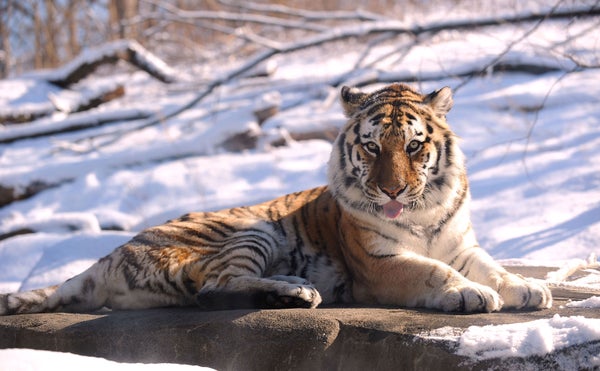
A tiger enjoys the winter weather at the Bronx Zoo in New York in 2009.
James Devaney/Getty Images
Millions of people in the United States are bracing for a massive winter storm this weekend, with plunging temperatures, “catastrophic” ice accumulation, freezing rain and heavy snow, authorities say. But humans aren’t the only ones hiding; zoos across the country are also preparing for the winter storm.
In Texas, the Houston Zoo has equipped its buildings and barns with heaters “designed to withstand extreme conditions,” the zoo said in a blog post on Friday. Animals will have access to extra hay and bedding, and food will be stored in advance. “Throughout the zoo, sensitive plants are protected by covers and generators are positioned to provide backup power if needed,” the blog states.
Elsewhere in the state, the Dallas Zoo reportedly plans to bring many of its animals indoors and step up enrichment activities such as keeper trainings, food puzzles and nature sounds. “Humans can stay inside and watch Netflix,” said Keith Zdrojewski, zoo curator. Dallas Morning News. “When animals stay indoors for several days, it can become quite boring for them.”
On supporting science journalism
If you enjoy this article, please consider supporting our award-winning journalism by subscription. By purchasing a subscription, you are helping to ensure the future of impactful stories about the discoveries and ideas shaping our world today.
Likewise, the Fort Worth Zoo welcomed its endangered Pan’s box turtles indoors. Fort Worth Star Telegram reported. Meanwhile, in Cincinnati, animal care staff plan to stay overnight at the zoo to keep an eye on the animals, according to the Cincinnati Zoo. And in Washington, D.C., if temperatures drop below 35 degrees Fahrenheit (1.7 degrees Celsius), as they are currently predicted, species at the Smithsonian National Zoo, including Asian small-clawed otters, brown pelicans, orangutans and gorillas, will likely also be taken indoors, per standard zoo procedures.
Other animals, of course, will do just fine in the cold. At the Philadelphia Zoo, officials expect Marcy the snow leopard to do well this weekend, according to a local report. And in Sedgwick County, Kansas, an Amur tiger, a species very well adapted to low temperatures, “loves” the cold.
It’s time to defend science
If you enjoyed this article, I would like to ask for your support. Scientific American has been defending science and industry for 180 years, and we are currently experiencing perhaps the most critical moment in these two centuries of history.
I was a Scientific American subscriber since the age of 12, and it helped shape the way I see the world. SciAm always educates and delights me, and inspires a sense of respect for our vast and magnificent universe. I hope this is the case for you too.
If you subscribe to Scientific Americanyou help ensure our coverage centers on meaningful research and discoveries; that we have the resources to account for decisions that threaten laboratories across the United States; and that we support budding and working scientists at a time when the value of science itself too often goes unrecognized.
In exchange, you receive essential information, captivating podcasts, brilliant infographics, newsletters not to be missed, unmissable videos, stimulating games and the best writings and reports from the scientific world. You can even offer a subscription to someone.
There has never been a more important time for us to stand up and show why science matters. I hope you will support us in this mission.


