Human brains have 5 distinct ‘epochs’ in a lifetime, study finds

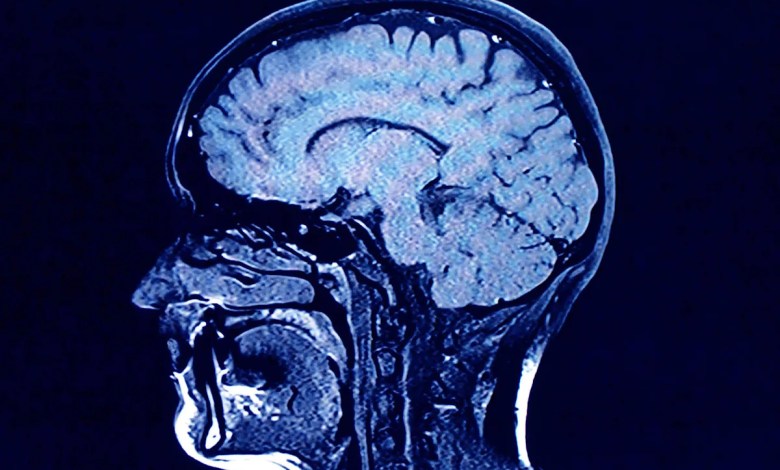
As we age, the human brain reconnects.
The process occurs in distinct phases, or “epochs,” according to new research, as the structure of our neural networks changes and our brains reconfigure the way we think and process information.
For the first time, scientists say they have identified four distinct turning points between these phases in the average brain: at ages 9, 32, 66 and 83. During each epoch between these years, our brains exhibit markedly different characteristics of brain architecture, they say.
The findings, published Tuesday in the journal Nature Communications, suggest that human cognition does not simply increase with age until it peaks and then declines. In fact, ages 9 to 32 is the only time in life where our neural networks become increasingly efficient, research shows.
During the adult phase, from ages 32 to 66, the average person’s brain architecture essentially stabilizes without major changes, a time when researchers believe people generally plateau in terms of intelligence and personality.
And in the years since the last turning point – 83 and beyond – the brain becomes increasingly dependent on individual regions as the connections between them begin to fade.
“It’s not a linear progression,” said Alexa Mousley, a postdoctoral research associate at the University of Cambridge and lead author of the study. “This is the first step in understanding how changes in the brain fluctuate with age.”
The findings could help identify why mental health and neurological problems develop during particular phases of rewiring.
Rick Betzel, a professor of neuroscience at the University of Minnesota who was not involved in the research, said the results are intriguing, but more data is needed to support the conclusions. These theories may not stand up to scrutiny over time, he said.
“They did something really ambitious,” Betzel said of the study. “Let’s see where he’ll be in a few years.” »
For their research, Mousley and his colleagues analyzed diffusion MRI scans — which are essentially images of how water molecules move in the brain — of about 3,800 people ages 0 to 90. The goal was to map the neural connections in the average person’s brain at different stages of life.
In the brain, the bundles of nerve fibers that transmit signals are encapsulated in fatty tissue called myelin. Think of it like wiring or plumbing. Water molecules diffused into the brain tend to move in the direction of these fibers rather than across them, meaning researchers can infer where the neural pathways are.
“We can’t open skulls…we rely on non-invasive approaches,” Betzel said of this type of neuroscience research. “What we’re trying to understand is where these fiber bundles are.”
Based on MRI scans, the new study maps the average person’s neural network throughout their life, determining where connections strengthen or weaken. The five “epochs” described are based on the neural connections observed by the researchers.
The first phase is from 0 to 9 years old, they suggest. The brain rapidly increases in gray and white matter; it prunes extra synapses and restructures itself.
From age 9 to 32, there is a long period of rewiring. The brain is defined by rapid communication throughout the brain and efficient connections between different regions.
Most mental health disorders are diagnosed during this period, Mousely said: “Is there something about this second period of life, as we find it, that might lead people to be more vulnerable to the onset of mental health disorders?
From 32 to 66 years old, the brain stagnates. It’s still rewiring itself, but in a less dramatic and slower way.
Then, from ages 66 to 83, the brain tends toward “modularity,” where the neural network is divided into highly connected subnetworks with less central integration. At age 83, connectivity declines further.
Betzel said the theory described in the study likely aligns with people’s experiences with aging and cognition.
“It’s intuitively something we gravitate toward. I have two kids and they’re very young. I think all the time, ‘I’m growing out of my toddler days,'” Betzel said. “Maybe the science is there eventually. But are these exactly the right ages? I don’t know.”
In the ideal version of a study like this, he added, researchers would have diffusion MRI data for a large group of people, each of whom would be analyzed during each year of life, from birth to death. But this was not possible because the technology was not available decades ago.
Instead, the researchers combined nine different datasets containing neuroimaging from previous studies and attempted to harmonize them.
Betzel said each of these data sets varies in quality and approach, and efforts to match them to one another could eliminate significant variability, ultimately leading to bias in the results.
Nonetheless, he said the paper’s authors are “thoughtful” and competent scientists who did their best to control for this possibility.
“Brain networks change over the course of life, absolutely. Is it discrete, such that there are five exact points of change? I would say stay tuned. That’s an interesting idea.”
This article was originally published on NBCNews.com


