Danish scientists assess economic impact of Salmonella on dairy farms


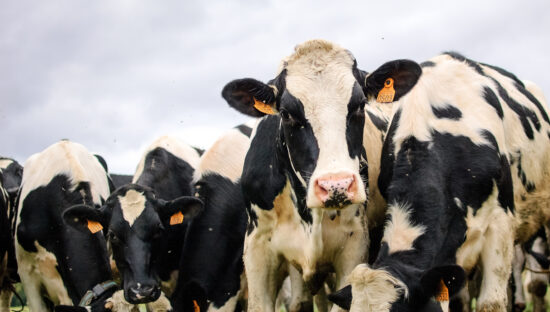
Scientists estimated the economic impact of infections in Salmonella Dublin in dairy farms in Denmark.
Researchers at the University of Copenhagen examined Salmonella Dublin in all Danish dairy farms over a period of 10 years.
A national eradication plan was launched in 2008. The current infection rate is estimated at around 5% of the herds of Danish cattle, compared to 20 to 25% in 2008. A human infection can occur by contact with animals as well as by the consumption of non -pasteurized dairy products and insufficient meat.
Lack of incentives
Jakob Vesterlund Olsen, of the Ministry of Food and Resources, said that a possible reason not yet achieved the objective is the absence of a sufficiently strong incentive for farmers.
The asymptomatic nature of Salmonella Dublin in livestock discourage farmers from implementing control measures. Incitations could include the supply of subsidies to those who invest in prevention, early detection and control measures, or the introduction of a reduced price for milk from infected herds chronically.
According to the Statens Serum Institut, 20 to 30 human cases are recorded each year in Denmark.
The study, published in the journal Agricultural Economics, used data from 2011 to 2020 and showed that Salmonella Dublin leads to increased mortality from the calf, a drop in dairy efficiency, higher medication costs and more veterinary treatments.
The farms of cattle with high levels of infection face additional annual costs of around € 11,300 ($ 13,100). But even the herds with low levels of infection face losses. A typical herd of 200 dairy cows with low level infection causes additional variable costs of € 6,700 ($ 7,800) per year.
Appeal to action
“Salmonella Dublin is not only a serious threat in the barn. Globally, it is a potential risk of public health that is likely to develop as antibiotic resistance spreads. It is a bacteria that kills people every year, and it is high time that we do more to fight it, “said Dagim Belay, assistant professor in the Department of Food Economy and Resources.
“The delicate thing about Salmonella Dublin is that it often flies under the radar. Many herds are infected without visible symptoms, which means that disease and economic losses can develop gradually without being noticed,” said Belay.
The researchers also underlined a problem in the way the authorities monitor Salmonella Dublin. The Danish veterinarian and food administration measures the level of antibodies against the bacteria in the farm’s milk tank, and if the antibody level is below a certain threshold, the herd is considered without salmonella.
“Threshold -based regulations have contributed to help Denmark considerably reduce the prevalence of Salmonella Dublin to its current low level.But the current threshold is rather arbitrarily defined. And our data shows that production losses are already occurring at the levels of infection well below this threshold, “said Vesterlund Olsen.
(To register for a free subscription to Food Safety News,click here)


