China’s Ancient Tombs Reveal Links Between Political Stability and Prosperous Landscapes


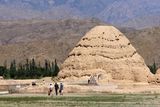
Stretching from the fertile plains of Chengdu to the mist-shrouded hills of northern China, thousands of ancient tombs mark the places where generations lived, prospered and rest. These burial sites, some dating back 4,000 years to the Xia dynasty, constitute an archive of China’s long and complex history.
Researchers have now mapped the locations of these tombs in unprecedented detail, revealing patterns that reflect the country’s changing centers of wealth, warfare and governance. The study, published in PLOS One by scientists from Beijing University of Civil Engineering and Architecture, reveals that geography and social stability shaped the locations of tomb construction, showing where ancient communities flourished.
Beyond providing a window into the past, the researchers say their work could guide future preservation efforts. Many of these ancient burial sites are threatened by erosion, natural disasters and urban development. Understanding how and where they survived could help protect them for generations to come.
Learn more: Deadly fungus that haunted ancient tombs could now help fight cancer
The tombs reflect the stability and power of ancient China
The team’s analysis shows that the number and distribution of surviving graves correspond closely to periods of political stability. Eras of peace and prosperity, such as the Qin-Han and Yuan-Ming-Qing dynasties, are well represented in the archaeological record. On the other hand, chaotic periods, such as those of the Five Warring Dynasties, left far fewer burial sites.
Because tombs were not simply places of rest but also reflections of social status, wealth, and religious beliefs, people could spend more time focusing on the afterlife when the standard of living was high. In this sense, each burial site becomes a marker of its era.
Geography shapes the living and the dead
Physical geography played an equally important role in shaping the Chinese funerary landscape. The Chengdu-Chongqing region and the central plains are notable for their high concentration of tombs. Both regions are characterized by flat terrain, fertile soil, and abundant water, which are essential environmental features that supported early agricultural settlements.
In addition to these landscapes nourishing life, they also preserved death. The study notes that the humid conditions in these regions likely helped protect the grave goods from decay, providing archaeologists with a richer trove of evidence. Meanwhile, during periods of conflict – particularly from the late Eastern Han through the Northern and Southern dynasties – mass migrations pushed populations south, leading to corresponding changes in the distribution of tombs.
Informing policies for the protection of historic sites
China’s ancient tombs are among the most valuable sources of historical and cultural knowledge. They contain clues to the identities, social ranks and belief systems of their occupants, offering tangible connections to lives lived millennia ago. Yet these sites face increasing threats: erosion due to natural forces and inadequate protection policies.
Researchers hope that by digitally mapping the country’s tombs, they can lay the groundwork for more systematic preservation.
“This study conducted a systematic numerical investigation and analysis of the spatio-temporal distribution characteristics and influencing factors of ancient tombs in China,” the study authors said in a press release. The results, they added, could help build “a scientific and precise protection system” to safeguard China’s funerary heritage.
As China continues to modernize, its ancient tombs remain constant reminders of how geography, governance and human aspirations have intertwined over the centuries.
Learn more: Three new Egyptian tombs discovered in Luxor were those of prominent statesmen
Article sources
Our Discovermagazine.com editors use peer-reviewed research and high-quality sources for our articles, and our editors review the articles for scientific accuracy and editorial standards. See the sources used below for this article:


