I’m sticking with Windows 10 even after it dies next week. Here’s how


On October 14, 2025, Microsoft will officially end support for Windows 10, reversing the company’s initial promise that Windows 10 would be “the last version of Windows.” Instead, six years after its 2015 launch, Microsoft released Windows 11.
It’s now been four years since the release of Windows 11 and Microsoft is tired of waiting for users to upgrade. In September 2025, Windows 11 and Windows 10 are still neck and neck in terms of global market share, and Microsoft clearly wants to move things forward.
But what does it mean that Windows 10 support ends next month? Well, let me explain! Not only that, but I’m going to tell you why I’m sticking with Windows 10 and how I plan to do it.
Time is running out for Windows 10
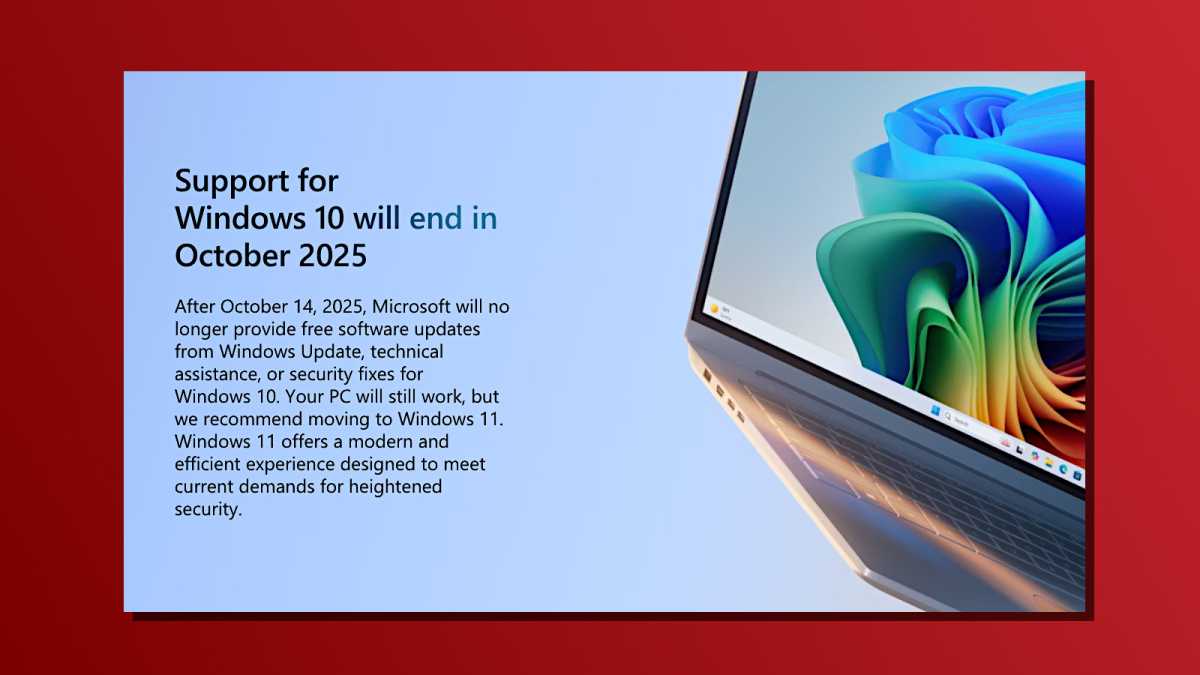
Once October 14 arrives, Windows 10 PCs will no longer receive security updates or bug fixes, much less new features. This means that the longer you continue to use it, the more vulnerable your PC will become to malware and hackers (because they will exploit as-yet-undiscovered security holes that won’t be patched on your PC). And if you experience system issues with your PC, Microsoft will not provide technical support.
Dave Parrack / Foundry
As it stands, this has scared many users into taking the plunge and upgrading to Windows 11, either by running a Windows Update or purchasing a new machine with Windows 11 pre-installed. But Statcounter’s market share statistics show that hundreds of millions of users still refuse to upgrade, including me.
I knew that Windows 10 end of support was coming for a while, but I didn’t care enough to upgrade and I always I have no plans to upgrade. I’m sticking with Windows 10. Yes, I’m aware of the risks, but I have ways around them. (More on this below.)
My current PC is not efficient enough
Microsoft is desperate to get holdouts like me to abandon Windows 10, but the numbers suggest that far too many people are refusing Windows 11 outright for a variety of reasons.
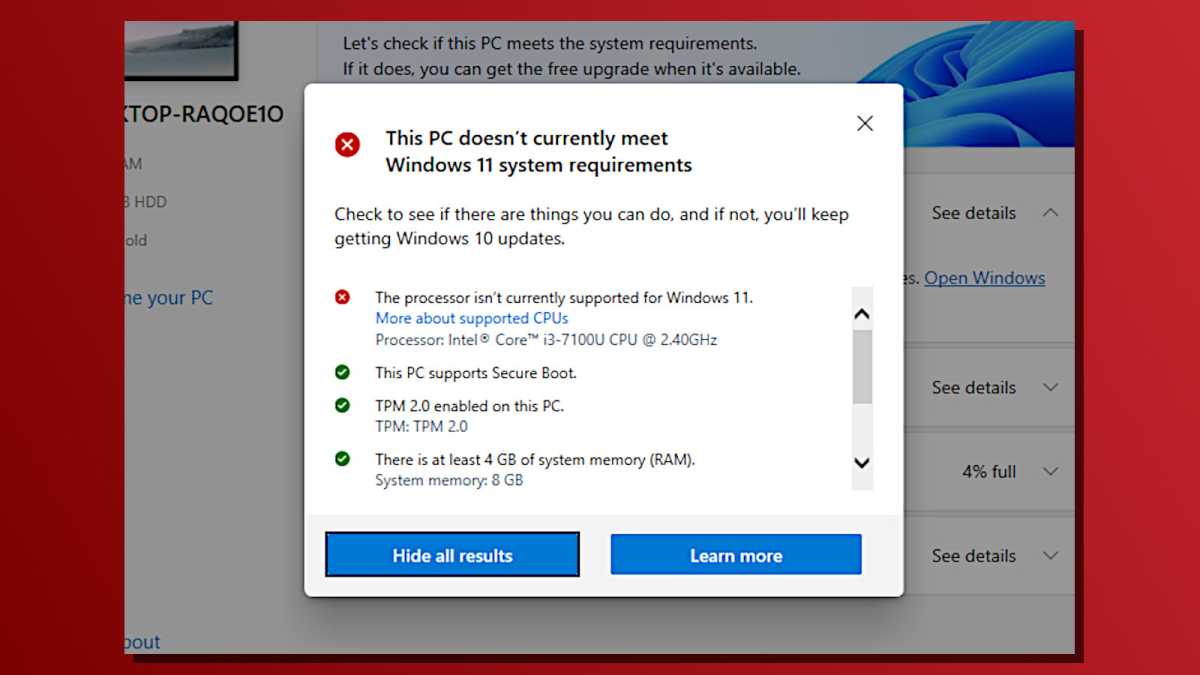
Why am I I stay on Windows 10? The main reason is that my PC is apparently not eligible for Windows 11. I ran the Windows PC Health Check app and discovered that my Intel Core i3 (on my seven year old laptop) is not supported by Windows 11. To upgrade, I would either need to purchase and install a new CPU (no thanks) or purchase a new PC entirely (no thanks). Why spend unnecessary money when my current PC works great?
Dave Parrack / Foundry
Why is my processor not eligible for Windows 11? Who knows. I doubt Microsoft has a good answer. Maybe my laptop would choke on Windows 11 because it’s much larger, or maybe it would perform as well as Windows 10. Maybe Microsoft just wants to give me a reason to abandon ship and buy a new laptop.
But my laptop works fine! And that for me is the crux of the problem. It’s more than capable of doing everything I need it to do, and I’m not a power Windows user, so I don’t need anything extra. This seems like planned obsolescence to me…and I hate it. It’s a waste of a perfectly good laptop and I refuse to turn it into electronic waste. I’m also not impressed with Microsoft’s potential trade-in program for Windows 10 PCs.
Dave Parrack / Foundry
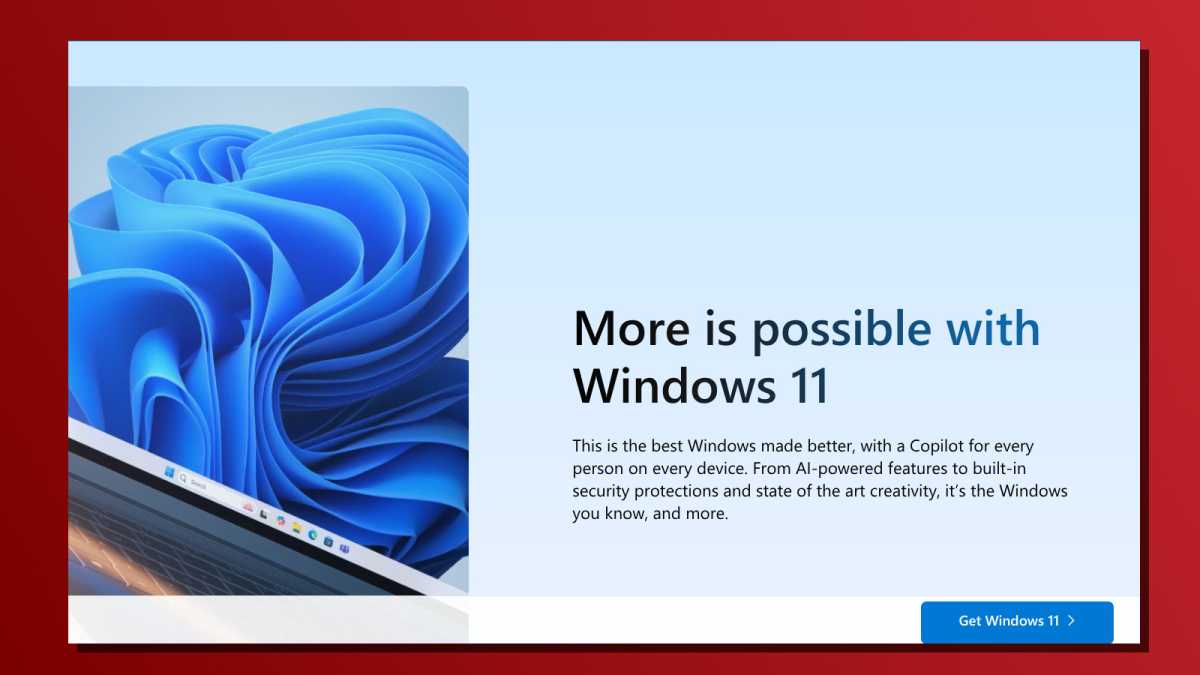
As for Windows 11, I don’t care. I’ve used it on other people’s PCs a few times and honestly it doesn’t really feel like an upgrade. Sure, there are some notable improvements, but none of them are big and revolutionary enough to justify investing hundreds of dollars in new hardware.
And I would be remiss if I didn’t mention the bugs and issues that have been affecting Windows 11 for 24 hours! There is no way I would willingly subject myself to this kind of frustration.

Dave Parrack / Foundry
It also doesn’t help, as I’ve written before, that I use a Chromebook for most of my daily activities. Which means my Windows 10 PC has been sidelined a bit, only there for times when I need it in place of my Chromebook.
Am I just getting old?
One concern that has crossed my mind is that maybe this is all just a matter of age. As I approach middle age, could it be that I’m reaching that point in life where I prefer to stick with familiar technology and don’t want to bother with “the next thing”? I don’t remember feeling these same feelings when I had to upgrade from Windows XP to Vista or from Windows 7 to 10. This could very well be (at least in part) a “me problem” here.
Still, I can’t deny that Microsoft makes me feel stuck and wanting to go backwards, continuing with the hardware I’ve been using for several years. I’m irritated that this multi-billion dollar company is essentially forcing me to buy a new computer and downgrade to an inferior operating system instead of turning Windows 11 into a product so good and desirable that it makes me to want for a change.
Don’t get me wrong. I don’t think there’s anything bad about Windows 11. It just didn’t give me a compelling reason to upgrade. If I could upgrade freely without needing a new PC, sure, maybe I would. But since this comes at a real cost, I choose to stick with Windows 10.
How to Stick to Windows 10 (For Now)
If you’re in a similar situation to me and want to continue using Windows 10 even after the end of support date, you have several different options to do so safely. Whatever you do, don’t continue to use it in its unsupported state. Without a continuous source of security updates, you’ll just be asking for trouble.
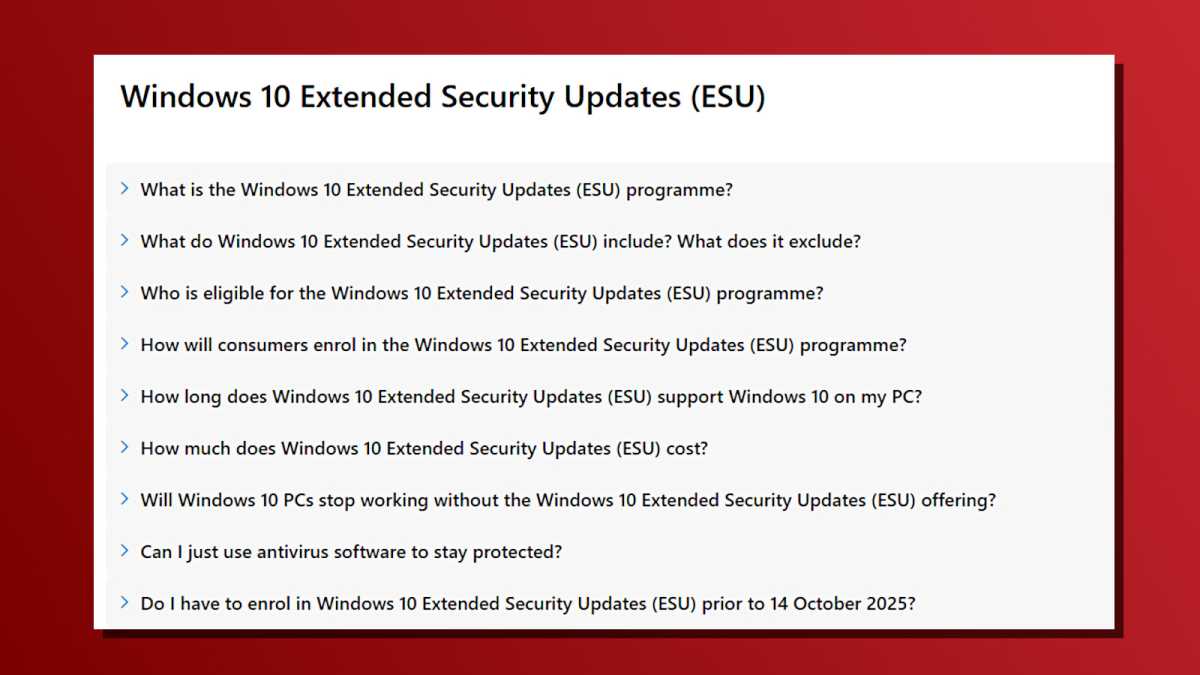
Instead, you’ll want to sign up for Microsoft’s Extended Security Updates (ESU) program. By enrolling your PC in the ESU program, you will benefit from an additional year of Windows 10 security updates.
Microsoft
There are actually three ways to join the Windows 10 ESU program. A valid Microsoft account is required for all three options:
Option #1: Pay $30. This is a one-time flat fee that unlocks an additional year of Windows 10 security updates with no other strings attached (aside from requiring a Microsoft account). Price may vary if you are outside the United States.
Option #2: Enable Windows Backup. Windows Backup is a free feature that backs up selected files, folders, and settings to OneDrive so you don’t lose them even if your PC crashes, is lost, or stolen. After enabling Windows Backup, your Windows 10 PC receives extended updates.
Option #3: Spend 1,000 Microsoft Rewards points. Instead of paying $30, you can sign up for Microsoft Rewards and start earning points by searching on Bing, playing certain games on Xbox One, purchasing products from the Microsoft Store, and more. Points can then be redeemed for extended security updates.
If any of these options work for you, you should be able to enroll your PC in the Windows 10 ESU program via a banner in the upper right corner of your Windows Update settings page.
There is also another unofficial option
If none of Microsoft’s official ESU options sound good to you (maybe you don’t want to create a Microsoft account at all), there is one more thing you can try, but this route comes with caveats.
There is a free third-party tool called UpDownTool that allegedly provides several additional years of support for Windows 10. How does it work? By converting your PC to Windows 10 LTSC (“Long-Term Servicing Channel”), which is a special lite version of Windows 10 that is not intended for general-purpose PCs. Windows 10 LTSC has regular support until January 12, 2027 as well as extended support until January 13, 2032.
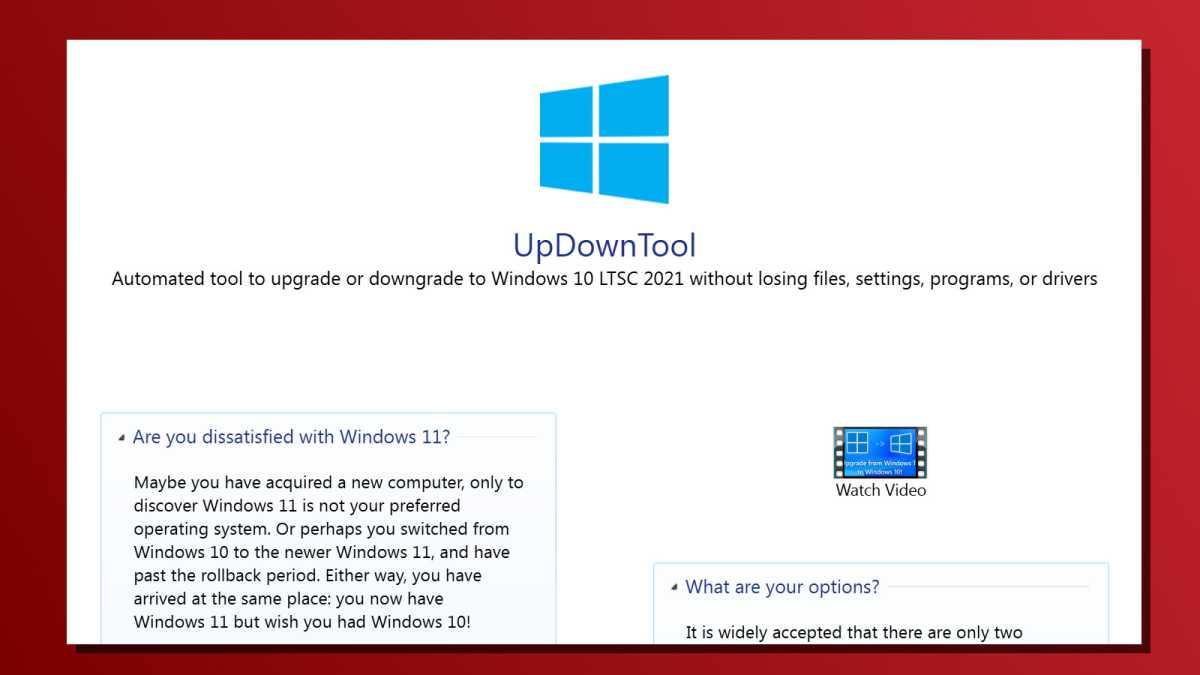
UpDown Tool
UpDownTool is actually aimed at Windows 11 users who regret the upgrade and want to go back to Windows 10. However, it can still be used by people on Windows 10 (or any other version of Windows) to upgrade to Windows 10 LTSC.
By upgrading to Windows 10 LTSC, you’ll end up with a PC that essentially runs Windows 10, except without any of the usual bloatware or nagging pop-ups about upgrading to Windows 11. The caveat is that Windows 10 LTSC doesn’t receive feature updates, doesn’t support the Microsoft Store, and doesn’t support Windows 10 LTSC. supports apps regularly maintained through the Microsoft Store, such as Microsoft Edge.
Again, UpDownTool is a third-party tool that is not officially supported by Microsoft, so use it at your own risk if you go this route.
It’s still Windows 10 for me
I will most likely enroll my PC in the Windows 10 ESU program by enabling Windows Backup before the October 14 deadline, which will keep my PC safe and protected until at least October 13, 2026.
Beyond that, I don’t know how I’m going to move forward. I might finally bite the bullet on a new PC that ships with Windows 11, but I’m also tempted to ditch Windows entirely in favor of ChromeOS — and if I end up doing that, Microsoft will only have itself to blame.
Further reading: The Best Chromebooks That Are Really Great

:max_bytes(150000):strip_icc()/Health-GettyImages-2212819792-c02d8ece2ada4947bd5e9720cbdcb00f.jpg?w=390&resize=390,220&ssl=1 "15 Best Herbs To Take Daily According To a Dietitian")

