In a ‘race against time,’ archaeologists uncovered Roman-era footprints from a Scottish beach before the tide washed them away


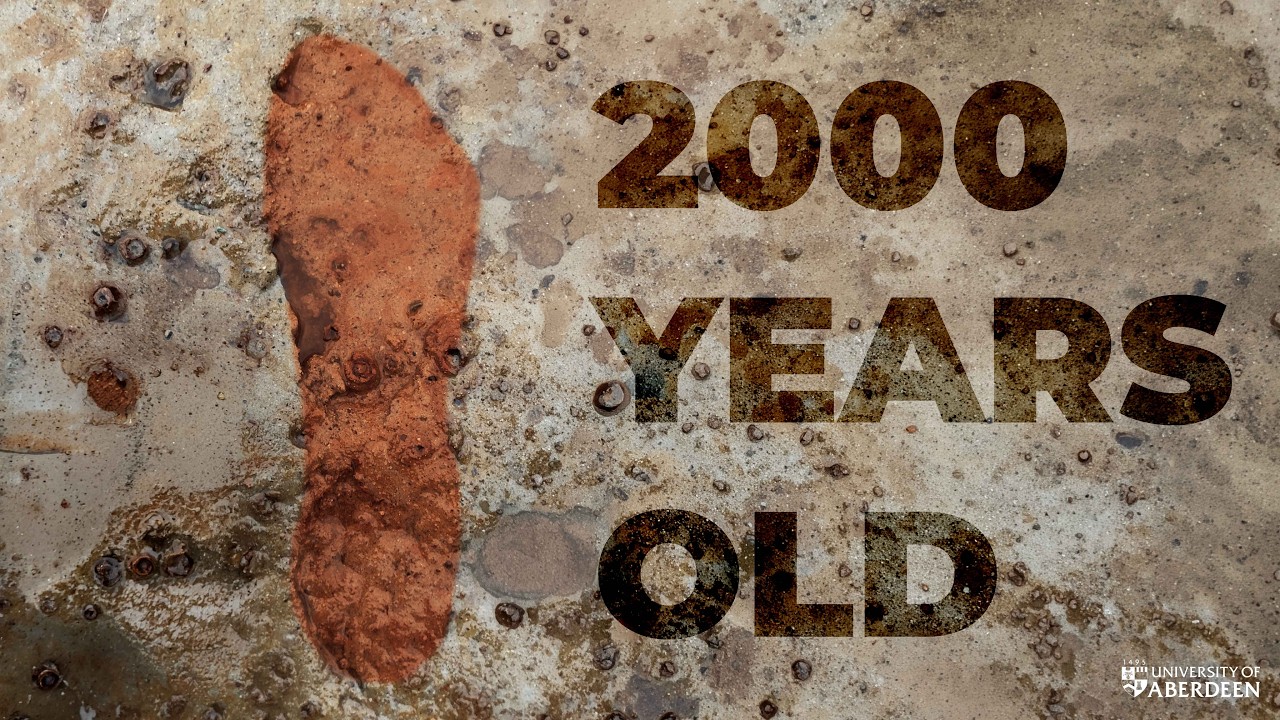
While walking their dogs along a cliff-edge Scottish beach after an intense storm, a couple came across a series of unusual markings on the wet ground – patterns that resembled ancient human and animal footprints.
Their discovery sparked an archaeological race against time to document and study the footprints before they disappear into the waves.
On the beach at Lunan Bay In eastern Scotland, locals Ivor Campbell and Jenny Snedden, along with their dogs Ziggy and Juno, spotted a new layer of clay in storm-damaged dunes, with what appeared to be footprints. They informed the Aberdeenshire council archaeologist Bruce Mannwho called on Britton and his team to excavate the newly discovered site before it was lost forever.
The team of archaeologists worked in wind gusts of up to 88.5 km/h, racing to document the footprints as the site was eroded with each high tide. They used drones, cameras and, later in the laboratory, 3D modeling software to record images of the archaeological site. They also used plaster to create molds of some of the best-preserved footprints, made by barefoot humans and several animals, including red deer (Cervus elaphus) and deer (Capreolus capreole), according to the statement.
“I’ve never seen a site like this in Scotland,” Britton said. “It was immediately clear that this was something special.”
Under the footprints, archaeologists found a layer of charred plant remains. They carbon dated plants 2,000 years ago, at the end of the Iron Age.

“The Late Iron Age dates match what we know from the rich archeology of the nearby Lunan Valley,” Gordon Noblean archaeologist from the University of Aberdeen, said in the statement. “It’s very exciting to think that these engravings were made by people around the time of the Roman invasions of Scotland and in the centuries before Scotland emerged. Picts“.
The Lunan Bay site “tells us how this now sandy beach was once a muddy estuary and that humans used this environment, perhaps to hunt deer or to harvest wild plants”, William Millsan archaeologist from the University of Aberdeen, said in the statement.
Britton and his team searched the site for two days, recording as much as they could. When they returned a week later, the prints had completely disappeared.
“The footprints that represent people’s actions over a few minutes, thousands of years ago, were destroyed in a few days,” Britton said.
Although the Lunan Bay site is unique in Scotland, Britton said, “what it means for us now is that there could be other sites like this.”
Look on it

Laura Geggel
This footprint discovery is exciting because the tracks can reveal a lot about the people who left them, including their approximate weight, height and age, as well as how fast they walked and whether they wore shoes. They can even reveal behavior; for example, footprints left in White Sands National Park in New Mexico appear to have been left by Ice Age children who jumped in mud puddles. In Portugal, 78,000-year-old footprints left by Neanderthals suggest that a man, a child and a toddler were foraging, ambush hunting or stalking prey, as some of the footprints overlapped with those of large mammals.
We look forward to any further analysis of these prints from Scotland and what they might tell us about the Iron Age people who lived there.
Roman Britain Quiz: What do you know about the Empire’s conquest of the British Isles?