In New Orleans, a sanctuary city’s policies are being tested in a state that supports immigration enforcement


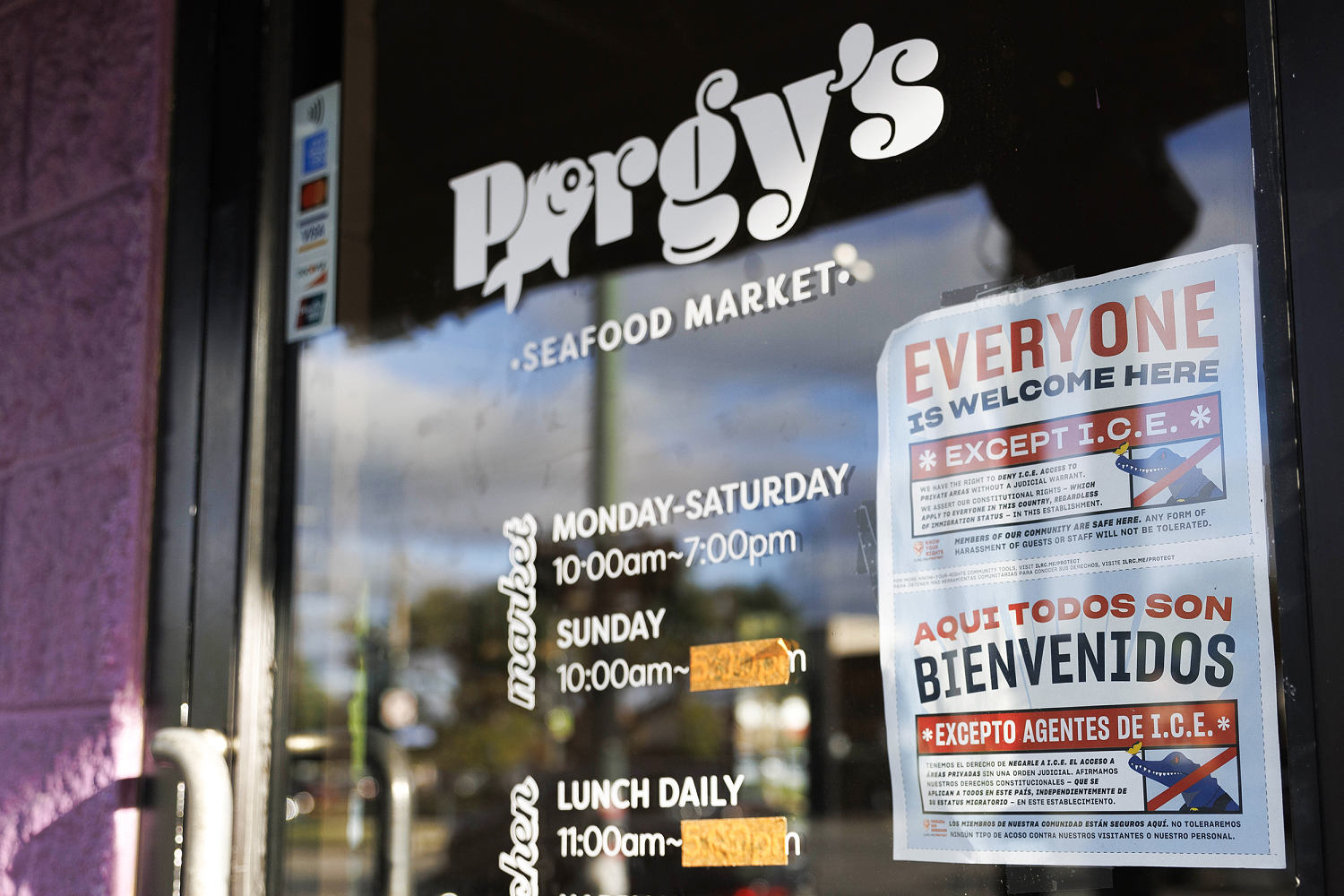
On Friday, state Attorney General Liz Murrill, a Trump loyalist, sent a letter to Kirkpatrick encouraging him to order agents to “cooperate fully” with ICE and U.S. Customs and Border Protection officials.
“ICE and CBP are our law enforcement partners in New Orleans and throughout Louisiana, where public safety is our collective mission,” Murrill’s letter reads in part. “Extremists have targeted ICE and CBP officers with threats of violence, as has been the case in other jurisdictions, and it is important that all law enforcement, including NOPD, oppose such violence and support and enforce the rule of law.”
Murrill’s letter cited a state law that makes it a misdemeanor for city employees to refuse to cooperate with federal immigration agencies, and also referenced a federal law that prohibits a person from knowingly concealing or shielding from detection a person who is in the country illegally.
Murrill is also embroiled in a legal battle with the Orleans Parish Sheriff’s Office, which runs the city’s jails. That remains governed by a consent decree in effect since 2013, when the department settled a federal case involving two immigrants detained in prison after serving their sentences.
Murrill asked a federal judge to overturn the Sheriff’s Department’s policy barring jails from holding immigrant detainees. Hearings are ongoing, according to the attorney general’s office.
“While it is under review, it is still important to remember that nothing in the consent decree would obstruct or interfere with ICE and federal immigration enforcement,” Murrill said in a statement to NBC News.
“It looks a lot like a storm.”
Immigration advocates in New Orleans say they understand the conflict between state and local policies, but want to see city officials take a stronger stance against Trump’s immigration enforcement tactics.
“They don’t want to be the nail that sticks out and gets hammered in,” Rachel Taber, an organizer with Migrant Union, an immigrant advocacy group, said of New Orleans leaders.
Taber saw immigrant communities shrink into the shadows as the recent operation began. Parents are keeping their children home from school, businesses are closing and employees are not showing up for work.
“It looks a lot like a storm where people need to stay inside and not go out,” she said. “But it’s heartbreaking because it’s a storm that only affects a third of the population and other people may not even be aware of it.”
So far, “dozens” have been arrested in the first days of enforcement, representing a small fraction of the 5,000 people the administration aims to arrest, according to DHS.
Last week, a New Orleans City Council meeting devolved into shouting and pushing and shoving when law enforcement forcibly removed a small group of anti-ICE protesters.
Dozens of protesters called on city leaders to adopt “ice-free” zones similar to those established in Chicago earlier this year. Chicago’s executive order, signed into law in October by Mayor Brandon Johnson, limits federal access to municipal properties, such as parking lots and garages, for immigration enforcement activities.
New Orleans City Council member JP Morrell told reporters that city officials are “doing everything they can under the law to make it as difficult as possible for ICE to operate here.”
Speaking after the meeting, Mayor LaToya Cantrell said New Orleans “stands with all residents in our community in making sure they know their rights.”
“They feel safe and we will continue to ensure that,” she continued.
But not all immigrants feel safe, said Alfredo Salazar, a New Orleans resident. He has lived in the United States for almost three decades and is a naturalized citizen.
About two months ago, before enforcement efforts intensified, Salazar said he was stopped by federal immigration agents outside a Home Depot. He was briefly questioned in the back of a car and released a few minutes later after presenting documents, Salazar said.
He says he remains shaken by the experience.
“It’s a crime to be Latino right now in New Orleans,” he said. “I can get arrested just because of my face.”


