Space Mice Babies Born From Frozen Stem Cells Give Hope for Human Fertility in the Cosmos


The miracle of childbirth has not yet occurred in space, but mice babies have proven that it may not be as risky as before.
Aiming to test how spatial conditions would have an impact on offspring, a new study sent mouse stem cells to space to be frozen for six months before returning to earth. Now, researchers report good news: so far, mouse offspring born from cells is as healthy as possible.
The study behind this encouraging development, published in Stem cell relationshipsis a major step to understand if human offspring can thrive in space. Although babies have origins outside the world will always have to be monitored for long -term health effects, there is nothing shortened in their DNA for the moment.
Birth risks in space
An increasing interest in long -term space missions and space tourism has raised many questions about the question of fertility in space. Being in space for long periods is known to have an impact on the human body due to exposure to microgravity, radiation, changes in the circadian rhythm and the constraint of the space trip. These factors are believed to affect male and female reproductive systems, although research on this specific subject is limited.
Scientists have greatly drawn their attention to research on how space flight changes germ cells, which develop in eggs and sperm. Germinal cells are crucial to consider because any damage caused to them is likely to be transmitted to offspring.
According to a press statement on the new study, anomalies in embryonic stem cells which have experienced space flights were observed before, although the exact cause of damage has remained unknown.
Learn more: The international space station can be too clean – but these microbes could help
The birth of healthy space mice
The researchers involved in the study decided to know how space flights could potentially damage spermatogonial stem cells and how the offspring of these cells would get out. They chose to test mouse cells, which have a much shorter reproductive lifespan than humans.
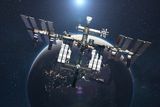
Experts initially cryoconstricted the stem cells before sending them to the international space station, where they were stored in a deep freezer for six months. After that, they were returned to earth and, according to the researchers, the cells seemed no anomaly. After having thaw and in vitro Expansion, they were then transplanted into mouse testicles.
The progeniture of the cells was born within three to four months thanks to natural mating. The researchers found that the newborn mice were healthy and had a normal gene expression, which told them that the frost-revenue cells maintain fertility for at least six months.
“It is important to examine how long we can store germ cells in the ISS to better understand the limits of storage for future human space flights,” said the first author Mito Kanatsu-Shinohara, professor of molecular genetics at the University of Kyoto, in the press release.
After new generations of space mice
Given that stem cells of many species can be cryo -is and still producing sperm, the preservation of germ cells will be a critical objective to consider for long -term spatial missions.
The researchers initially thought that the radiation encountered during space flights would have caused more difficulty in spermatogonial cells than cryocorer, which can sometimes cause cell death induced by cryoinjury.
The results showed that this was not the case; The concentration of hydrogen peroxide used in cryo -reservation killed some of the cells, but there were minimum differences in surviving cells before and after space flight.
Even if mouse offspring has not shown signs of abnormal DNA models, researchers will have to monitor any long -term complication of health as they continue to grow. They plan to observe mice throughout their lifespan and examine the continuous health of future generations come from these mice.
“We still have frozen spermatogonial stem cells on the ISS, so we will continue to carry out a more in-depth analysis,” said Kanatsu-Shinohara.
Learn more: 36 miles long, this conceptual spacecraft could transport 2,400 people in the interstellar space
Article Sources
Our Discovermagazine.com writers use studies evaluated by high -quality peers and sources for our articles, and our publishers examine scientific precision and editorial standards. Review the sources used below for this article:


