
In the far corner of the Crockett County Senior Center, 75-year-old Cynthia Flores almost always has a puzzle going. She and her friends sort colors and look for edge pieces while they gossip — “faster than the telephone” — in the Tex-Mex blend of Spanish and English they grew up speaking in Ozona, a tiny ranching and oil outpost in far West Texas. A couple of days before Valentine’s Day, their puzzle surface was one of the few in the center not covered in red and pink hearts; preparations were underway for the big dance the following night.
“La comida esta ready,” another senior said, calling the puzzlers to lunch. Flores placed one last piece, then took her seat at a long community table. The plate in front of her would have delighted a nutritionist with its lean protein and mountain of steamed broccoli. She pulled a tiny plastic container of teriyaki sauce out of her bag and poured the contents over the meat. “They feed us what we need,” Flores said, “but I always fix it up.” Mostly, she said, she’s just thankful not to have to cook. Like many of her friends, Flores still lives at home, but comes into the center for lunch most days. After being married at 16 and preparing food for herself and her family for almost 60 years, she said she was ready for a break.
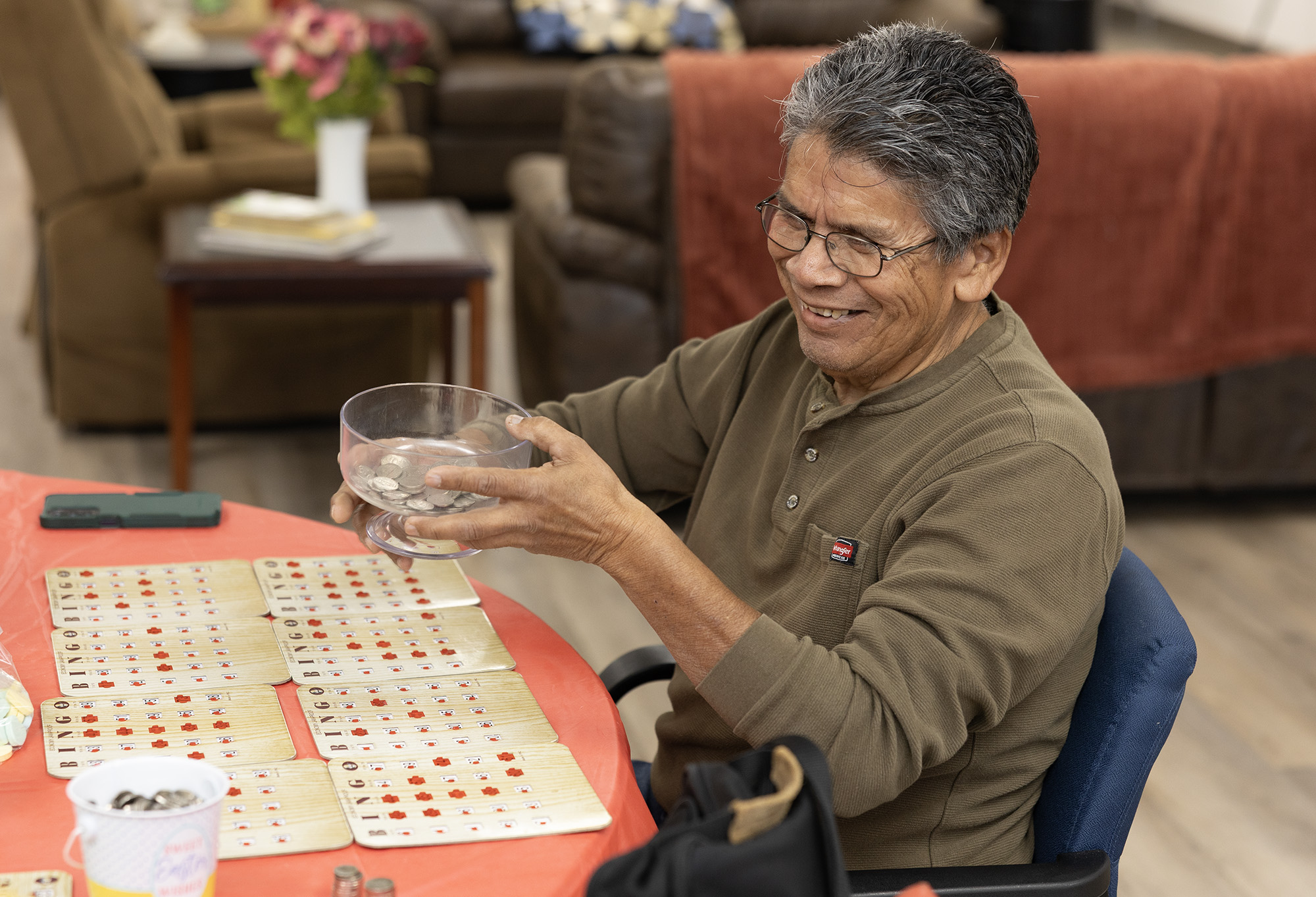
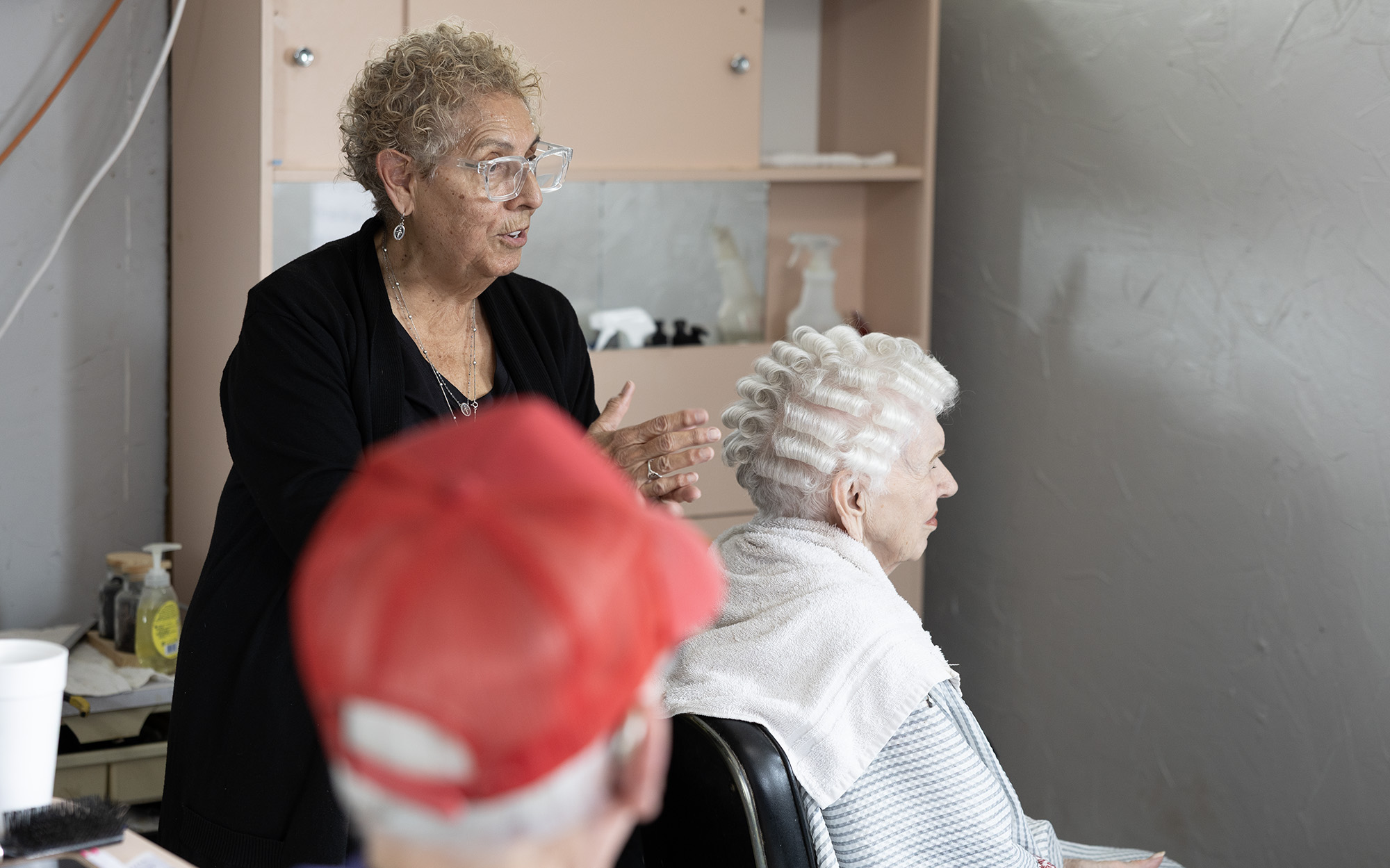
Some might say Flores and her friends are living the retirement dream. The center is like a second home, with nutritious food and a full calendar of bingo, dominoes, and social events. Thanks to services like these, many of Crockett County’s aging residents have been able to stay in the familiar community where they, their parents, and sometimes even their grandparents grew up. Flores has been cutting hair locally for decades, working primarily out of her house. Many of her clients now are in their 90s. “I’ve been blessed to work in Ozona, where I can do my own thing,” she said.
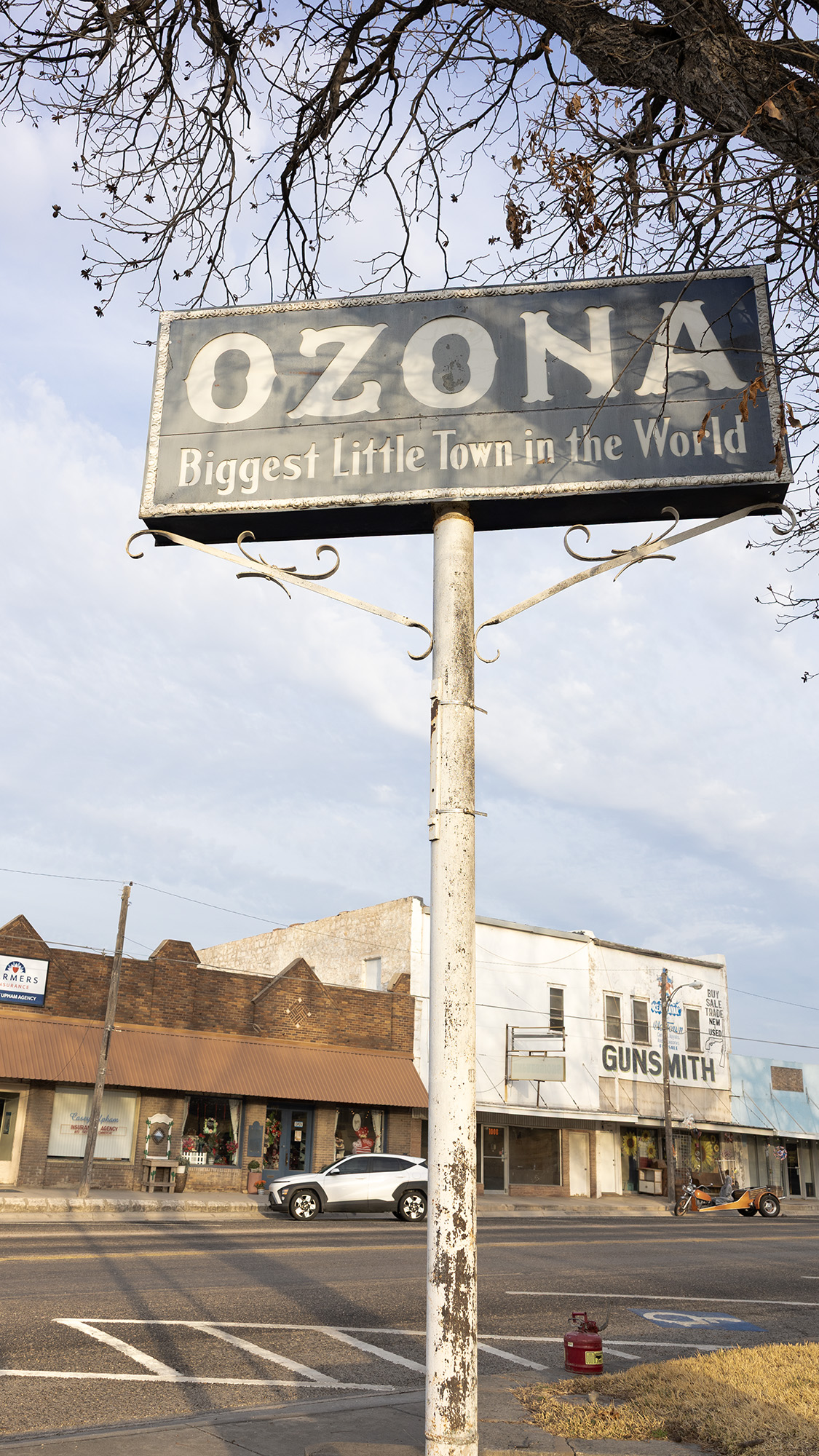
Ozona is the only town in Crockett County’s 2,800 square miles, and technically, it’s not even that. “The Biggest Little Town in the World,” as it brands itself, is technically unincorporated, meaning that the county is the only municipal government for its 2,800 residents. One person per square mile means Crockett isn’t the most rural county in Texas, but it’s up there. Taxes and regulations are minimal. The nearest city, San Angelo (the locals just say “Angelo”), is 90 minutes away. The nearest metro area, San Antonio, is three hours.
Reid Bader / Grist
In her chic, clear-frame bifocals and flowy duster, Flores makes aging gracefully in place in one of the most rural places in the United States look easy. It’s not. In many rural communities, seniors may find it hard or impossible to get the resources they need to remain in their homes and hometowns. Older Americans are already at risk of isolation, and living in a remote area can make that worse. Not to mention, resources are thin, local hospitals and other services are folding, and groceries may be pricey, far away, or both. According to the Rural Health Information Hub’s summary of U.S. Department of Agriculture data, 10.2 percent of seniors in rural areas don’t have sufficient access to healthy and nutritious food, compared with 8.5 percent in metro areas.
But in Ozona, older adults like Flores are thriving. The Crockett County government has created a strong network of senior services, and ensures that they are supported — with the help of a wonky tax arrangement and some powerful new neighbors: wind companies.
Reid Bader / Grist
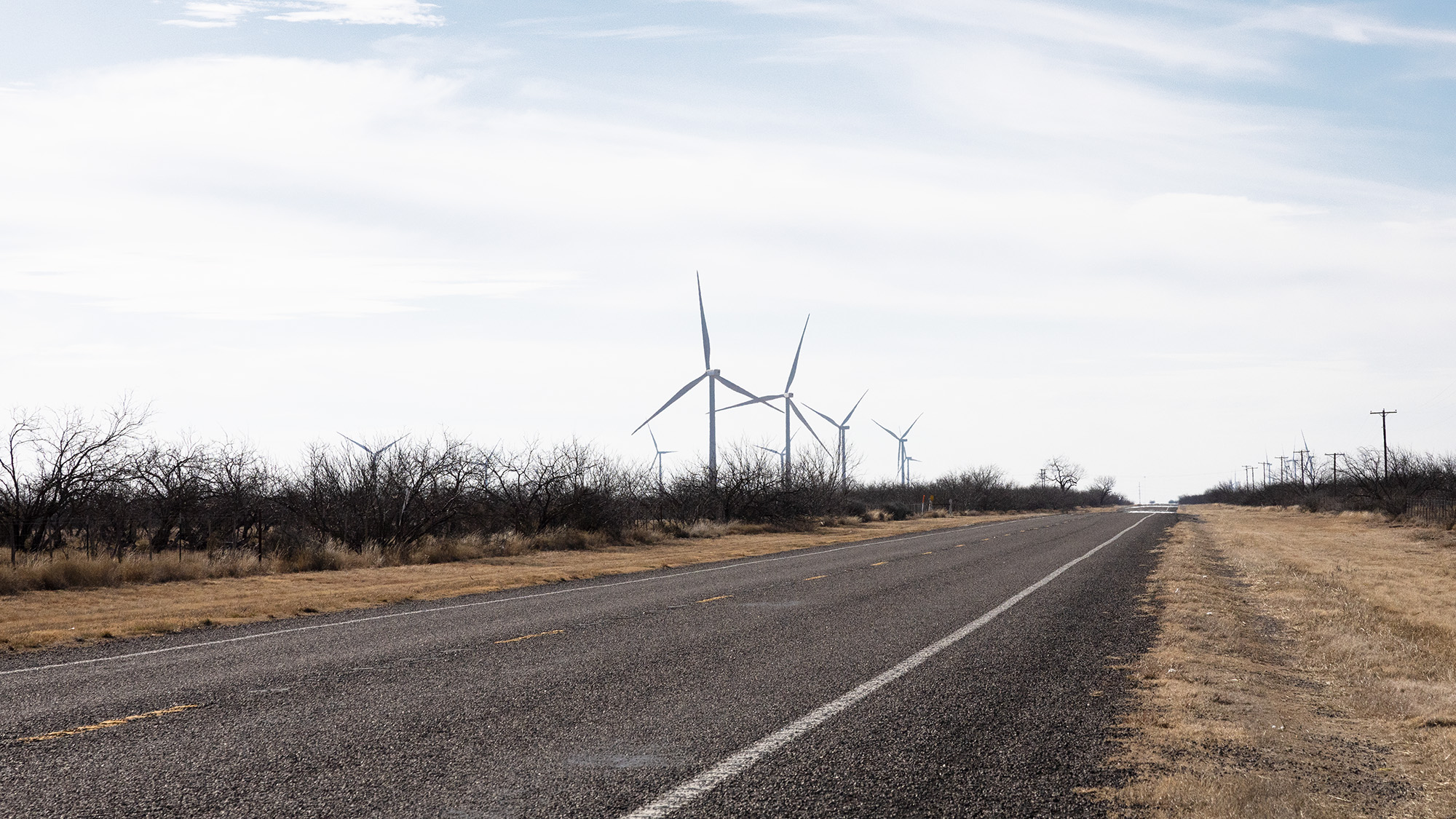
AAbout 15 miles north of the senior center on State Highway 163, the wind turbines start cropping up, fleets of towering structures owned and operated by a company called NextEra Energy. In Texas, wind generates 29 percent of the power distributed by the state’s notoriously independent power grid — second only to natural gas. According to the state comptroller, Texas wind generation surpassed nuclear power in 2014 and overtook coal-fired generation in 2020. As of 2023, the state led the nation with 239 wind-related projects and more than 15,300 wind turbines.
In Crockett County, the turbines generate more than just electricity. Money from NextEra supports the meals that Flores and her friends enjoy at the center and helps make events like the Valentine’s Day Dance possible.
It all comes down to clever utilization of a section of the Texas tax code. As a way of attracting large projects like wind farms, the state offers companies a temporary property tax break — up to 10 years — in exchange for local investment. This Texas Abatement Act (also known as Section 312) means less tax revenue in the short term, but more dollars immediately flowing to community projects and programs like the senior center in Crockett.
While some economists say the abatements are unnecessary to recruit the companies — there aren’t many places they can go where taxes would be lower — the opportunity to reduce start-up costs for wind turbines or data centers or other developments gives the county a bargaining tool.
Many counties and cities use funding generated from these deals to improve roads and other infrastructure that might be strained by the new development, or to fund other public projects that don’t have a place in the regular budget. In Medina County, for instance, officials negotiated with incoming data centers to improve roads where locals were concerned about increased traffic.
How Texas communities can benefit from tax abatement deals
In Crockett County, like many places in West Texas, roads, jobs, and public projects have long been tied to oil and natural gas revenue, with its attendant booms and busts. According to Crockett County Judge Frank Tambunga, oil and gas have kept public coffers full in Ozona, even with the ups and downs of the industry — and the steadier (though usually lower) revenues from wind farms will likely add consistency to an already healthy budget.
Ozona’s services for seniors are usually funded by a mix of federal and local funds, as well as charitable donations. As NextEra expanded its wind farms and more turbines cropped up, Tambunga saw the opportunity to offer those aging support services a boost.

Reid Bader / Grist
Tambunga is a native of Ozona. Now in his early 60s, he’s well acquainted with the sorts of choices his slightly older peers are making. He hears their concerns about health care, groceries, and social isolation. When he considered what to ask for in the tax abatement negotiations with NextEra, those concerns were top of mind. But rather than push for a new public department or project, Tambunga looked to those already doing the work in the community.
“As we negotiate, we ask that, during the term of the abatement, that they make charitable contributions to nonprofit organizations to help the local groups,” said Tambunga. “It allows us to provide support for these organizations that help people within the community.”
Eligio Martinez remembers when the wind companies first arrived in Crockett County in the 2010s. He was a county commissioner back then (at times in Ozona, it feels like everyone has taken their turn in county office), and remembers talking to other counties to figure out the best terms for the tax abatement deal. Locally, he said, the wind turbines were an easy sell. “We welcomed them,” Martinez said. No one got caught up in the politics of green energy — something that Texas’ oil-funded politicians regularly debate — or even the aesthetic effect of adding turbines to the wide open vistas. They saw the chance to increase their tax base and gain funding for local services, Martinez said. “If it’s beneficial to the community, we’re going to stick together.”
For their part, the residents at the senior center didn’t understand exactly how the turbines worked — when the massive structures first arrived, they said, locals wondered if they could run electricity directly from the turbine and were skeptical when they learned that the electricity would be sent to Texas’ power grid to be used elsewhere. Energy-funded towns like theirs are used to asking: “How long will the royalties last?” They’re asking the same about the wind farms. They’ve lived long enough to watch booms and busts in nearly every industry — ranching, oil and gas, banking — but donations from the tax abatement deals and the increased tax revenue for the school district are welcome while they last.
There’s a pragmatism, Martinez said, that comes from being so remote. “We’re very vulnerable here,” he said. When his mom got cancer in 2013, he saw just how vulnerable. He was lucky enough to have a job that allowed him the flexibility to take her to her chemotherapy appointments in San Angelo, but if he hadn’t, he wondered how she would have made the trek over and over, being as sick as she was.
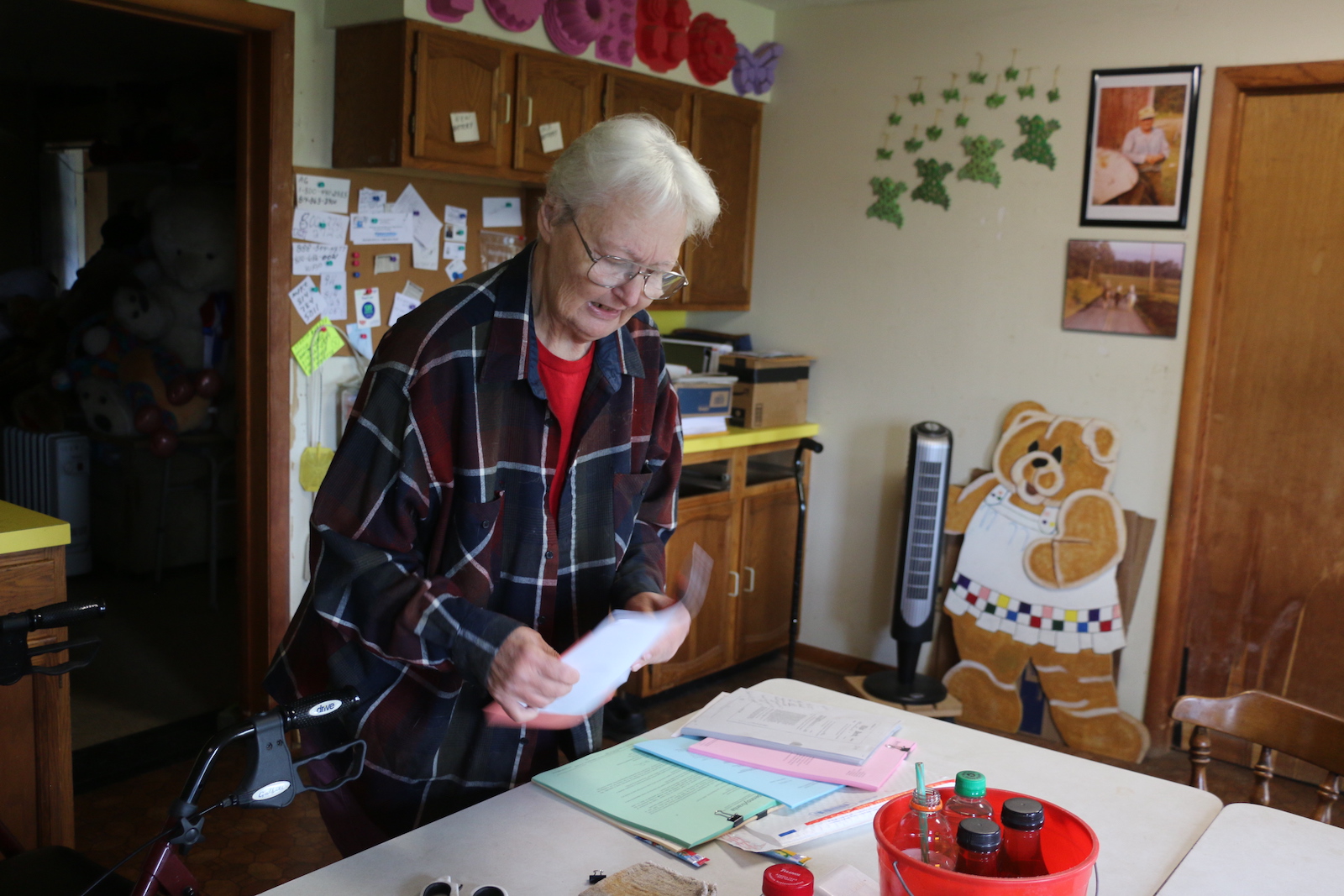
Even for more able-bodied seniors, transportation is a hurdle in Ozona. The Concho Valley Transit buses make daily runs to San Angelo, and many use them for errands, but some don’t want to be out all day until the scheduled return trip. Some may have to check in for dialysis and cancer treatments at hours when the buses don’t run. And for those with more complex medical conditions or advanced cancer, San Angelo doesn’t have what they need. They’d have to go to San Antonio, Dallas, or even Houston — all between three and seven hours away. Whoever provides that transportation — usually a family member — is taking on substantial costs.
Martinez started looking for ways to raise funds to help others in his community pay for these travel expenses. He was a radio DJ, so his first idea was a music festival. He organized a day-long festival, and posted some student volunteers by the door to collect entry fees. Almost no one came to hear the music, he said, but when he checked with the students at the door, they had raised $5,000. People had simply dropped off donations. Even if they didn’t want to spend the day listening to music, they wanted to help. Everyone knew this was a huge issue for rural Texans, and that most likely, at some point, they too would need to make long drives to access various forms of medical treatment.
Martinez hosted a few more music festivals, but eventually realized that he didn’t need to put on an event — locals were ready to donate. He created a nonprofit, In Care of Ozona (or “Coz 4 Oz”), that provides gas cards and hotel funds for folks who need to travel for medical care.
This year, Martinez became a beneficiary of the very programs he helped negotiate back on the commissioners court: He received two donations from NextEra, totaling $3,000 — Coz 4 Oz’s entire budget for the moment.
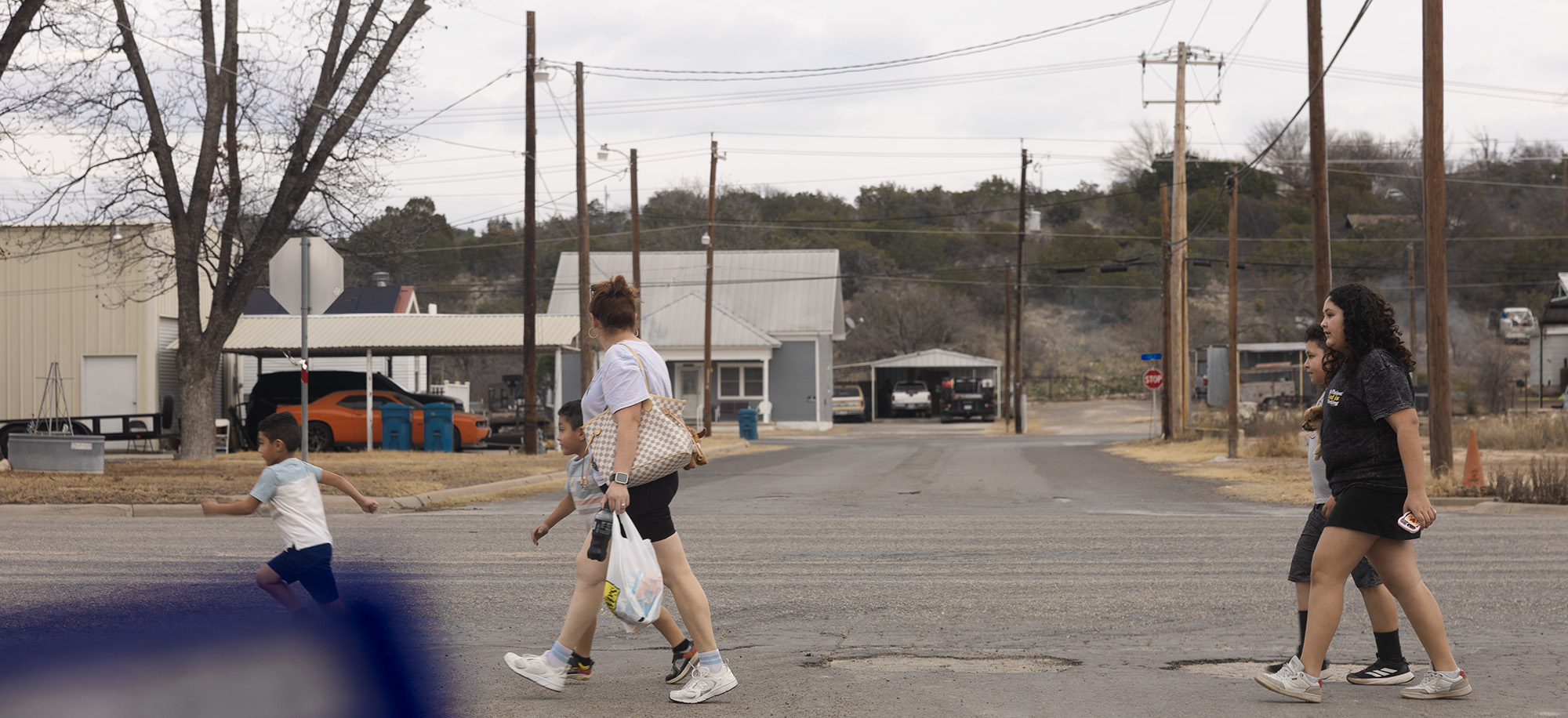
It’s not just medical emergencies that create transportation woes in Ozona. Ordinary errands can be just as burdensome. As in many small towns, the local grocery store prices are high. Prices are better in San Angelo, so seniors will often carpool for the 90-minute drive, or if someone is planning to make a trip, they’ll take a list of what their neighbors need. Much of the impromptu organizing runs through the senior center, said Director Emily Marsh. “It’s like a huge family.”
Reid Bader / Grist
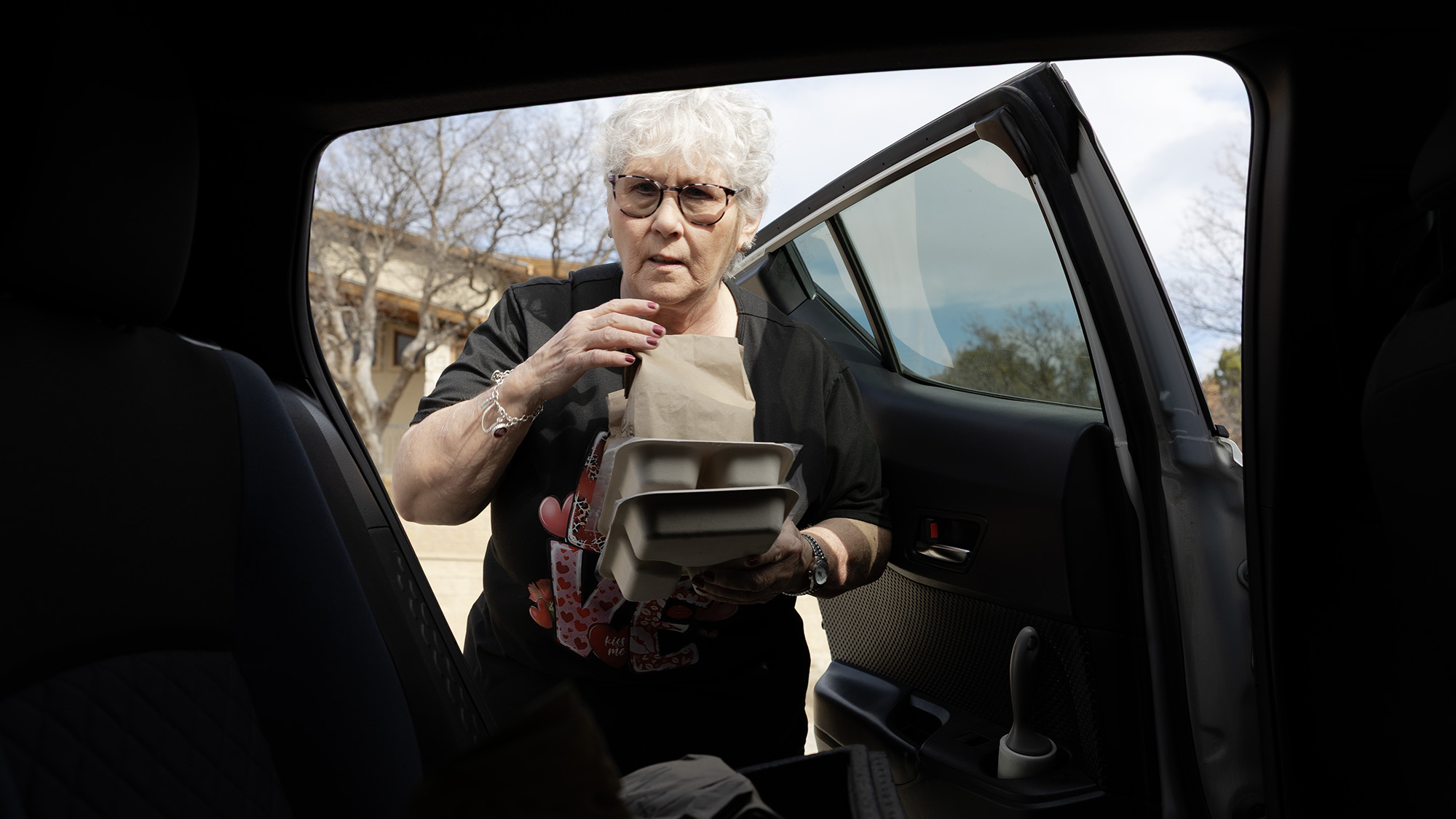
Back at the Crockett County Senior Center, while Flores and her friends were working on their puzzles, 69-year-old Arletta Gandy loaded trays of hot meals into her small SUV. The former grocery store manager’s dangly, candy heart-inspired earrings bobbled as she heaved a box full of lunch sacks onto the back seat. She and two other volunteer drivers show up to the senior center every weekday to drive the three “Helping Hands” routes, delivering meals to 42 seniors around Ozona. It’s a good way to get out of the house in her retirement, said Gandy, who doesn’t consider herself “from Ozona” because, as she said, “I’ve only been here over 20 years.”
Reid Bader / Grist
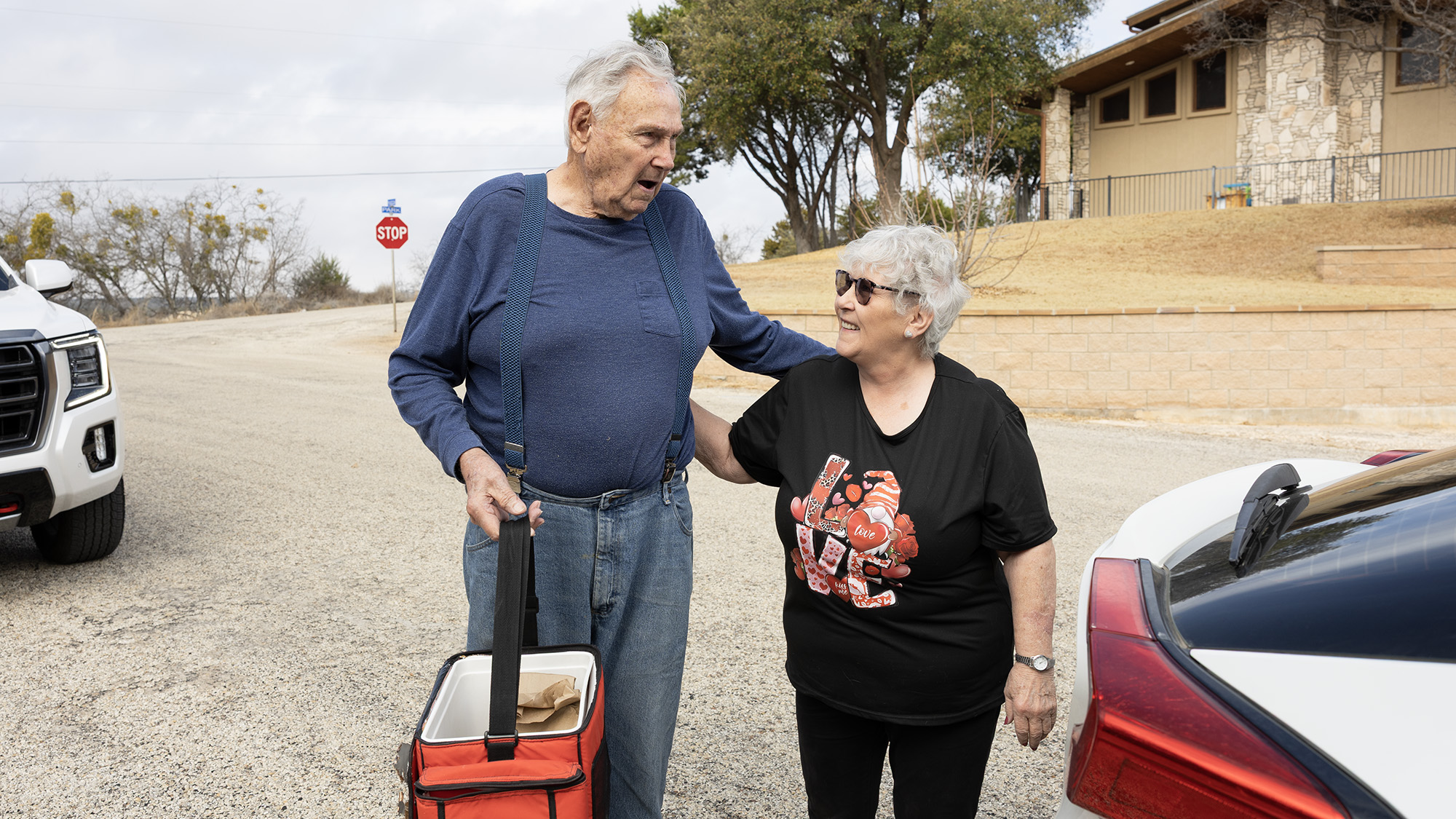
After eight years delivering meals in the community, she knows the routes by heart. She knows which recipients have dietary restrictions and which dogs will run out of the house if she opens the door too wide. At some houses she chats briefly. Others have their own rituals. One man does little more than reach out from behind his screen door, but every day, as Gandy walks back down the plywood ramp overpassing the porch stairs, he says, “See you later, alligator.”
“After a while, crocodile,” Gandy responds.
“Nacho nacho,” the man calls back.
“Nacho nacho,” Gandy replies.
The Helping Hands program has been operating in Ozona for as long as Director Stacy Mendez can remember. She’s been involved since childhood. “I remember helping my grandmother and aunt deliver meals,” Mendez said. The program began in a local Catholic church, and when the Crockett County Senior Center opened with its commercial kitchen over 20 years ago, Helping Hands moved in.
Reid Bader / Grist
In Texas alone, an estimated 100,000 seniors rely on meals funded through Meals on Wheels programs like this one. Across the board, federal funding for these programs has dwindled as pandemic-era appropriations expired and the Trump administration began canceling grants and slashing federal budgets. A government shutdown in the fall further disrupted an already unstable funding stream. Last September, a $20,000 donation from NextEra came just in time, Mendez said. It kept their lean operation afloat, replacing the lost federal dollars and allowing Helping Hands to continue operating through the shutdown, while other programs around the state had to cut back services.
Other Texas counties could also use the renewables boom to meet local needs. The number of Texans 65 and older is expected to more than double from 3.9 million in 2020 to 8.3 million by 2050, making it the state’s fastest growing population, according to AARP. That’s a concern for hunger advocates like Jeremy Everett, director of the Baylor Collaborative on Hunger and Poverty, because seniors are already one of the most food-insecure groups, after young children. But while kids can get food through their schools, such hubs don’t usually exist for seniors, especially in rural areas. In 2026, Meals on Wheels reported that nearly 14 million seniors worried about having enough food.
“Without the ability to safely and reliably access affordable food, senior adults may no longer be able to live in the rural communities they have called home,” Everett said. In Crockett County, money from the wind farms is helping to address that issue. The county is also working with the Baylor Collaborative on Hunger and Poverty to identify ongoing gaps. Especially in times of economic uncertainty, a coalition-based approach to senior hunger is vital, said Everett. No one sector can meet every need, so partnerships between local governments, industry, and nonprofits are key. “That’s how strong food systems are built from the ground up,” Everett said.
There’s another group of Crockett County seniors who benefit from the wind farms: ranchers. Steve Wilkins’ family has owned and operated the 6,000-acre Flying W Ranch for four generations, and he and his wife Belinda now breed Brahman beef cattle and lease part of their land to hunters. Belinda also sits on the board of the senior center.
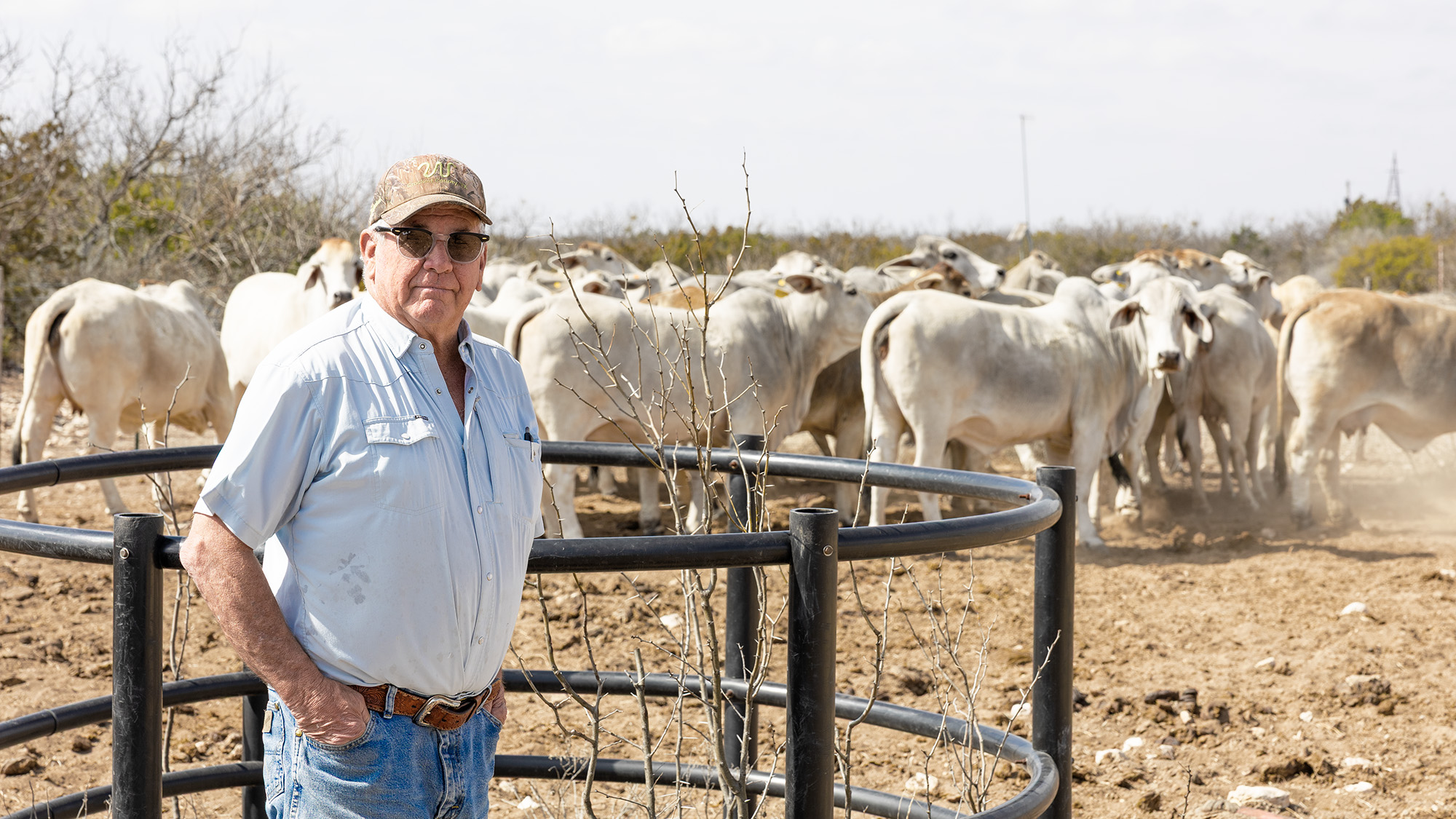
As of Valentine’s Day, Wilkins reckoned he was probably a month or so away from signing a deal to lease part of his family ranch to a wind company. Most of the ranches around them have already done so. “I’ve kind of been dragging my feet on it,” Wilkins said. He’s not sure how he feels about wind energy, but these days ranchers have to be pragmatic. Many also lease to oil and gas companies — one of the more lucrative ways to keep a ranch intact. But in “mature regions” like Crockett County, many oil wells have already been producing for decades, putting them near the end of their productivity. Natural gas can have a similar lifespan, but big profits tend to drop sharply after the first six months to two years.
Wind, of course, is not a finite resource. Theoretically, the region could keep producing wind and reaping the benefits indefinitely, or as long as demand for electricity continues apace. Still, there’s skepticism about how long it will last, Belinda said. If the wind boom comes and goes, they’ll just have to keep adapting, as they always have.
In any case, the wind farms are a longer-term investment. Wind money doesn’t start flowing to the ranchers immediately, Wilkins said. The companies told him that it could be seven or eight years before they start seeing royalties. At 70, Wilkins said, that’s of little use to him. But ranchers are also used to seeing land management in generational terms. “Maybe my kids can keep the ranch,” he said.
Reid Bader / Grist
In the hours leading up to the Valentine’s Day dance, Jerry and Willa Perry checked in for their weekly appointment at Flores’ in-home salon. Jerry removed a red MAGA-style cap that said “Make Texas A Country Again” and placed his hearing aids inside while Flores trimmed his white hair. Willa, his wife of 70 years, looked on smiling. “I can’t wait to get you home,” she joked, raising her eyebrows playfully. Jerry smirked — although he could not hear her, he got her meaning just fine.
Flores charges on a sliding scale from about $12 to $40 to make sure all her clients can afford to stay coiffed. She makes enough to stay in the house, which she rents. But at her age, she said, she knows that she’s just one medical emergency away from needing full-time care, which she’ll likely find at the county’s local public nursing home.
After finishing with her last clients, Flores changed into a billowy red pantsuit, pearls, and bedazzled sneakers. The dance didn’t start until 6 p.m., but she and several other regulars were there by 5 to get a good table. Emily Marsh and Belinda Wilkins enlisted their help setting out food on the long buffet. By the time the DJ fired up the first cumbia number, about 60 seniors were seated around the dance floor with plates of chips, cookies, and veggies with dip.
County Judge Frank Tambunga (left), Cynthia Flores (right), and other locals dance during the Valentine’s Day dance at the senior center in Ozona, where the DJ, the decorations, and part of the budget are courtesy of the wind blowing across Crockett County. Reid Bader / Grist
Things started slowly, but began to pick up when a country two-step song came on. Judge Tambunga and his wife got up to dance, and other couples immediately followed. At the next cumbia, Flores rustled up a group of single ladies to take the floor. A couple songs later, she led a conga line.
This story was supported by a grant from the Solutions Journalism Network.


