Indiana state senators advance GOP-drawn congressional map, setting up a final vote


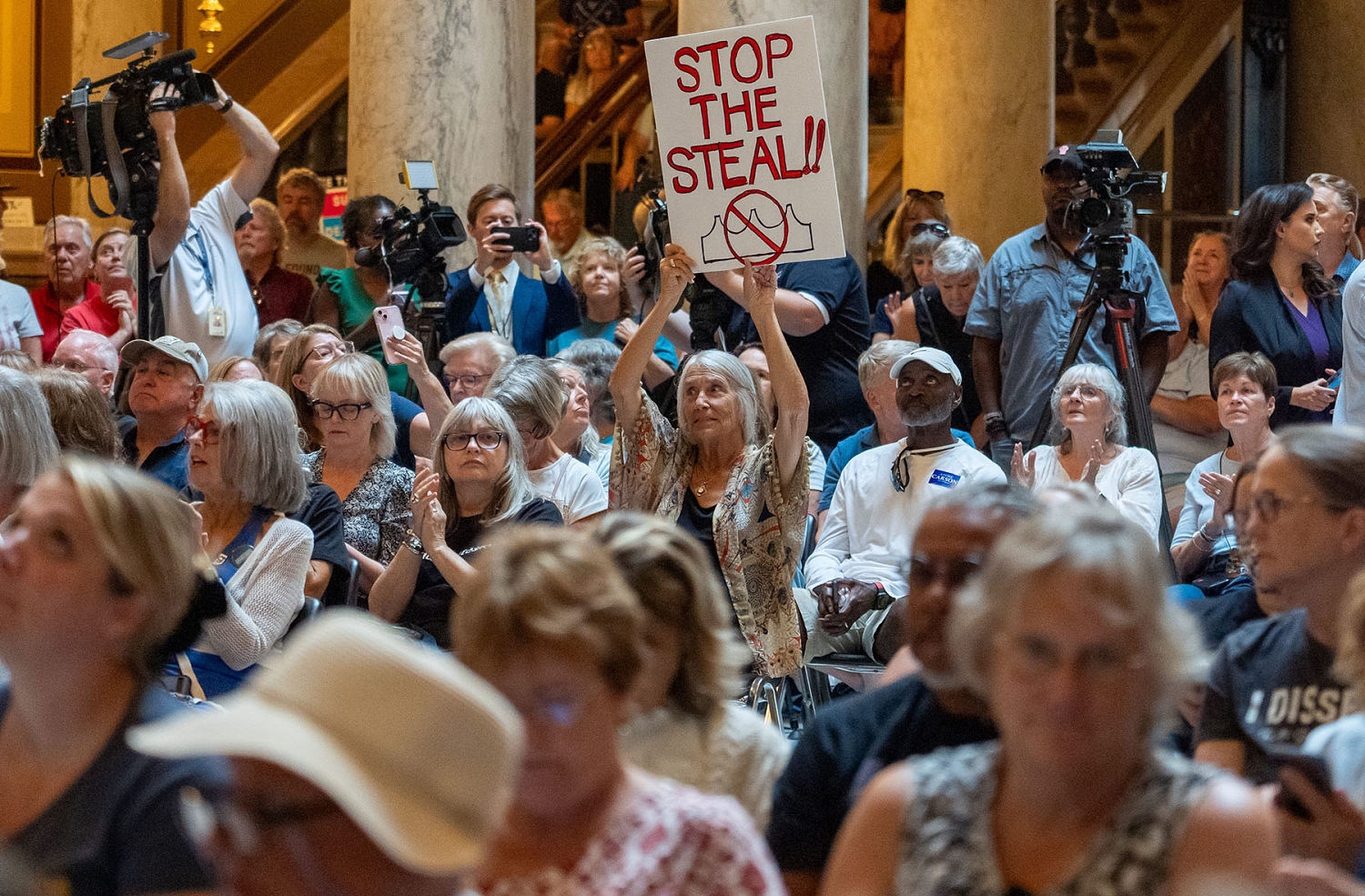
A committee of Indiana state lawmakers presented a Republican-drawn congressional map Monday, sending it to the state Senate, where its outcome remains uncertain.
After more than six hours of testimony, the map was rejected by the committee in a 6-3 vote, with one Republican, Sen. Greg Walker, joining two Democrats in opposition. Half of the Republicans who voted “yes” suggested they did so to ensure full consideration of the legislation in the Senate and suggested their votes might change after further debate.
The map, which passed the House last week, aims to bring two seats to the Republican Party in next year’s midterm elections. The Senate is expected to vote on it this week.
The new district lines were drawn at the request of President Donald Trump, who has pressured Republican lawmakers across the country to adopt maps that strengthen the party’s narrow majority in the House of Representatives.
But while Republicans in states like Texas, Missouri and North Carolina agreed to Trump’s wishes, Republican leaders in the Indiana Senate resisted a mid-decade redistricting campaign for months, repeatedly saying there weren’t enough votes to pass a new map.
The White House and national Republicans continued to intensify their pressure campaign. Trump said he would support the primary challengers of any Indiana Republican who opposed the map overhaul.
“Why would a REAL Republican vote against this when Democrats have been doing it for years???” Trump asked on Truth Social over the weekend. “If they stupidly say no, remove them from power – they are not worthy – and I will be there to help!”
This increased attention has led to an increase in threats and harassment against state lawmakers. At least 11 Indiana Republican lawmakers have been victims of “squatting” attempts, in which false police reports are made to get answers from law enforcement, since Trump called on them to adopt a new map.
Walker, the only Republican on the panel to vote against the map, gave lengthy, tearful remarks about the national influence over the Legislature, the threats he and other lawmakers have faced and his concerns about the map’s constitutionality.
“I fear for this institution, I fear for the state of Indiana, I fear for all states if we allow intimidation and threats to become the norm,” he said.
Walker had said he would not seek re-election next year, although he suggested the redistricting fight had prompted him to consider running again.
More than 100 people gathered in a packed courtroom Monday to testify about the map, which aims to split Indiana’s two Democratic-controlled districts and give Republicans all nine seats.
Marion County Clerk Kate Sweeney Bell, a Democrat, said it was not possible to implement the new map before the election and it would cost more than $1 million.
“There is not enough time to complete the process,” she said, adding that important constituency data was missing from the bill.
Megan Robertson, testifying on behalf of Indiana Conservation Voters, argued that the map divides communities in “ridiculous” ways.
“I grew up in Porter County, which this map divides in two and then separates us from our friends right next door in Lake County. Now I live in Indianapolis, which this map divides in four,” she said. “The people who drew these maps, who are apparently in Washington, D.C., and have never been to our state, may not know how ridiculous these things can be, but everyone in this room understands.”
After Republicans were criticized for failing to defend their map at a House committee hearing last week, several people testified in favor of the proposal Monday.
“In 2024, just over 60% of Indiana voters elected the current president to a four-year term. That’s the only poll that matters,” said Marion County resident Gregory Katter. “Having a President Johnson rather than a President Jeffries makes a difference. It’s a choice between the president your voters elected in their 60s and 40s to a full term or being a lame duck fighting endless, absurd impeachments and investigations for the last half.”


