Indigenous concerns surface as Trump calls for seabed mining in Alaskan waters


President Donald Trump is considering allowing companies to lease more than 113 million acres of waters off Alaska for seabed mining. Alaska is the latest of many places Trump has sought to open up to the budding industry over the past year, including the waters around American Samoa, Guam and the Northern Mariana Islands. Like these Pacific islands, Alaska is home to indigenous peoples with ancestral ties to the ocean, and the proposal raises cultural and environmental concerns.
Deep sea mining, the practice of extracting minerals from the ocean floor to make commercial products such as electric vehicle batteries and military technology, is not yet a commercial industry. This phenomenon has been slowed by a lack of regulations governing permits in international waters and concerns about the environmental impact of extracting minerals formed over millions of years. Scientists have warned the practice could harm fragile fisheries and ecosystems that could take millennia to recover. Indigenous peoples have also pushed back, citing violations of their right to consent to projects on their territories.
However, Trump has expressed strong support for the industry as part of his efforts to make the United States a leader in the production of critical minerals. It has also pushed U.S. companies to mine their resources in international waters, circumventing ongoing global negotiations over international mining regulations.
Kate Finn, a citizen of the Osage Nation and executive director of the Tallgrass Institute Center for Indigenous Economic Stewardship in Colorado, said she fears the seabed mining industry will repeat the mistakes of land-based mining.
“The land-based mining industry has not done things well when it comes to Indigenous people,” Finn said. “Indigenous peoples have the right to give and withdraw consent. Mining companies themselves must design their operations around this right.”
It is not yet clear which companies, if any, are interested in mining off Alaska. A spokesperson for The Metals Company, one of the industry’s largest publicly traded companies, said it has no plans to expand into Alaska. Oliver Gunasekara, chief executive of startup Impossible Metals — which asked Trump to allow mining around American Samoa despite Samoan opposition — said his company also has no plans.
“We don’t have current plans for Alaska because we don’t know what the ocean’s resources are,” he said. “If there are good nodule resources, we would be very interested.”
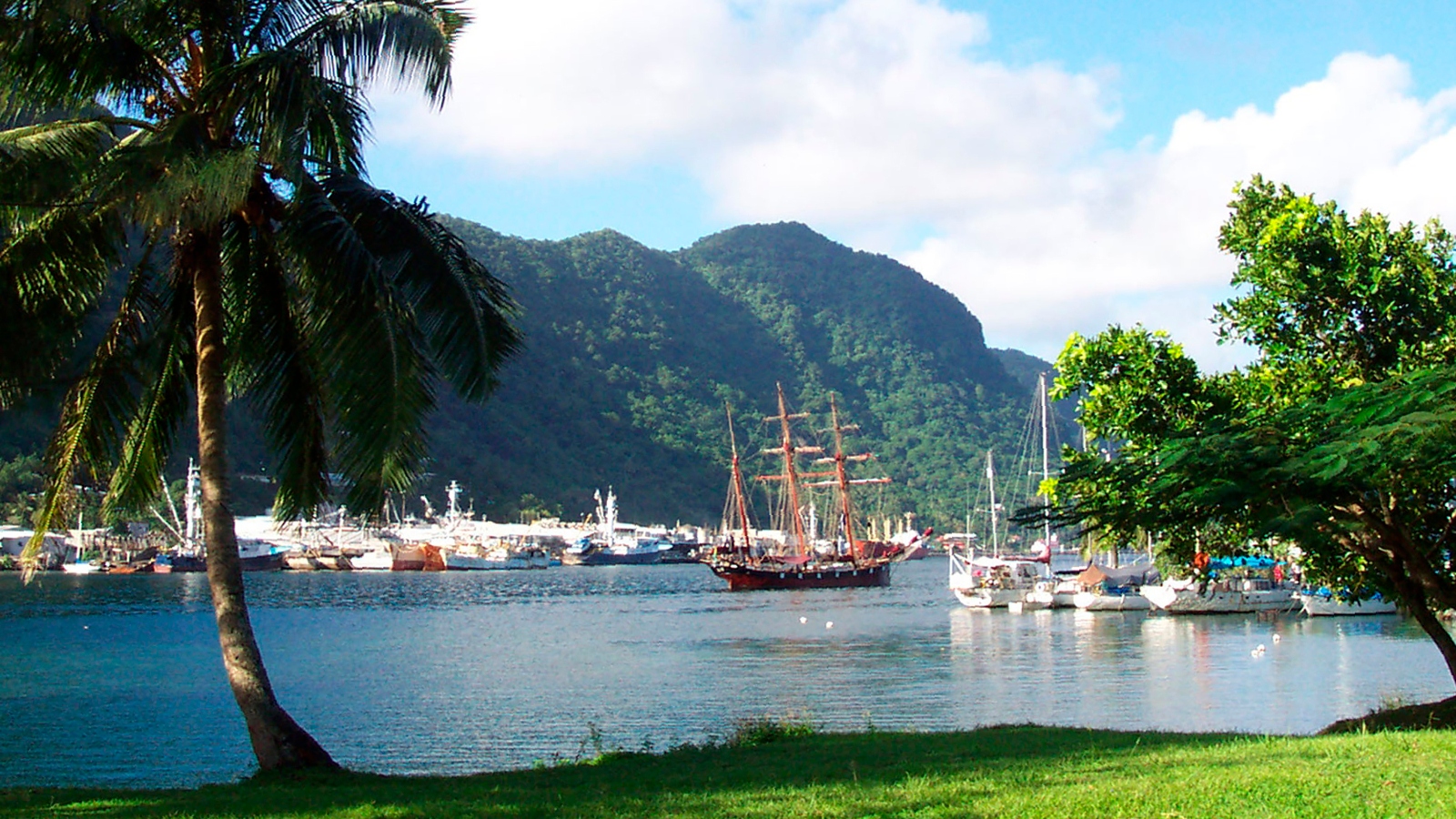
American Samoa says no to deep sea mining. The Trump administration might do it anyway.
The potential rental area being considered is larger than the state of California. Cooper Freeman, director of Alaska operations for the nonprofit Center for Biological Diversity, said the scope is so broad that it includes ecologically important waters already closed to bottom trawling, a fishing method that drags heavy nets across the seafloor.
“Many of these areas, particularly in the Aleutians, have been closed to bottom trawling because there are nurseries for commercially important fish and ecologically important species and habitats,” Freeman said.
In its announcement, the Bureau of Ocean Energy Management, or BOEM, the agency responsible for regulating deep-sea mining, said the proposed area includes depths of more than 4 miles near the Aleutian Trench and the abyssal plains of the Bering Sea and Gulf of Alaska, to depths as low as 3.5 miles. “BOEM is particularly interested in the areas identified by [the U.S. Geological Survey] as promising for critical minerals as well as heavy mineral sands along the Seward Peninsula and Bering Sea coast.
The waters lie off the coast of a state that is home to more than 200 Alaska Native nations. Jasmine Monroe, who is Inupiaq, Yupik, and Cherokee, grew up in the village of Elim in the Bering Strait region of Alaska. She said she was concerned about what the proposal could mean for the seafood her community depends on after learning that the Bureau of Ocean Energy Management opened a 30-day public comment period last week on potential leases.
“We eat beluga meat, we eat walrus, we eat seal, we eat whale,” she said. “Whatever happens in the ocean, it really affects our way of life. »
“It’s like we don’t have a say in whether this happens or not,” she said. “It feels like the system is doomed to fail for us.”
The Alaska Federation of Natives, an organization representing Alaska Native people, did not respond to requests for comment.
Monroe, who works on water quality issues at the nonprofit Alaska Community Action on Toxics, said she feels powerless by what she described as a top-down approach and short deadlines for public input.
Kate Finn of the Tallgrass Institute said indigenous peoples have the right under international law to consent to activities on their territories and cautioned that U.S. federal regulations alone may not be enough to keep companies in compliance with international legal standards, especially in a context of deregulation.
“Businesses will not benefit if they rely solely on consultations from the U.S. federal government,” she said.
Finn added that Indigenous nations have their own economic and cultural priorities and some have chosen to work with mining companies under specific conditions.
“There are indigenous people who work well with companies and invite mining into their territories, and there is a track record of doing this as well,” she said.
Monroe said she recognizes that seabed mining could provide minerals used in technologies such as electric vehicle batteries, similar to other mining proposals she opposes in Alaska, including a graphite mine that could pollute waters. But she doesn’t see electric vehicles in her community and believes the environmental and cultural cost is too high.
“It really seems like another false solution,” she said.


