Intel’s tough decision boosted AMD to record highs


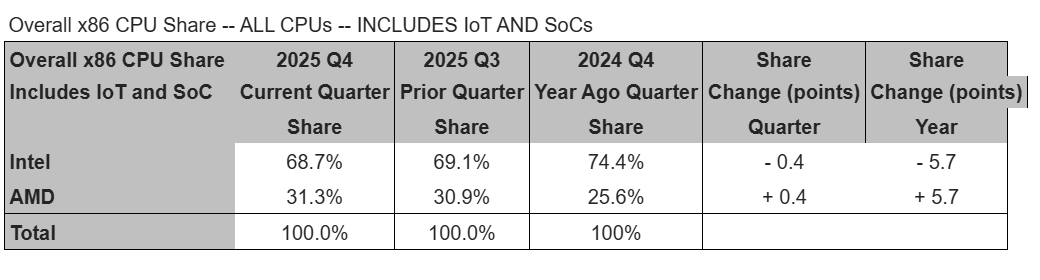
x86 processor shipments fell between the third and fourth quarters of 2025, as Intel’s supply constraints dampened PC processor shipments and helped AMD, particularly in the mobile market.
AMD itself released some of Mercury Research’s shipping estimates on Wednesday, but the research firm added additional details on Thursday, including Intel’s market share. He also confirmed that AMD has now achieved record share in mobile and desktop processors.
Normally, the fourth quarter of the year represents the highest sales, as Black Friday and the winter holidays help give consumers great deals on desktop processors, desktops, and laptops. In this case, however, Intel made a conscious choice to limit sales of consumer processors and prioritize servers, after low process yields and shortages forced it to make the difficult decision to offer higher-margin server parts. The slowdown was also driven by a decline in sales of AMD’s SOCs in consoles, which are entering their seventh straight year without a refresh, although that could come in 2027, said Lisa Su, AMD’s chief executive officer.
Typically, Intel had maintained an 80-20 ratio in the PCU arena, but that ratio narrowed several times as AMD’s share grew. Now it’s more like 70-30.
Mercury research
Excluding these SOCs, “AMD’s shipments significantly outpaced Intel’s, both sequentially and year-over-year, leading to strong share increases on both metrics,” Mercury Research President Dean McCarron wrote in a note to reporters. “AMD experienced seasonally stronger growth than the median in all segments during the quarter (except for gaming SoC products not included in this calculation.) In contrast, Intel’s desktop and mobile shipments were weaker than seasonal growth due to supply constraints, and while Intel’s server processor growth slightly offset the slowdown in customer numbers, it was not enough to impact overall share change. “
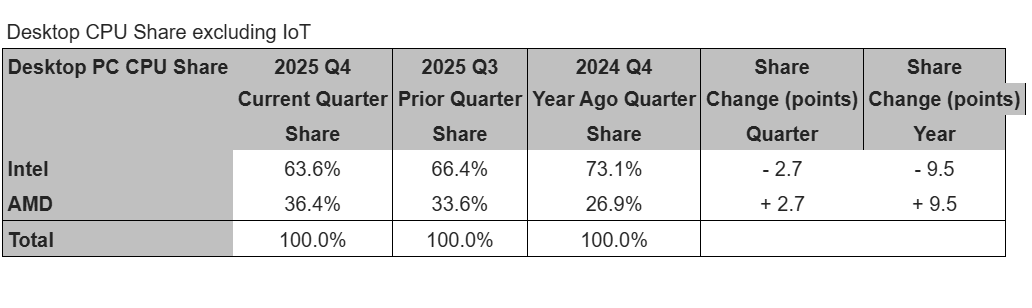
In the desktop space, AMD made progress across all of its product lines, not just high-end processors as in previous quarters. Growth has tended to favor mid-range products. Combine that with Intel’s decision to no longer prioritize desktop products, and AMD has once again reached an all-time high in desktop CPU shipments.
Mercury research
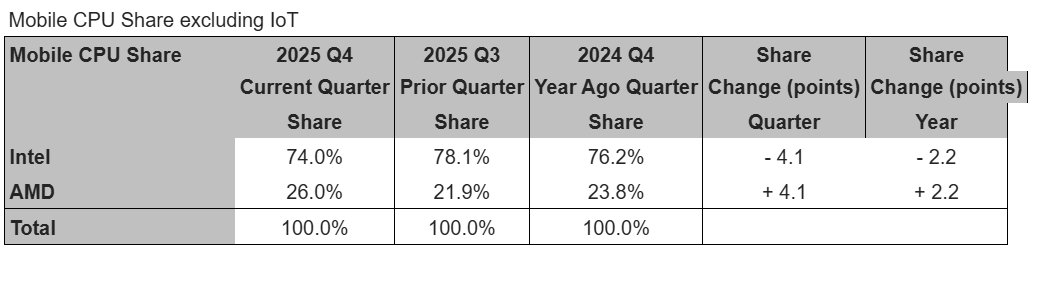
But AMD has also reached an all-time high in its share of mobile processors.
“Intel’s capacity reallocation hit the company’s mobile client processor shipments hardest, resulting in Intel experiencing significant sequential and annual declines in shipments, well below seasonal norms in what is typically a rising quarter,” McCarron wrote. “In contrast, processors for mobile clients were AMD’s largest segment during the quarter. This resulted in a strong increase in AMD’s share of the mobile processor market, which set a new record during the quarter.”
Mercury research
The joker, as always, remains Arm.
“There is greater than usual uncertainty in our ARM estimates this quarter, as strong PC sales have made determining CPU sales more difficult than usual,” McCarron wrote. “However, due to Apple’s decline in the segment, we are reasonably confident that overall ARM customer shipments declined during the quarter, but we would not be surprised if we had to revise the numbers in the next edition due to uncertainty.”
Mercury’s McCarron estimates that Arm’s share of the PC business, including Apple Macs and Arm Chromebooks, should be around 13.3 percent. This is slightly lower than the 13.7 percent recorded in this segment a year ago, he said.
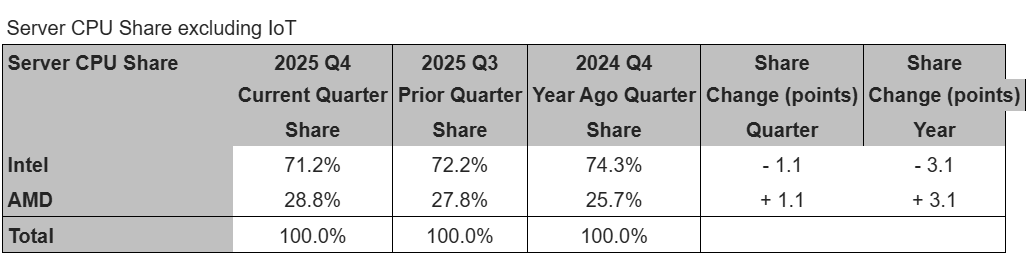
However, Intel’s renewed focus on the server market and AMD’s emphasis on this market have also led to significant growth in server shipments. Intel’s shipments here increased by twice the seasonal average, McCarron wrote, while AMD also tripled its average here.
Mercury research
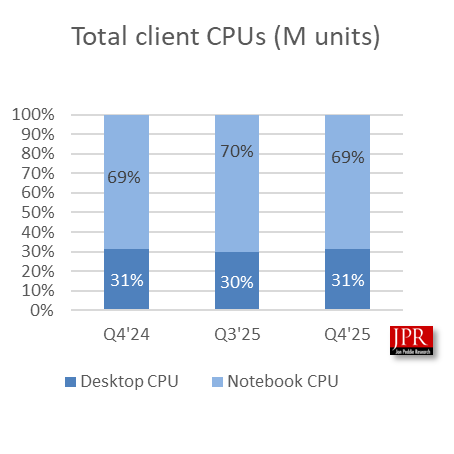
Jon Peddie Research, a competing organization, reported slightly different numbers; it revealed that the global client processor market grew 2.7 percent sequentially, while server processor shipments grew 14.1 percent year-over-year.
“We believe PC processor growth was consistent with seasonal purchasing behavior, although a little weak,” Jon Peddie, president of JPR, said in a note. “The upward and downward pricing influence and Microsoft’s withdrawal of support for Windows 10 2016 also had an effect. We expect the first quarter of 2026 to be down due to memory constraints and higher process.”
Jon Peddie Search


