Iran succession remains unclear as opposition figures vie for leadership


NEWYou can now listen to Fox News articles!
As U.S. and Israeli forces strike deep inside Iran — reportedly targeting senior regime officials, including Supreme Leader Ayatollah Ali Khamenei and President Masoud Pezeshkian — the question of who would lead Iran if the Islamic Republic collapses is no longer theoretical.
Iran has responded with missile strikes against U.S. positions in the Middle East, and while Iranian state media says top leaders remain alive and have been moved to secure locations, the direct targeting of political and military leaders marks a dramatic escalation.
Yet despite the intensity of the moment, regional analysts say there is no obvious successor ready to take control of the country.
The real center of power: the security forces
Experts consistently point to one determining factor: the fracture or consolidation of Iran’s coercive institutions – particularly the Islamic Revolutionary Guard Corps (IRGC).
If the IRGC remains coherent, the most likely outcome is not a democratic transition but a harsher, more overtly security-dominated system. A religious shakeup or military-led consolidation could preserve much of the existing power structure, even if key figures are removed.
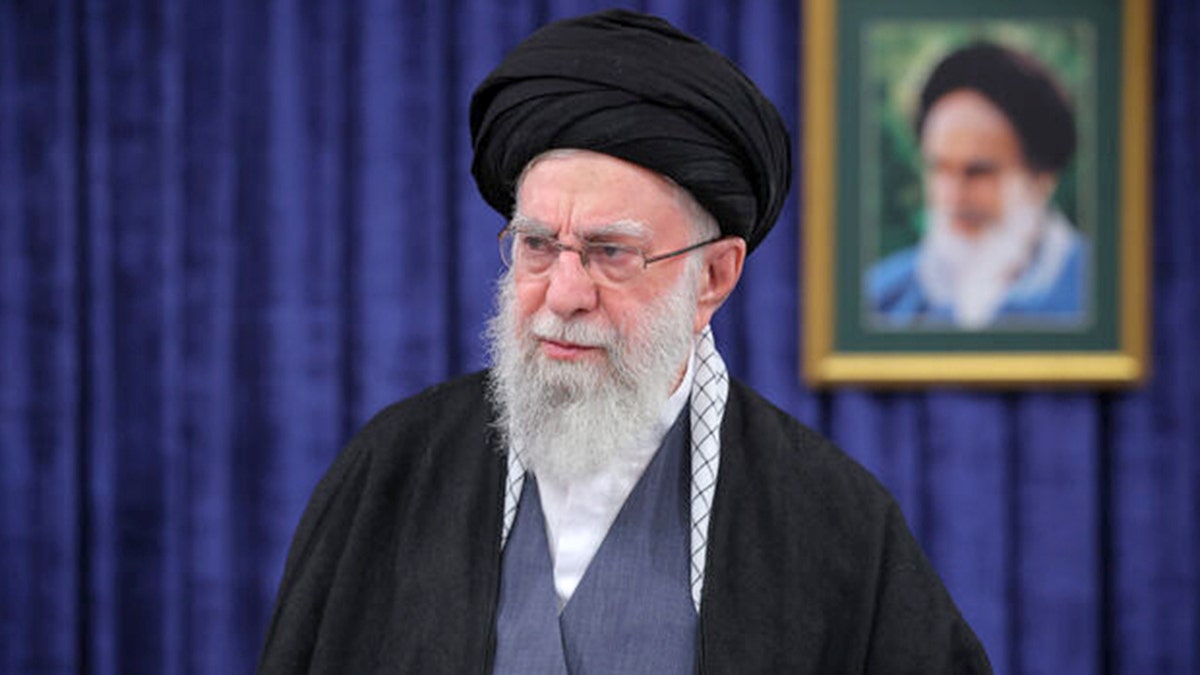
As U.S. and Israeli forces strike deep inside Iran — reportedly targeting senior regime officials, including Supreme Leader Ayatollah Ali Khamenei and President Masoud Pezeshkian — the question of who would lead Iran if the Islamic Republic collapses is no longer theoretical. (Iranian Leader’s Press Office/Anadolu via Getty Images)
However, if segments of the IRGC or regular armed forces defect or split under the pressure of war and internal unrest, a political opening could emerge.
At this point, there is no confirmed evidence of widespread security defections.
Reza Pahlavi: visible but long in exile
One of the most prominent opposition figures abroad is Reza Pahlavi, son of the last Shah of Iran. He has lived outside Iran since the 1979 revolution and has spent decades campaigning for a secular, democratic system.
In a recent statement, Pahlavi called the US strikes a “humanitarian intervention” and urged Iran’s military and security forces to abandon the mullahs’ rule. He said the Islamic Republic was “collapsed” and called on Iranians to prepare to return to the streets when the time comes.
But even though Pahlavi enjoys notoriety and support among parts of the diaspora, his actual base of support in Iran is difficult to measure. He has not lived in the country for more than four decades and many Iranians remain divided over the monarchy’s legacy.
Analysts note that symbolic visibility — including chants heard at past protests — does not necessarily translate into the organizational infrastructure needed to govern a country of nearly 90 million people.
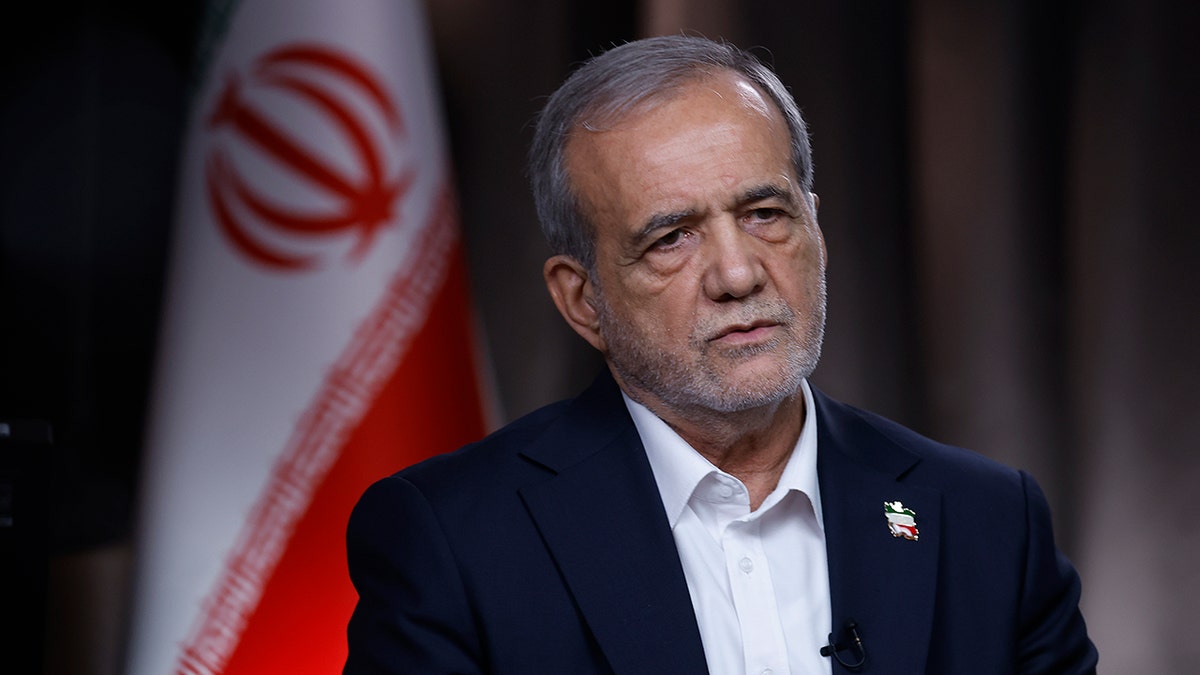
Iranian President Masoud Pezeshkian speaks with Fox News Channel’s Martha MacCallum during an interview September 25, 2025 in New York. (John Lamparski/Getty Images)
Maryam Rajavi and the NCRI: organized but controversial
Maryam Rajavi, leader of the National Council of Resistance of Iran (NCRI), took a different approach. His organization announced an interim government framework aimed at transferring sovereignty to the Iranian people and establishing a democratic republic based on its long-standing ten-point plan.
In a later message, Rajavi called on “patriotic personnel of the armed forces” to stand with the Iranian people and urged regime forces to “lay down their arms and surrender.” She also rejected both clerical rule and what she described as “monarchical fascism”, an apparent reference to restorationist movements linked to the former royal family.
The plan calls for disbanding the IRGC and other security institutions, separating religion from state, abolishing the death penalty, ensuring gender equality and holding elections for a constituent assembly.
The NCRI presents itself as a ready-made government alternative.
TRUMP ADMINISTRATOR INCREASES ‘MAXIMUM PRESSURE’ ON SANCTIONS ON IRAN AHEAD OF NEW ROUND OF NUCLEAR TALKS
But the group – closely associated with the People’s Mojahedin (MEK) – remains deeply controversial. His history of armed struggle and years of exile have led many analysts to question the extent of his support in Iran, particularly among younger generations.
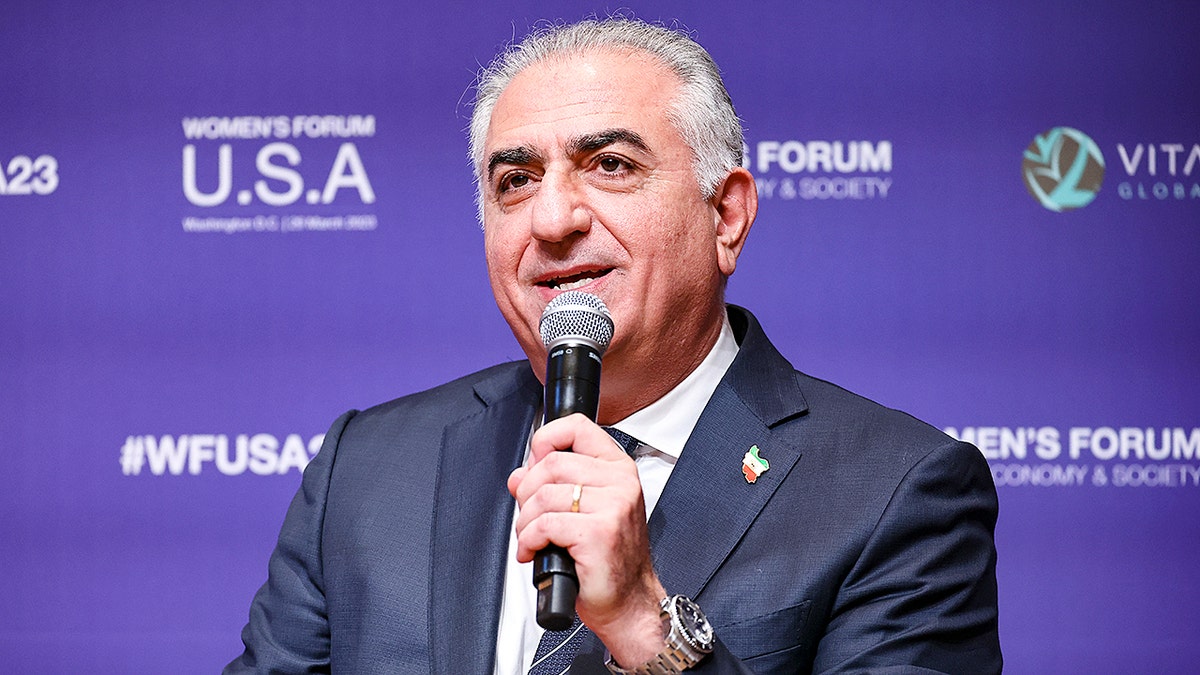
Exiled Iranian Crown Prince Reza Pahlavi said the Ayatollah’s regime had a habit of pretending to negotiate seriously to buy time. (Paul Morigi/Getty Images)
Although some Western political figures have expressed support over the years, domestic legitimacy remains uncertain.
No obvious heir
Despite bold statements from opposition figures, experts warn that Iran’s future leadership will be more likely to be shaped in military barracks and security compounds than at press conferences in exile.
Four decades of repression have hollowed out internal political alternatives. No widely recognized civilian leader in Iran has emerged with cross-factional legitimacy.
If the regime’s leadership were to fall quickly, the immediate struggle would likely be between security elites, not between rival figures in exile.
CLICK HERE TO DOWNLOAD THE FOX NEWS APP
For now, analysts say, Iran has competing visions but no consensus successor. Whether the country evolves toward a new political system, hardens toward military rule, or experiences prolonged instability will depend less on pronouncements abroad than on whether the regime’s key power structures fracture from within.
Related article