Iranian Brickwork Shows Us Better Architecture Is Possible


Why the beauty and inventiveness of contemporary masonry in Iran have captured the Western public.
The United States spends sums of money and human capital to keep its uninformed citizens on cities, people and bombs buildings in the Middle East. We know all the racist representations of the Middle Eastern (itself a very confused category) as a backward, underdeveloped and violent. Ditto their surroundings: when I was a child, the images of the war against terrorism were omnipresent, but all that I have ever seen from Baghdad or Kabul was bombed with buildings covered with sand and detritus, as well as tents or other makeshift shelters. This type of sequence serves an obvious ideological function. You will be much less reluctant about your country bombarding the open desert that you would only want people sitting on terraces to chat during lunch, or families who are unleashed in markets, cinemas, mosques, department stores or poorly decorated schools.
We live in another era of the media now that we did not do it at that time. Now we are saturated positively, and it is easier to secure a large audience with less rootstock. Part of the reason why young people have so strongly swung in favor of Palestine is that human suffering images imposed by Israel are easily available on platforms such as Instagram or Tiktok. (Though it’s also for ideologists on eITher side of this—or any other—issue to platform themselves Than Ever Before.) After Israel Launched its Attacks on Iran in mid-jun, a wave of videos and images stept social channels showing just How Other Major City: Young Women in Trendy Clothes Walked Into Brightly Lit Malls, People Read Books in Cafés, imposing buildings Dotted the Skyline. It was clear that no one wanted war to begin (at the time, 56% of Americans were against the idea), but also that no one had the appetite to bomb a place so full of life. What was particularly interesting about this particular media blitz is the role that contemporary architecture played in the communication of the cultural wealth of Iran, an American country has been invited to fear since the dawn of neoconservatism.
From time to time, the world of architecture has, for lack of a better word, its memes. Several years ago, there was a vogue for brutalism, followed by his cousin, brutalism with trees. It was fashionable to circulate images of monumental concrete structures (then monumental concrete structures punctuated by greenery). These images would be picked up by algorithms and will become viral not only once but several times. The last trend cycle may have, for the first time, a positive effect not only on architecture, but perhaps even the world.
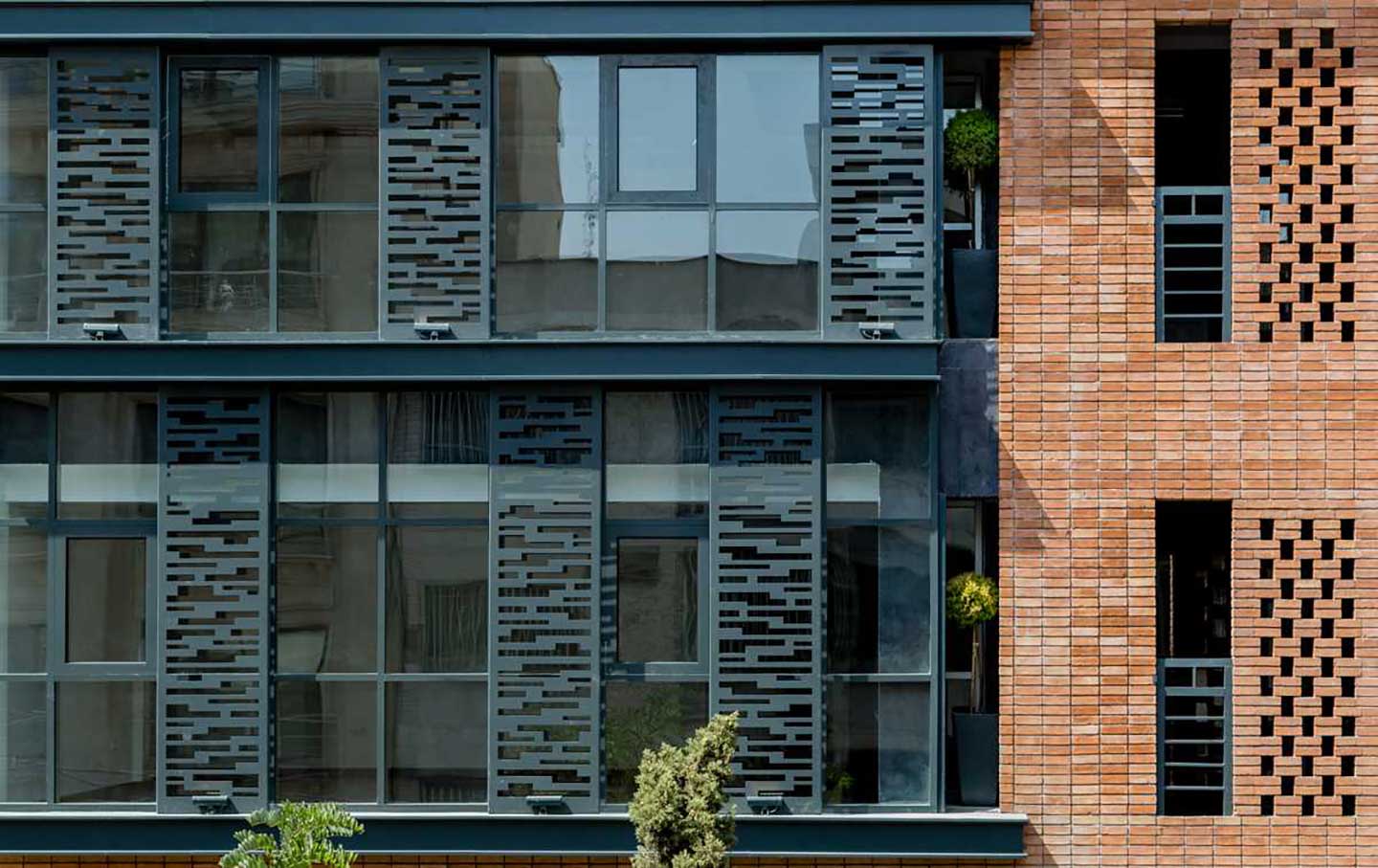
Images of architecture in contemporary Iranian brick began to circulate on the internet at the turn of the decade and prospered among those who know. One of the first promoters of Iranian masonry was a story called Yimby Tehran, who published beautiful buildings of apartments that were riding in the city. Philip Oldfield, architect and director of the Built Environment Program at New South Wales University, frequently puts Iranian architecture on its popular @SustaniableAblel account. These images were picked up by the rest of the Coterie architecture (including yours really) for a good reason. The architecture itself is wonderful.
Iran has now become internationally renowned for its use of masonry in sustainable buildings adapted to life in an arid climate. A simple Google research of “Iranian bricks” rewards you with pages on pages of master masonry in all kinds of complex patterns, forming forms of locking, undulations, awnings and brizetes solo (a characteristic that reduces the looks of the sun). The latter is particularly interesting, because it regulates not only light and temperature in the structure, but revives a characteristic of traditional Persian houses, which are not exposed to the street but accessible by a garden or a terrace.
Companies such as Admun Studios (including the rating project in Bricks 2015, with a Brick Sun, apparently draped as a swollen fabric on the front facade, regularly becomes viral), the Caat Studio and the fundamental approach architects may not be familiar names, but the images of their work circulate widely in the West. This work is often experimental: the brick is not only decorative, but used so that it looks lighter than it is, while playing spectacular with light and shadow. It merges the structure with the skin and is often combined with glass in a way that seems to test the laws of physics. This is done by throwing new brick forms, using new locking systems and using some optical illusion. Magnificent bricks, for example, is such a successful project because it is not only catchy but durable. It is not a new construction but an adaptation of an existing dull building.
Current number

Masonry has long played an important role in Persian architecture simply because it is the most available equipment, intimately linked to the climate and the geological characteristics of the region. The vernacular architecture responds to its environment and Persian architecture is no different. Brick resists the elements, maintains the buildings in the fridge, ready to develop and is well suited to the decorative articulation. Many models of pepper and geometric shapes of contemporary architectural language of Iran have roots in Persian architecture dating from the Seljuk period (around 13th centuries). According to Mahsa Kharazmi at the Berlin Islamic Museum of Islamic Art, which separates the Iranian masonry from Western Masonry, it is its use of complex geometric forms, rather than the typical grid. In the 1980s and 90s, critical regionalism, an idea popularized by Kenneth Frampton architecture criticism, expressed the desire to counter the “pucoté” which tormented many modernist utility structures by encouraging styles and techniques rooted in local cultural contexts. It is a Western term, but describes well how the architecture of contemporary Iranian bricks reconciles contemporary and historical modes, all from a vernacular sense of space, behavior and climate.
What makes this architecture so attractive to Western eyes, apart from its beauty is its unique character. Architectural culture, in particular in the United States, remains (with a few exceptions) linked to swollen forms and spectacle and the same dull minimalism that it has been shilling since the early 2000s. Practice on the ground is fragmented, and there is no longer any creative or ideological movement consistent to shame it in a gradual or oriented manner. The capital, meanwhile, pushes architectural work on the edge and encourages inexpensive and rehearsal, resulting in horrible offices, identikit buildings and disposable unifamilial houses. This is only an example of the disintegration of artistic culture written in all areas, because each of them enters their own crises of financing and structural decline.
A more interesting architecture occurs in places where there are still strong cultural ties or attempts to use the built environment to improve the world (such as new social housing initiatives in Spain). When architecture is considered a cultural and human enrichment rather than a playground for the rich, the results speak for themselves. The masonry of Iran has won such a traction of an audience mainly online without links with the country, because it reminded us that better more beautiful buildings are under construction elsewhere. Architecture is an ambassador of the world; Right now, and faced with the climbing of illegal wars, Iranian architects have done their job.


