Ireland’s New President Boldly Opposes Austerity, Militarism, and the Genocide in Gaza


Catherine Connolly, an independent leftist, won a landslide victory with a promise to serve as “a moral compass in a world increasingly driven by profit and spectacle.”
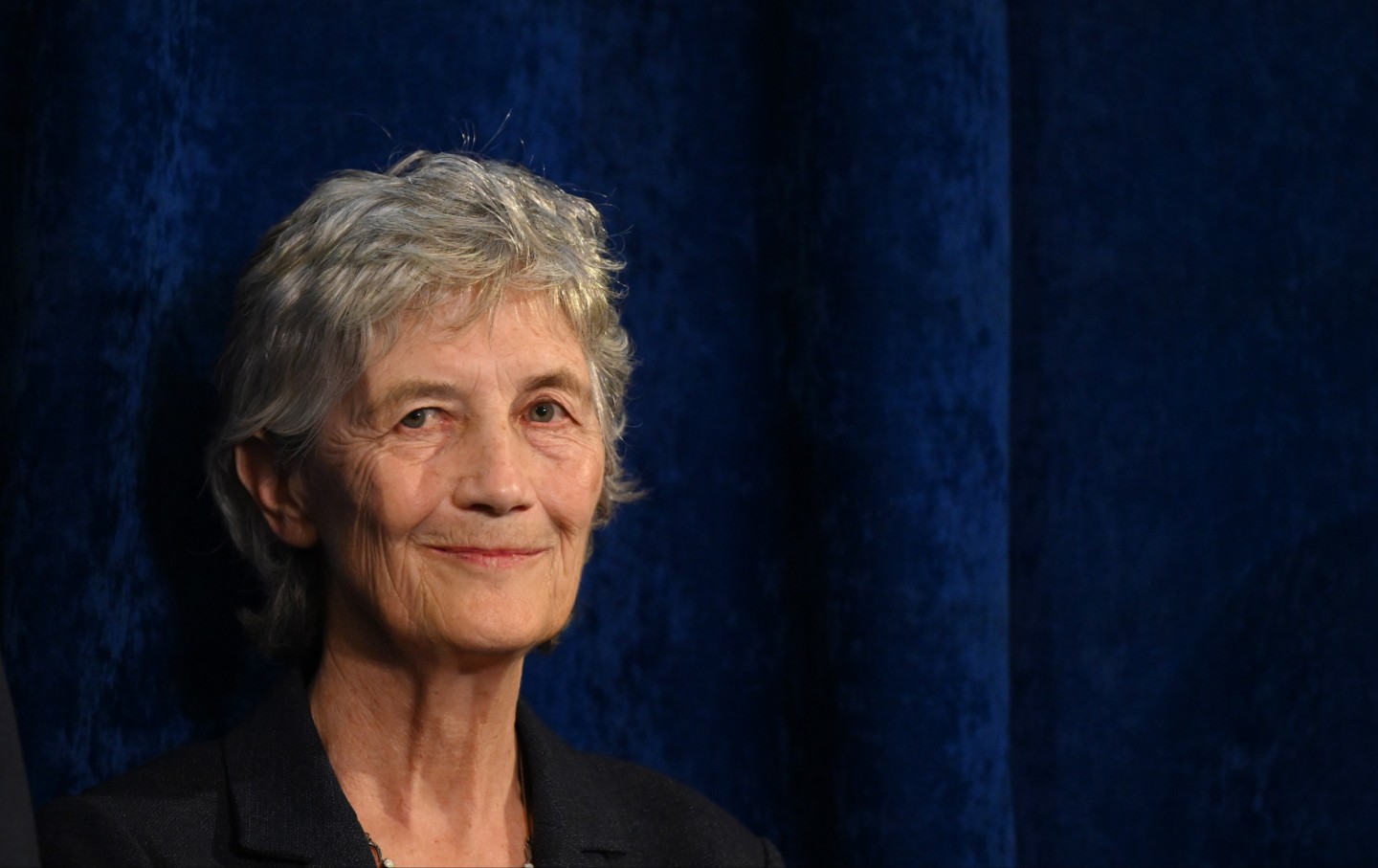
Catherine Connolly is pictured at Dublin Castle as she is declared the winner of the Irish presidential election, October 25, 2025.
(Charles McQuillan/Getty Images)
Ireland’s new president, Catherine Connolly, is a proud leftist who served for almost a decade as an independent socialist member of the Irish parliament (Dáil Éireann), a vocal critic of the failures of neoliberalism and corporate globalization, and a visionary advocate for the kind of dramatic interventions needed to address the economic inequalities that have made life increasingly unaffordable for working-class families.
Connolly, who was elected Saturday with 63.4 percent of the vote, also has an anti-colonial and anti-imperialist sensibility rooted in her own country’s long struggle against the British Empire. In this capacity, she campaigned as a defender of Ireland’s long-standing policy of military neutrality – denouncing the international arms trade and the “warmongering military-industrial complex” – and as a strong supporter of Palestinian rights. She said that when it came to the Israeli attack on Gaza, she would not hesitate to tell Donald Trump to his face: “The genocide was made possible and financed by American money. »
Elected as an independent who challenged candidates backed by Ireland’s two main center-right parties, Connolly will fill the largely ceremonial – but often influential – presidential post as an outspoken civil servant who observers across the political spectrum say will be the most left-wing president in Irish history.
The result attracted attention beyond Ireland’s borders – former British Labor leader Jeremy Corbyn hailed “a landslide victory for humanity and for hope” – and offered at least some lessons for progressives in the United States.
Connolly won the presidency after a whirlwind election campaign that united Ireland’s disparate left-wing parties, attracted thousands of volunteers and overcame determined efforts to “smear” her by establishment politicians and the media. And it wasn’t even close. She won by beating her closest rival by almost 35 points.
“This is the first time the left has won a majority of votes in a national election,” said Irish parliamentarian Paul Murphy, an anti-austerity campaigner and leading figure in the People Before Profit party which backed Connolly. “It wasn’t a narrow victory either; Catherine won the largest percentage and vote total of any presidential candidate in history.”
Current number
Murphy hailed the result as “a watershed moment” that saw unprecedented left-wing unity and a dramatic decline in support for the main parties, Fianna Fáil and Fine Gael, which have historically dominated Irish politics. Sinn Féin leader Mary Lou McDonald, whose party supported Connolly, described Saturday’s election result as a “game changer” for her party, for the left and for supporters of the vision of a united Ireland that Connolly and Sinn Féin championed. “When we come together, when we work collaboratively, when we stand up for each other, we can win,” McDonald said.
Now that she has won, Connolly, a 68-year-old lawyer and clinical psychologist, feminist and cycling parliamentarian from Galway, is still dismissed by the political elites who opposed her candidacy. They point out that the Irish president has few official powers compared to the Irish prime minister.
But Connolly, who has a long track record of influencing debates from her position as an independent congresswoman and whose candidacy has generated Bernie Sanders-style enthusiasm among young voters, says: “The presidency, we are told, is largely symbolic. But symbols matter. And actions taken under those symbols matter even more. I believe the president should be a unifying presence – a steady hand, yes, but also a spark. A reminder of what is possible. A moral compass in a world of increasingly motivated by profit and economics. A voice for those who are too often silenced.
Connolly’s determination to free up space for politics based on moral values – “not left versus right, but good versus evil” – allowed him to appeal to the type of disenfranchised voters who have given in to right-wing populism in many European countries and the United States.
This appeal was rooted in his sincerity and willingness to speak truth to power, both in Ireland and on the world stage, where Irish presidents such as Mary Robinson and outgoing President Michael D. Higgins proved to be particularly engaged and often influential figures.
Like Sanders in the United States, Connolly leveraged her history as an independent leftist – rather than a major party insider – to build a coalition that previously seemed impossible. While previous elections had seen candidates from small left-wing parties clash, she gained initial support from the Social Democrats and the Irish Greens, the People Before Profit-Solidarity movement and the Labor Party. Eventually Sinn Féin, the largest left-wing party, which many expected to field its own candidate, joined in, giving a powerful boost to the burgeoning campaign.
Popular
“Swipe left below to see more authors”Swipe →
Ireland is a small country, but it often captures the international imagination. And when former presidents, such as Robinson and Higgins, spoke, the world listened. It’s a safe bet that Catherine Connolly will also be heard, as will her message that voters in Ireland and around the world are rightly fed up with politics as usual. “People are tired, tired of being ignored, invisible, uncertain. Tired of broken promises and a fraying social fabric,” she says. People, Connolly argues, are looking for a politics not just focused on what is “but on what it could be,” a politics “driven not by fear, but by hope.” Not shaped by division, but by shared dreams.”
More than The Nation
The European Union has failed to offer an alternative to Donald Trump. In matters of defense, geopolitical alignment and trade policy, it is increasingly subservient to the United States.
Harrison Stetler

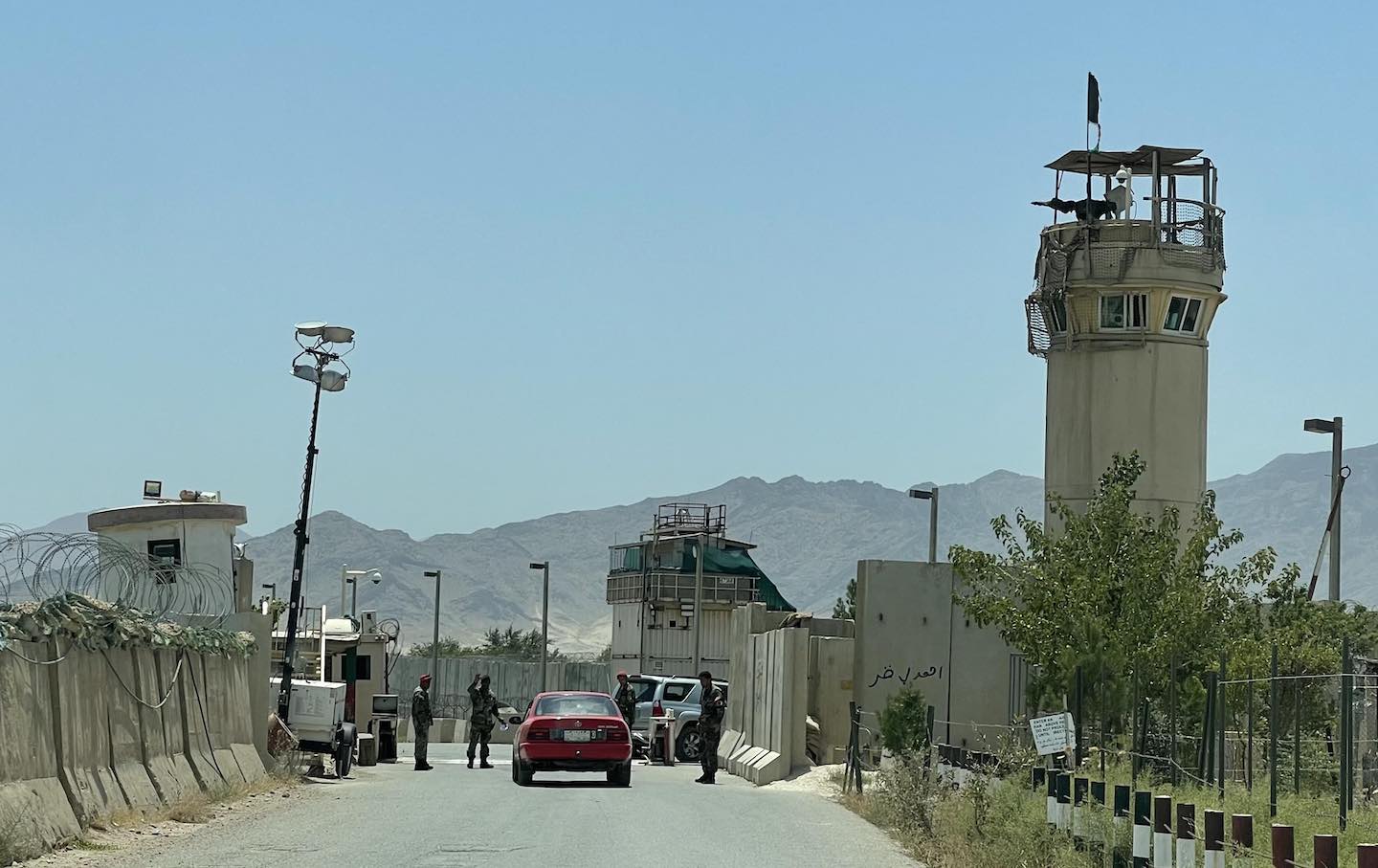
The president’s stated intentions to retake Bagram Air Base risk a departure from the détente of recent years.
Hassan Ali
The president’s unprecedented and illegal attacks are meant to target drug cartels, but they serve a far more disturbing political agenda.
Greg Grandin

A conversation with Robert Malley about Israel’s actions in Gaza and the West Bank, why the United States has failed to bring peace to the region, and his recent book Tomorrow is yesterday.
Questions and answers
/
Ahmed Maure


